
Masood Khalid Khan
World Bank President Ajay Banga’s recent visit to Pakistan carried a sobering message that should jolt the nation’s policymakers and business community into urgent action. His assessment was stark and unambiguous: Pakistan must generate between 2.5 to 3 million jobs every single year for the next decade—totaling 30 million new employment opportunities—or face catastrophic consequences. Failure to meet this monumental challenge risks pushing the economy toward collapse, fueling widespread social instability, and accelerating the exodus of talented young Pakistanis seeking better prospects abroad. What could represent Pakistan’s greatest asset—its youthful population—threatens to become its most destabilizing liability if leadership fails to rise to this generational test.
The arithmetic behind Banga’s warning reveals the scale of pressure bearing down on Pakistan’s economic future. With a staggering 80 percent of the population below age 40, and nearly two-thirds under 30, Pakistan possesses one of the world’s youngest demographic profiles. This youth bulge should theoretically position the country for rapid economic expansion, as happened in East Asian economies that successfully harnessed their demographic dividends during previous decades. However, demographics alone guarantee nothing. Without deliberate, sustained policy interventions to create employment at the required scale, this massive cohort entering the workforce will find doors closed, opportunities scarce, and futures uncertain.
Current realities paint a troubling picture. Pakistan’s unemployment rate has climbed to 7.1 percent according to the latest Labour Force Survey—a 21-year high that reflects deepening distress in job markets across the country. This official figure likely understates the true severity, as it doesn’t fully capture underemployment, disguised unemployment in agriculture and family enterprises, or the countless young people who have simply stopped seeking work after repeated failures. The collision between surging labour supply and stagnant demand for workers creates conditions ripe for social frustration, political volatility, and economic stagnation.
Banga correctly characterized this situation not as merely another development challenge to be addressed through routine policy adjustments, but as a “generational challenge” that will fundamentally determine Pakistan’s trajectory for decades ahead. The country’s ability to absorb, train, and productively deploy this unprecedented wave of young workers entering the labour force will shape economic outcomes, determine social cohesion, and establish whether governing institutions retain credibility and legitimacy. Failure carries consequences extending far beyond unemployment statistics—it threatens the basic compact between state and citizens, particularly young citizens whose expectations for dignified livelihoods must be met if stability is to be maintained.
The World Bank president outlined a comprehensive remedy resting on three interconnected pillars, each essential and mutually reinforcing. First, Pakistan must dramatically increase sustained investment in both human capital and physical infrastructure. Second, regulatory reforms must fundamentally simplify the process of starting, operating, and expanding businesses, removing bureaucratic obstacles that currently strangle entrepreneurial energy. Third, financing and insurance must become accessible to sectors that drive employment—particularly small and medium enterprises and agriculture—which remain largely excluded from formal credit despite being labour-intensive engines of job creation.
Human capital development deserves primacy in any serious employment strategy. Pakistan cannot address its unemployment crisis through temporary fixes, quick programs, or superficial interventions. Building genuine capabilities within the workforce requires long-term commitment, substantial resources, and fundamental reorientation of educational priorities. What Pakistan urgently needs are innovative approaches that equip young people with skills directly aligned with actual market demands rather than outdated curricula disconnected from economic realities.
Unfortunately, policy has consistently lagged in this critical area. Vocational and technical education has been systematically marginalized, treated as an afterthought or fallback option for students unable to pursue conventional academic paths. This represents a catastrophic misunderstanding of modern economic development. Countries that successfully created millions of jobs—from Germany to South Korea to Singapore—placed technical and vocational training at the absolute center of their human capital strategies, recognizing that industrial economies need skilled technicians, craftspeople, and operators as much as they need university graduates.
Pakistan must urgently strengthen and expand polytechnic institutes and skills development centers nationwide. These institutions should be transformed into hubs of workforce development, equipped with modern facilities, staffed by qualified instructors, and connected directly to industries requiring trained personnel. Properly structured polytechnics can serve dual purposes: enabling youth to access meaningful employment while simultaneously boosting productivity and competitiveness across labour-intensive sectors including construction, manufacturing, and agriculture where Pakistan possesses genuine comparative advantages.
The curriculum at these institutions must be designed through close collaboration with industry, ensuring that graduates emerge with capabilities employers actually need rather than theoretical knowledge disconnected from practical application. Programs should emphasize hands-on training, apprenticeships, and certifications recognized by industry. Funding must be adequate and sustained rather than sporadic and insufficient. When properly resourced and intelligently structured, technical education programs can close the devastating skills gap currently plaguing Pakistan’s economy, unlock employment and economic empowerment for millions of young people, and raise productivity across key industries that form the backbone of economic activity.
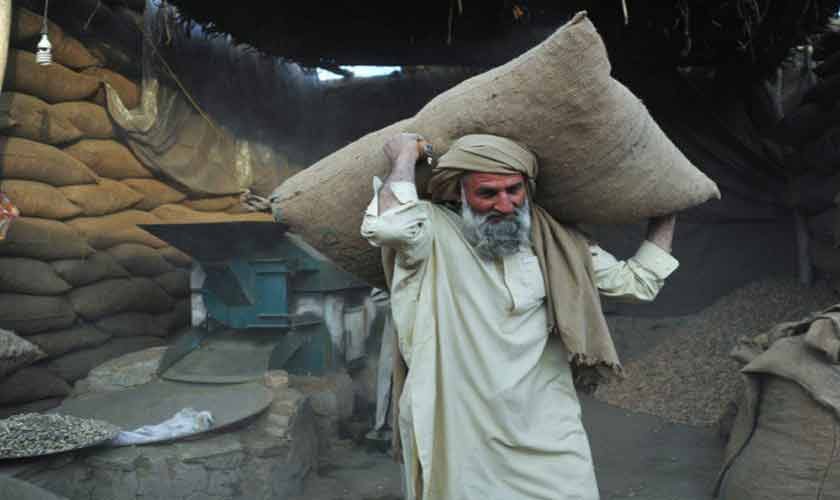
Banga’s second pillar—expanding access to financing and insurance for small and medium enterprises and agricultural producers—addresses another fundamental constraint on job creation. SMEs and farms collectively employ the vast majority of Pakistan’s workforce and possess enormous potential for absorbing additional labour through relatively modest expansion. However, these sectors remain largely locked out of formal credit systems despite being the engines of employment generation the country desperately needs.
The problem extends beyond simply making credit available. Expanding financing depends on a broader, more fundamental shift toward formalizing Pakistan’s massive informal economy, where the majority of economic activity currently occurs outside regulatory oversight, tax systems, and formal financial infrastructure. Many businesses operating informally would benefit from accessing credit, insurance, and other financial services, yet they hesitate to formalize operations because of the daunting obstacles formalization entails.
Pakistan’s regulatory environment imposes cumbersome, convoluted requirements that discourage businesses from entering the formal sector. Labour regulations, social security compliance, EOBI requirements, and numerous other legal obligations create administrative burdens that small enterprises struggle to navigate. The taxation system compounds these difficulties with minimum taxes on turnover regardless of profitability, varied withholding rates at multiple transaction stages, and compliance procedures that consume time and resources small businesses can ill afford.
These structural barriers produce perverse outcomes. Not only do they discourage informal businesses from formalizing, thereby limiting their growth potential and ability to create jobs, but they also constrain enterprises already operating formally. Even businesses that have entered the formal economy face ongoing compliance costs and regulatory complications that limit their capacity for expansion and employment generation. This undermines the foundations of the inclusive, dynamic job creation strategy Banga advocates.
Regulatory reform therefore becomes essential. Pakistan needs comprehensive simplification of business registration, operation, and expansion procedures. Compliance requirements should be streamlined, digitized where possible, and scaled to business size rather than imposing uniform obligations regardless of enterprise scale. Tax systems should encourage rather than penalize formalization, perhaps through graduated rates and simplified procedures for smaller enterprises. Labour regulations should balance worker protection with flexibility businesses need to expand employment.
Without addressing these structural barriers decisively and comprehensively, Pakistan will struggle to achieve the employment generation the demographic reality demands. Businesses will continue operating informally where possible, limiting their growth and job creation. Formal sector enterprises will face constraints preventing them from expanding as rapidly as economic conditions might otherwise permit. Credit will remain concentrated in established corporations rather than flowing to dynamic SMEs and agricultural producers who could deploy it most effectively for employment generation.
The stakes could scarcely be higher. Pakistan stands at a crossroads where demographic reality collides with economic performance and institutional capacity. The next decade will reveal whether the country can harness its youthful population as an engine of prosperity or whether this demographic bulge becomes a source of instability as millions of young people find themselves shut out from productive, dignified employment.
Meeting Banga’s challenge requires immediate, sustained, coordinated action across multiple fronts. Human capital development through transformed technical education, regulatory simplification that encourages formalization and business expansion, and financial sector reforms ensuring credit flows to job-creating sectors must proceed simultaneously rather than sequentially. Half-measures will prove inadequate. Business as usual guarantees failure.
Pakistan’s leaders face a generational test of vision, courage, and execution capability. The country’s demographic potential remains real and substantial. But potential means nothing without deliberate action to realize it. The clock is ticking, the pressure building, and the consequences of failure too severe to contemplate. Pakistan must create 30 million jobs over the next decade—not as an aspirational target but as an existential imperative. The question is whether the nation’s institutions, leadership, and social fabric possess the capacity to deliver on this monumental challenge before time runs out.