
Bilawal Kamran
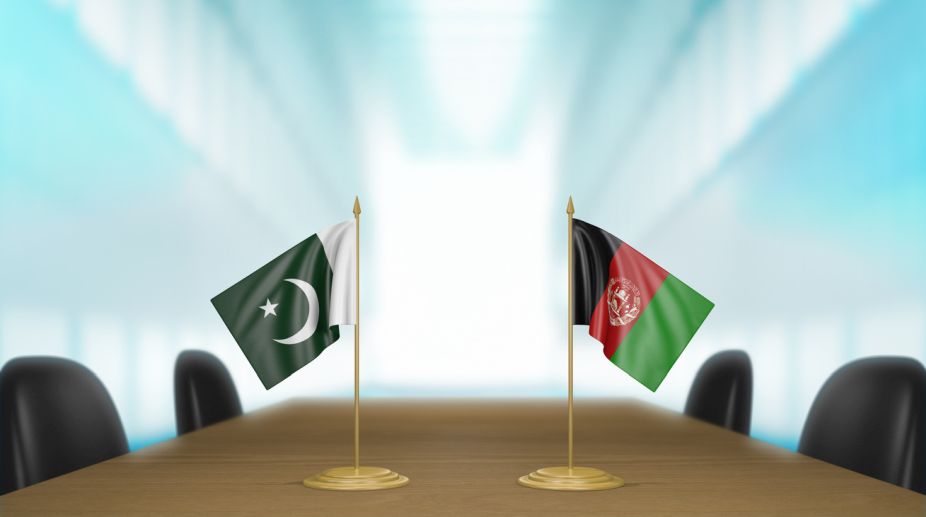
Pakistan’s ambassador to the United Nations said what needed to be said. When India and Afghanistan’s UN mission representative stepped forward to condemn Pakistan’s cross-border strikes, Islamabad’s envoy did not flinch or retreat into diplomatic vagueness. He pushed back, directly and without apology, and in doing so laid bare a reality that too many in the international community have been content to ignore for far too long.
The operations carried out in late February were not acts of aggression. They were acts of survival. Pakistan targeted militant camps and support infrastructure belonging to the Tehreek-e-Taliban Pakistan and ISIL-K, two organisations that have murdered Pakistani civilians, killed security personnel, and torn apart communities on Pakistan’s own soil. The legal basis for those strikes was the recognised right of self-defence. The moral basis was even simpler: no government can stand by while its citizens are slaughtered and its territory is treated as a free-fire zone by groups sheltering comfortably across an international border.
Yet criticism came quickly. India’s representative at the Security Council condemned the strikes and spoke of civilian casualties. Afghanistan’s mission representative echoed similar objections. Both interventions shared a common flaw. They addressed the symptom while refusing to acknowledge the disease. Neither said a word about the militant networks that continue to operate openly from Afghan soil. Neither called for the dismantling of the sanctuaries from which these groups plan and launch attacks inside Pakistan. That selective outrage tells you everything about the politics driving those interventions.
The facts on the ground are not in dispute, at least not among those willing to look at them honestly. United Nations monitoring reports have consistently documented the presence of the TTP and ISIL-K inside Afghanistan. These organisations exploit the country’s fragile and chaotic security environment to recruit, organise, arm, and deploy fighters against Pakistani targets. This is not Pakistani propaganda. It is the documented finding of international observers. Pakistan has raised these concerns repeatedly, through diplomatic channels, through bilateral dialogue, and through formal international forums. The Afghan Taliban, despite repeated assurances that Afghan territory would never be used against neighbouring states, have allowed these networks to persist and operate.
Pakistan’s patience on this matter has not been rewarded. It has been exploited. Every year that Islamabad absorbed the attacks without a decisive response was treated as permission to continue. Cross-border infiltration did not slow down. Militant operations did not diminish. The death toll on Pakistan’s side of the border kept rising, and the sanctuaries across the border remained intact. The strikes in late February were the product of that accumulated failure, not of recklessness.
The Indian dimension of this crisis deserves equal attention. Pakistan’s representative at the Security Council did not shy away from naming India’s role, and rightly so. For years, Pakistani authorities have maintained that New Delhi has used Afghanistan as a platform to destabilise Pakistan. The argument is not speculative. It is grounded in a consistent pattern of Indian intelligence activity inside Afghanistan and in the documented links between Indian support networks and militant groups hostile to Pakistan, including the TTP and the Balochistan Liberation Army. India has long understood that a chaotic western frontier serves its strategic interests by draining Pakistani resources and attention. Afghanistan under the Taliban, ungoverned and resentful, has provided exactly the kind of environment that allows such interference to flourish with minimal accountability.
When India’s representative chose to condemn Pakistan’s strikes rather than condemn the terrorist infrastructure those strikes were targeting, he was not acting as a neutral voice of international law. He was acting as a party with a stake in Pakistan remaining vulnerable. That is a reality the international community must have the honesty to recognise and name.
China’s offer to mediate between Pakistan and Afghanistan was a welcome signal. Beijing understands that regional instability serves no one’s long-term interests, and its willingness to play a constructive role reflects a sensible read of the situation. Dialogue matters. Diplomacy matters. But diplomacy that avoids the central question is not a solution: it is postponement dressed up as statesmanship.
The central question is this: will the militant networks operating from Afghan territory be dismantled? Everything else is secondary. Pakistan is not at war with the Afghan people. The bonds of culture, language, religion, and family that tie millions of Pakistanis to millions of Afghans run deeper than any political dispute. Pakistan’s quarrel is not with Afghan farmers or Afghan schoolchildren. It is with armed organisations that use Afghan soil as a base of operations and with the failure of Kabul’s authorities to confront those organisations despite the obligations they have accepted.
Until that changes, the security situation along Pakistan’s western border will not stabilise. It cannot. As long as militant groups can plan operations in Afghanistan and execute them inside Pakistan, Islamabad will have no choice but to respond. That is not a policy preference. It is a basic reality of national defence.
The message Pakistan delivered at the United Nations was therefore both necessary and long overdue. Pakistan has every right to defend its citizens. It has every right to name those who are exploiting Afghanistan’s disorder for their own strategic purposes. And it has every right to demand that the international community apply consistent standards rather than selective condemnation.
Regional peace in South Asia will not come from silencing Pakistan’s legitimate security concerns. It will come from addressing them. That means dismantling the militant sanctuaries. It means holding the Afghan Taliban accountable for the commitments they made. It means recognising India’s destabilising role rather than shielding it. And it means accepting that a Pakistan permanently under siege from its western frontier is not a stable Pakistan, and an unstable Pakistan is a problem not just for Islamabad but for the entire region.
The guns along that border will continue to speak until the words of accountability are finally heard.