
Zafar Iqbal
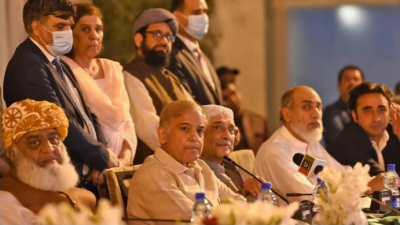
The midnight deal between the Pakistan Muslim League-Nawaz (PML-N) and the Pakistan People’s Party Parliamentarians (PPPP) on Tuesday has eased the political uncertainty that had gripped the country since the announcement of the 8th February election results. The deal has paved the way for the formation of a coalition government led by the PML-N, which emerged as the second-largest party in the polls. However, despite the news of the formulation of a coalition government, the rigging allegations are solid and might not bring the political stability inevitable for economic and social stability.
Furthermore, the deal does not guarantee the smooth functioning of the parliament on key issues, as the Leader of the House will have to deal with the diverse and conflicting agendas of the coalition partners, as well as the PPPP, which has decided to sit on the opposition benches despite supporting the PML-N. The PPPP’s support will be crucial for the government to secure a majority vote on important legislation and the budget.
Moreover, the government will face a strong challenge from the opposition, especially from the Sunni Ittehad Council, which has joined forces with 82 candidates backed by the Pakistan Tehreek-e-Insaf (PTI), the largest party in the parliament. The opposition is likely to disrupt the parliamentary proceedings and question the legitimacy and performance of the government.
Therefore, the government will find it difficult to implement the much-needed economic reforms that are required to address the balance of payments crisis and restore macroeconomic stability. The reforms, which are part of the Stand-By Arrangement (SBA) agreed with the International Monetary Fund (IMF) in 2023, include measures such as increasing electricity tariffs, raising taxes, reducing subsidies, and privatizing state-owned enterprises (SOEs). These reforms are expected to face resistance from various stakeholders, including the establishment, which has so far supported the reform agenda but may have vested interests in some of the SOEs.
The most serious threat to the reform process, however, comes from the public discontent that has been rising due to the high inflation and low growth that have eroded the purchasing power and living standards of the people. The sensitive price index, which measures the inflation of essential commodities, reached a record high of 34.25 percent year on year for the week ending 15 February 2024. This may trigger widespread protests against the government’s policies by the people, who the opposition parties may join. The government may have to resort to excessive force to quell the protests, which may further escalate the situation and undermine the social cohesion and stability of the country.
The public discontent was overlooked in the first review of the SBA that was published on the IMF website last month, as the caretaker government that was in charge before the elections was only concerned with meeting the fiscal targets agreed with the Fund by the previous government. The review also did not mention the possibility of street protests against the administrative measures taken by the government to comply with the SBA, such as increasing electricity charges and raising revenue through higher indirect taxes, which have a greater impact on the poor than on the rich.
On the other hand, the deal between the PML-N and the PPPP has some positive implications for the business environment, both domestically and internationally. The deal has created a sense of political stability and continuity, which may boost the confidence of the investors and the creditors. The deal may also facilitate the release of the foreign investment that has been pledged by various countries and institutions, but has not been disbursed due to the political uncertainty and the security situation. The Letter of Intent dated 18 December 2023, signed by the caretaker minister for finance and the Governor of the State Bank of Pakistan, stated that “the caretaker government, in collaboration with other stakeholders, has been making concerted efforts to attract foreign investment, including through the forthcoming privatisation of SOEs, which will support our efforts to improve economic performance and will help replenish our gross reserves to more comfortable levels”.
However, the level of foreign direct investment in the country remains very low, less than a billion dollars per year, and it is doubtful whether the government will be able to attract the 20 to 25 billion dollars of investment that some stakeholders are hoping for. The foreign investment inflow is crucial for the economic turnaround of the country, as it will provide the much-needed foreign exchange, create jobs, and spur growth.
The international credit rating agencies, however, are not likely to upgrade Pakistan’s rating unless they see concrete evidence of the foreign investment inflow and the positive economic data. Pakistan’s current ratings are very low, which makes it difficult and expensive for the government to borrow from the international markets. The government has budgeted to borrow 6.1 billion dollars from commercial banks abroad and to issue sukuk/Eurobonds, which are Islamic and conventional bonds, respectively. However, these sources of financing are subject to market conditions and investor sentiments, which may not be favorable for Pakistan, given its economic and political situation.
Apart from the financial and economic issues, there is still a daunting political issue of the legitimacy of the coalition government of PMLN, PPP, MQM, and others. PTI alleges that they have won the elections with a 2/3rd majority, but their mandate is being stolen, and they will do all possible means to recover their mandate. It might bring legal and political battles to the fore, and political stability might not be achieved. Therefore, it is premature to analyze the outcomes of the coalition government in Pakistan.
Please, subscribe to the YouTube channel of republicpolicy.com