
Ahmed Pervez Chisthti
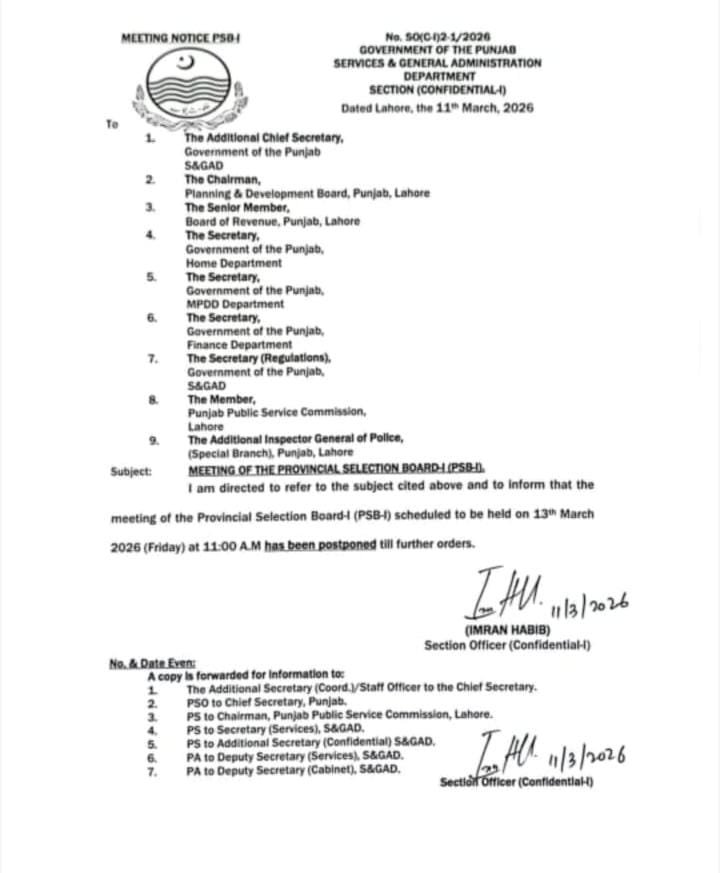
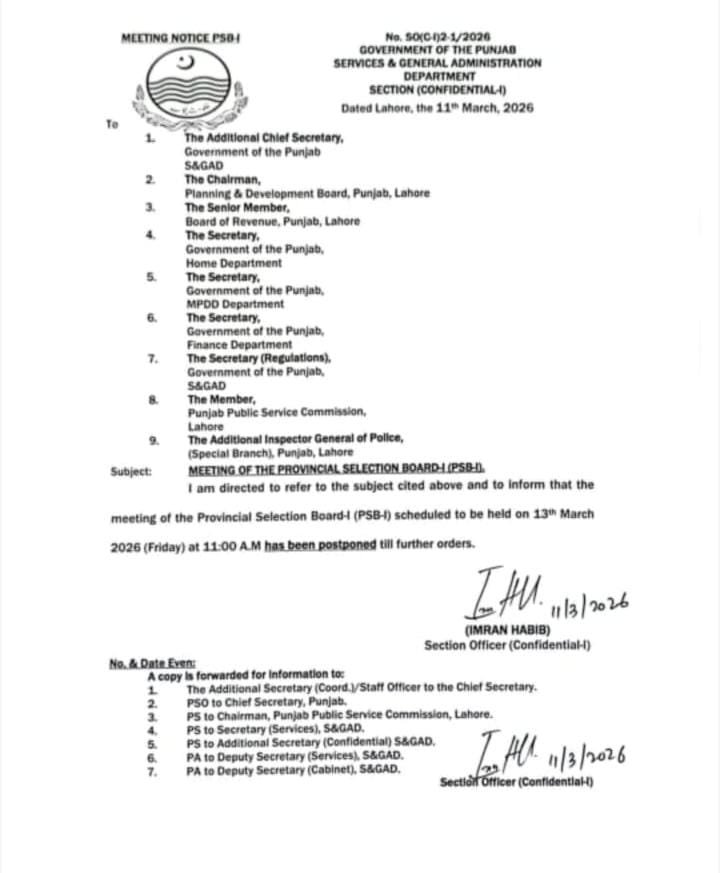
It is the notification, where the problems between the PMS officers, and the S&GAD have arisen. PMS officers are claiming that chief secretary & S&GAD have wilfully denied to hold the promotion board.
A storm is brewing inside Punjab’s provincial bureaucracy. For the past three years, officers of the Provincial Management Service have been raising alarm over what they describe as systematic discrimination, institutional neglect, and deliberate suppression of their service rights. Their grievances are no longer whispers in corridors. They have now reached a point where senior PMS officers, including the current PMS Officers’ Association leadership, are openly warning of a pen-down strike and organised agitation if the situation is not urgently addressed.
The core complaint is stark and specific. Departmental promotion boards have not been convened for three consecutive years. Transfers and postings have been frozen or manipulated. Career progression has been effectively stalled. Officers who have served Punjab with dedication for over two decades find themselves trapped in grades far below what their service length should command. Under the present structure, a Pakistan Administrative Service officer reaches Grade 19 within approximately twelve years of service. A PMS officer, by contrast, must wait more than twenty-five years to reach the same grade. This is not a minor administrative gap. It is a structural injustice that no reform-minded government can afford to ignore.
The PMS officers have directed their frustration at one central figure: Chief Secretary Punjab, Zahir Akhtar Zaman. A PAS officer himself, he has been accused by multiple senior PMS officers of running an administration that systematically favours the federal cadre at the expense of the provincial one. The numbers they cite are difficult to dismiss. There are over 1,200 PMS officers serving Punjab against approximately 300 PAS officers. Yet when one examines who holds the secretaryships, who sits as Deputy Commissioner in the districts, and who occupies the commanding positions of provincial administration, the picture is deeply disproportionate. According to data held by the Republic Policy Think Tank, more than eighty percent of these critical positions are occupied by PAS officers. A service that is outnumbered four to one continues to dominate governance four to one. That is not merit. That is capture.
Some PMS officers have gone further in their analysis. They argue that PAS, being a federal civil service, should by constitutional logic and administrative principle operate from Islamabad and within federal institutions. The provinces, they contend, belong to the provincial services. This argument has constitutional weight and deserves serious examination rather than administrative suppression.
The Punjab Assembly has not remained silent. An adjournment motion has already been moved to deliberate on this deepening crisis, signalling that the matter has crossed the threshold from internal grievance to public legislative concern. That alone should have prompted executive action. It has not.
The damage extends beyond the careers of individual officers. Chief Minister Maryam Nawaz Sharif came into office with a mandate to deliver visible, people-centred governance in Punjab. That mandate depends entirely on a functional, motivated, and fairly treated bureaucracy. A provincial administration fractured along cadre lines, where one service resents the other and morale has collapsed, cannot deliver the governance the Chief Minister has promised. The two goals are simply incompatible.
The message from this analysis is direct. Chief Minister Maryam Nawaz Sharif must personally intervene. She must order an immediate review of the posting and promotion record of the past three years, examine the ratio of PAS to PMS representation in key positions, and ensure that promotions and boards long overdue are conducted without further delay. She must also evaluate the conduct and administrative posture of Chief Secretary Zahir Akhtar Zaman. If the evidence of institutional bias is as overwhelming as the PMS officers claim, then the Chief Minister owes Punjab a Chief Secretary whose approach is genuinely neutral and constitutionally sound.
The time for studied silence has passed. This crisis will not resolve itself.