
Tahir Maqsood Chheena
The passage of the Police Order (Second Amendment) Bill, 2025 by the Punjab Assembly offers an early and revealing insight into Chief Minister Maryam Nawaz Sharif’s governing approach. Presented as a law-and-order measure, the amendment goes far beyond routine policing reforms. It signals a governing philosophy that appears more focused on controlling political expression than strengthening public safety, raising serious questions about civil liberties, democratic norms and accountability in Punjab.
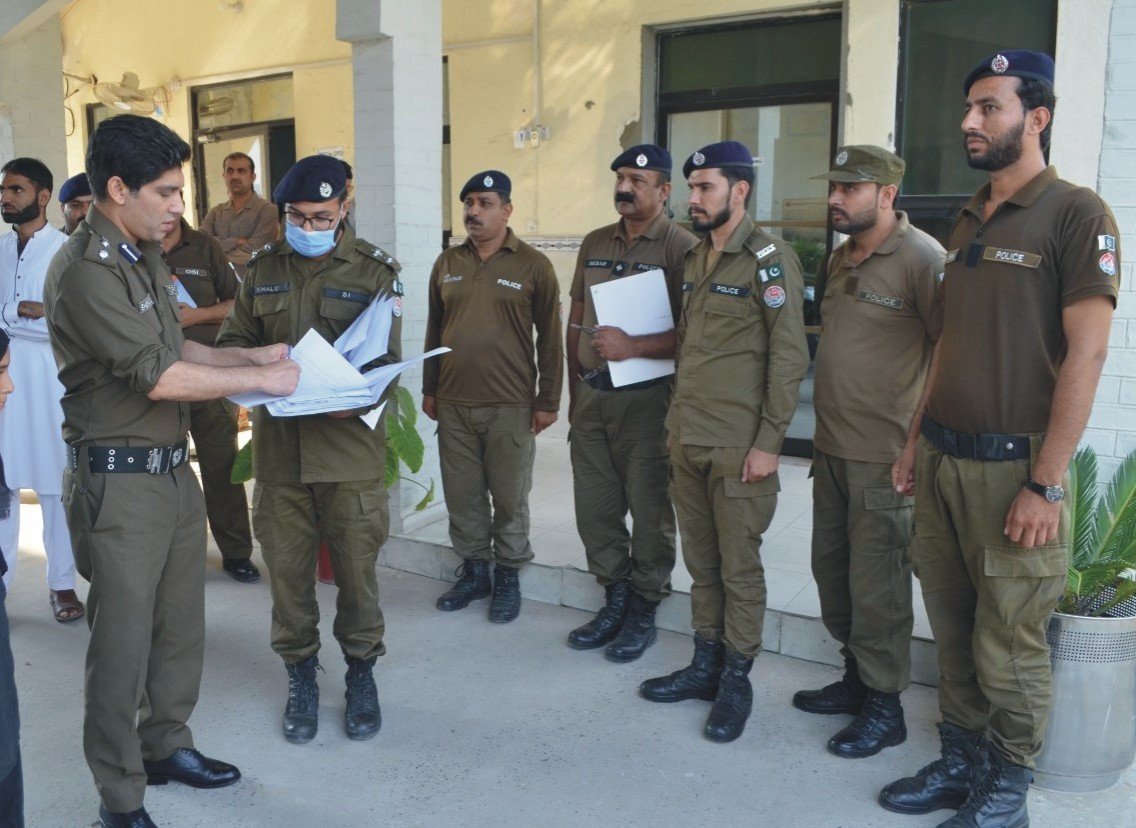
At the heart of the amendment lies a significant expansion of police powers. The law authorizes the creation of a dedicated riot police wing and grants sweeping authority to preempt, restrict and disperse what are broadly described as “unlawful” political gatherings. Even more troubling is what the legislation does not include. There is no meaningful mechanism for independent parliamentary or judicial oversight to check how these powers are exercised. In effect, extraordinary authority has been granted without corresponding safeguards.
The amendment empowers deputy commissioners and district police chiefs to unilaterally declare any gathering unlawful and designate any area a “riot zone.” Once such a declaration is made, roads can be sealed, public movement restricted and even forced evacuations ordered. These decisions can be taken swiftly and with little transparency, leaving citizens with limited recourse. In a constitutional democracy, such powers directly encroach upon the fundamental right to peaceful assembly and political expression.
Equally concerning is the legal immunity provided to police officers acting in “good faith” during riot control operations. The law offers blanket protection without clearly defining how good faith will be determined or who will assess it. In a polarized political environment, this vagueness creates fertile ground for abuse. Without independent review, claims of good faith risk becoming shields against accountability, even in cases involving excessive force or rights violations.
The fear that these provisions will be selectively applied against opposition groups is not unfounded. Punjab’s political climate remains deeply divided, and discretionary authority concentrated in the hands of a few officials invites partisan use. When the definition of an unlawful gathering is left unclear, any protest, rally or political meeting critical of the government can be framed as a threat to order. This ambiguity effectively chills political participation, as citizens may think twice before exercising their constitutional rights.
The amendment further intensifies these concerns by introducing harsh penalties for participants in such gatherings. Prison terms, heavy fines and non-bailable offenses are included, transforming political protest into a high-risk activity. These punitive measures send a clear message that dissent may come at a severe personal cost. Instead of addressing unrest through dialogue and democratic engagement, the state appears to be relying on deterrence through fear.
Context matters, and the government’s recent actions add to the unease. The Punjab government has expanded the powers of the Crime Control Department, ostensibly to tackle serious criminal activity. However, the department has repeatedly faced allegations of staged encounters resulting in the deaths of dozens of suspects. Despite the gravity of these accusations, the government has shown little inclination to initiate judicial inquiries or independent investigations. This pattern reinforces the perception that enhanced police powers are being granted without corresponding accountability.
Effective policing in a democratic society does not mean unrestrained authority. It rests on professional investigation, respect for due process and robust oversight. When law enforcement operates beyond scrutiny, public trust erodes. Communities begin to view the police not as protectors but as instruments of political control. This is a dangerous trajectory, particularly in a province as politically active and socially diverse as Punjab.
The opposition’s description of the amended police law as draconian reflects a deeper anxiety about the direction of governance. The concern is not merely about one piece of legislation, but about a broader trend in which constitutional guarantees are weakened in the name of order and stability. History shows that such trade-offs rarely produce lasting peace. Instead, they deepen grievances and widen the gap between the state and its citizens.
Punjab’s challenges related to crime and public disorder are real and require serious solutions. But those solutions must be grounded in transparency, accountability and respect for fundamental rights. Laws that concentrate power without oversight may offer short-term control, but they undermine democratic legitimacy in the long run.
The Police Order (Second Amendment) Bill, 2025 risks becoming a symbol of governance that prioritizes control over consent. If unchecked, it could shrink the already limited space for political dissent in Punjab. For a democratic system to function, the state must tolerate, even protect, peaceful opposition. Without that commitment, law and order becomes a pretext for silencing voices rather than serving the public good.