
Mubashir Nadeem
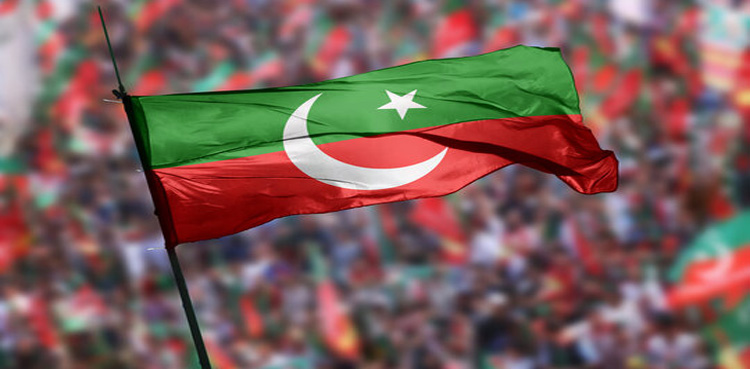
There is a particular kind of political tragedy that unfolds not with a dramatic collapse but with a slow, grinding unravelling. Pakistan Tehreek-e-Insaf is living through exactly that. The party that once electrified Pakistani politics, that drew millions into the streets and redefined the country’s political imagination, is now consuming itself. The disarray is no longer deniable. The cracks that party loyalists once dismissed as healthy internal debate have widened into open fractures, and senior figures who once stood together under a single banner are now pointing fingers at each other in full public view.
PTI has always had an uneasy relationship with internal discipline. From its earliest days as a mass movement, the party cultivated a culture of individual voices, strong personalities, and a deliberate resistance to the kind of hierarchical order that characterises more established parties. Its defenders called this democratic. They called it a culture of healthy disagreement. They argued that PTI’s internal tensions were a sign of vitality, proof that the party was not a monolith dominated by a single will. That argument was always fragile. It has now collapsed entirely. What is happening inside PTI today is not healthy disagreement. It is blame, accusation, and dysfunction dressed in the language of principle.
The most visible symptom of this dysfunction is the growing rift between Imran Khan’s family and the party’s formal political leadership. Khan remains behind bars, and his family has made no secret of its frustration with how PTI’s leaders are handling the situation. The concerns are specific and serious. The government has proceeded with its own plan for managing Khan’s health, largely brushing aside the family’s demands: access to his personal physicians, treatment at a private medical facility, conditions appropriate for a former head of government who has not been convicted of the charges that would justify his continued detention. These are not unreasonable demands. The family has every right to raise them.
But what is striking is the contrast between the family’s visible agitation and the relative calm of PTI’s political leadership. Khan’s sisters have spoken to the press, and in doing so they have revealed something important. They drew a distinction between the party’s blood and its bureaucracy. It was a pointed choice of words. Blood and bureaucracy: family loyalty on one side, organisational machinery on the other. That the two have drifted apart is not merely a personal matter. It reflects a deeper confusion at the heart of PTI about what the party actually is, who it serves, and where its loyalties ultimately lie.
PTI emerged from the February 2024 general election as a significant political force despite everything that was done to suppress it. Independent candidates backed by the party secured enough seats to make a serious claim on power. That result was remarkable given the circumstances. But the energy that produced that result has not been converted into effective political strategy. Instead, the entirety of PTI’s politics has narrowed to a single point: Imran Khan and the question of his release. Every political calculation, every statement, every move is filtered through that single lens. There is no broader platform being advanced. There is no legislative strategy, no alternative economic vision, no engagement with the policy questions that actually shape people’s lives. There is only Khan’s incarceration and the demand that it end.
That demand is legitimate. But a political party cannot sustain itself on a single demand indefinitely, particularly when its own legal counsel is now openly admitting that they see no viable path through the courts. That admission is significant. It means PTI’s lawyers, the people who know the legal landscape better than anyone inside the party, have concluded that the judicial route is exhausted or blocked. What remains is political negotiation, and for that to work, both sides must be willing to engage honestly with reality.
The current standoff is a product of mutual intransigence. Imran Khan and Pakistan’s ruling establishment have backed each other into a corner from which neither feels it can retreat without appearing weak. Khan’s supporters believe that any compromise represents surrender. The government believes that releasing Khan would vindicate everything he has stood for and energise a political opposition it has worked hard to contain. Both calculations are shortsighted. The longer this standoff continues, the more damage it does: to institutions, to political norms, to the social contract that holds a functioning democracy together.
That damage is already visible. Institutions that should be independent have been drawn into a political conflict that has eroded their credibility. Courts, electoral bodies, and security establishments have all been implicated in ways that undermine public trust. The social contract, the implicit agreement between citizens and state that makes governance possible, has been strained to a degree that will take years to repair. And the end of this conflict is still not in sight.
What makes this particularly painful is the waste of it. PTI has genuine support. Imran Khan has genuine followers who believe in his vision, however imperfectly he has embodied it. That political energy could be directed toward constructive ends. It could hold the government accountable. It could build policy alternatives. It could pressure for institutional reform. Instead, it is being consumed by an internal war that produces nothing except more grievance, more division, and more reason for ordinary Pakistanis to despair about their country’s political future.
The bickering between factions, and within factions, has gone on long enough. It serves no purpose. It advances no one’s legitimate interests. A party that cannot discipline itself, that cannot manage the distance between its founding family and its formal leadership, that cannot articulate a programme beyond the release of its founder, is not a party in any meaningful sense. It is a movement in suspended animation, waiting for a resolution it has no clear strategy to achieve.
Something must give. The provocations must stop. The finger-pointing must end. Stakeholders on all sides must find the political courage to seek solutions rather than score points. Pakistan cannot afford to wait while its major political forces destroy each other and themselves.