
Arshad Mahmood Awan
The World Bank’s latest semi-annual Global Economic Prospects paints a cautiously hopeful picture of the world economy. According to the report, global growth has proven more resilient than earlier feared, prompting the Bank to slightly revise its forecasts upward compared to projections made in June 2025. Global GDP growth is now estimated at 2.6 percent this year, marginally below last year’s 2.7 percent and expected to return to 2.7 percent in 2027. Yet behind these reassuring numbers lies a far more fragile and uncertain global reality—one shaped by trade disruptions, intensifying geopolitical conflict, and deepening inequality.
The World Bank acknowledges that growth remains uneven and largely concentrated in advanced economies. Even where expansion continues, it is too weak to make meaningful inroads into extreme poverty, particularly in developing countries already burdened by debt, inflation, and climate stress. The modest upward revision reflects resilience rather than strength, and it comes despite major shocks to the global trading system, most notably the sweeping US tariffs announced in April 2025.
Those tariffs, imposed across all trading partners, threatened to unravel decades of trade integration and raised serious fears of a renewed global trade war. Although Washington later negotiated reductions with several countries, China stood out as the only major power capable of pushing back decisively. Its leverage stemmed from its control over more than 90 percent of the refined rare earths supply chain—materials critical to modern industry and defense. While this standoff eased immediate tensions, it underscored how fragile global supply chains have become and how easily economic disputes can spill into strategic confrontation.
What is striking, however, is the limited weight the World Bank appears to give to the rapidly deteriorating geopolitical environment. While the institution understandably avoids deep political analysis, economic forecasts divorced from geopolitical realities risk becoming academic exercises. Two major conflicts—the Russia-Ukraine war and Israel’s expanding military actions across the region—continue unabated and have visibly escalated in recent months.
Reports of an attempted strike near Russian President Vladimir Putin’s official residence and Moscow’s subsequent deployment of advanced hypersonic missiles highlight how close the conflict is to crossing new and dangerous thresholds. The alleged targeting of key Ukrainian aviation facilities, including those servicing Western-supplied aircraft, signals a widening confrontation with direct implications for NATO and global security. Meanwhile, Western actions such as the seizure of Russian-linked vessels and the UK’s decision to target so-called “shadow fleet” tankers risk further militarizing economic policy and inflaming tensions.
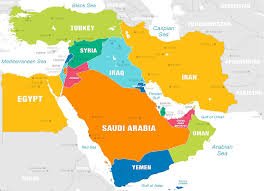
The Middle East presents an equally volatile picture. Israel’s military operations have expanded well beyond Gaza, and the prospect of another confrontation with Iran is gaining momentum. European leaders have adopted increasingly confrontational rhetoric, while Washington has imposed new penalties on countries trading with Tehran. China’s response—warning that tariff wars have no winners—suggests the potential revival of US-China economic hostilities, with predictable negative consequences for global growth.
Even seemingly distant developments, such as speculation over a US move to take control of Greenland, point to a world where power politics is increasingly unrestrained. Such ambitions may appear detached from economic forecasting, yet history shows that geopolitical overreach often carries profound economic costs.
Against this global backdrop, the World Bank’s country-level projections also merit scrutiny. Pakistan’s projected GDP growth of 3 percent reflects continued adherence to tight monetary and fiscal policies agreed with the International Monetary Fund. While macroeconomic stability is essential, the human and industrial cost of prolonged contraction cannot be ignored. High interest rates, well above regional averages, have already forced large-scale closures in the manufacturing sector, particularly textiles. Achieving the projected growth rate without easing these pressures appears increasingly unrealistic.
Compounding Pakistan’s challenges is India’s continued violation of the Indus Waters Treaty, a development with potentially severe consequences for agriculture, food security, and rural livelihoods. Such structural risks rarely feature prominently in headline growth figures but can have lasting effects on economic and social stability.
In conclusion, the World Bank’s optimism rests on a narrow definition of resilience—one that underestimates the cumulative impact of sanctions, wars, and geopolitical brinkmanship. Advanced Western economies, increasingly reliant on economic coercion as a policy tool, may find their own growth slipping below 2 percent. Should any of today’s conflicts expand further—and the trajectory suggests that risk is rising—the resulting shock could push the global economy from sluggish growth into outright contraction.
The numbers may hold for now, but the foundations beneath them are cracking. Without de-escalation, cooperation, and a retreat from the weaponization of trade and finance, global growth forecasts may soon give way to far harsher economic realities.