
Mubashar Nadeem
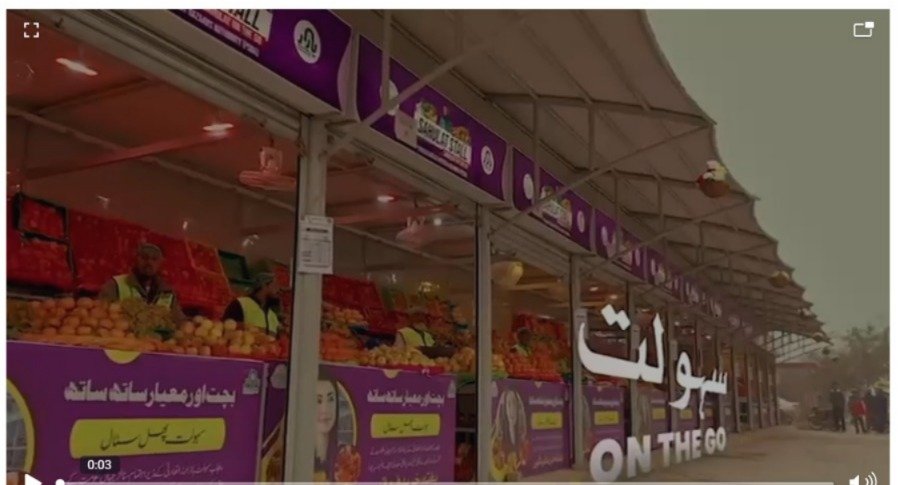
Punjab’s first-ever Sahulat On-the-Go Bazaar has quickly become a symbol of a changing approach to urban governance in Lahore, one that combines consumer relief with social dignity for street vendors. Introduced on the directives of Chief Minister Punjab Maryam Nawaz Sharif, the initiative reflects an effort to institutionalise affordability, order, and inclusion within the city’s everyday economic life. By offering essential food items at officially notified DC rates while formalising informal livelihoods, the project represents a notable shift from reactive governance to structured urban welfare.
At its core, the Sahulat On-the-Go Bazaar seeks to address two long-standing urban challenges simultaneously. On one hand, rising inflation and market volatility have eroded the purchasing power of ordinary citizens, making access to affordable food a persistent concern. On the other hand, thousands of street vendors—often treated as encroachments rather than contributors to the urban economy—have struggled to earn livelihoods under precarious and undignified conditions. This initiative brings both groups into a regulated, mutually beneficial framework.
More than 400 vendors have been allotted stalls through a transparent open balloting process, ensuring fairness and reducing opportunities for political favouritism. For vendors who previously operated pushcarts or temporary roadside setups, the move into properly designated stalls marks a significant social upgrade. Many have described the transition as life-changing, noting that they are no longer vulnerable to eviction drives, harassment, or weather extremes. Instead of being pushed out of the cityscape, they have been formally absorbed into it.
In its first phase, ten Sahulat On-the-Go Bazaars have become operational across Lahore, including areas such as Gulshan Ravi, Shadman, Madar-e-Millat Road, Township, Faisal Town, Sundar Road, Madina Market, and Kotha Pind. Additional locations including Kharak Nala, Awan Town, Valencia, and Shahdara have further extended the project’s reach. This geographic spread reflects an intention to ensure city-wide access rather than confining the initiative to select neighbourhoods.
The bazaars provide fruits, vegetables, chicken, and grocery items strictly at DC-notified rates, insulating consumers from price manipulation and speculative profiteering. Beyond pricing, the design of the bazaars focuses on convenience and hygiene—two areas where traditional informal markets often fall short. Facilities such as clean washrooms, organised waste disposal, sanitation services, security arrangements, and even drive-through shopping options have been incorporated. These features not only enhance the consumer experience but also elevate the overall image of public markets in the city.
Officials have confirmed that the project is far from complete. By February, five more On-the-Go Bazaars are expected to become functional in Lahore, while work at locations including Barki, Sadar, Nishtar Town, Raiwind Phase II, Moon Market, Faisal Town, and Ferozewala is nearing completion. The phased expansion suggests an intent to refine the model based on initial feedback before scaling it further—a prudent approach in public sector innovation.
For Chief Minister Maryam Nawaz Sharif, the project carries both practical and symbolic value. She has described the Sahulat On-the-Go Bazaar as an extension of the vision of Quaid Muhammad Nawaz Sharif for a clean, organised, and humane Lahore. Emphasising that genuine development must benefit the hardworking poor, she has highlighted the dignity restored to vendors who can now proudly say they own a shop. Her remarks underscore a political narrative that frames urban order not as exclusion, but as structured inclusion.
The initiative also marks a departure from past approaches that relied heavily on seasonal interventions, particularly Ramazan bazaars. According to the chairman of the Punjab Sahulat Bazaar Authority, year-round access to affordable essentials through On-the-Go Bazaars could significantly reduce the need for large-scale subsidies during Ramazan. This shift has important fiscal implications, as it allows the government to move from short-term relief measures to sustained market regulation.
From a governance perspective, the project offers a workable model for managing informal economies without criminalising them. Rather than displacing street vendors in the name of beautification, the state has chosen to integrate them into a planned commercial framework. This approach aligns with global best practices in urban management, where informal workers are increasingly recognised as stakeholders rather than obstacles.
Critically, the success of the Sahulat On-the-Go Bazaar will depend on consistent enforcement of pricing rules, transparency in future stall allocations, and long-term maintenance of facilities. If these standards slip, the model risks devolving into another short-lived scheme. However, early indicators—public footfall, vendor satisfaction, and administrative backing—suggest that the initiative has struck a positive chord.
As Punjab grapples with inflation, unemployment, and urban stress, the Sahulat On-the-Go Bazaar stands out as a practical example of how thoughtful policy design can deliver economic relief while restoring dignity to labour. If expanded across Punjab with integrity and accountability, it could redefine how the state engages with both consumers and the informal workforce, turning everyday marketplaces into instruments of inclusive development rather than sites of conflict.