
Rizwan Mudassir
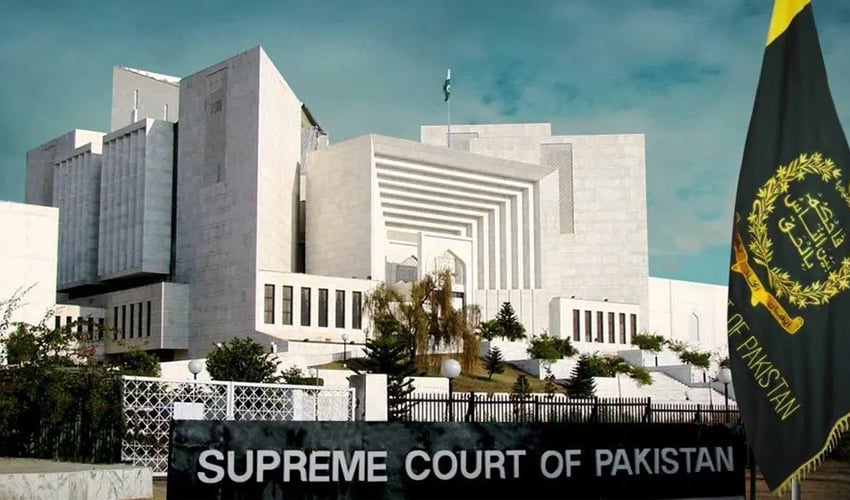
The Supreme Court is currently grappling with a complex issue of jurisdiction, with particular focus on the formation of benches and the allocation of cases. A major point of contention is the ambiguity surrounding which cases should be heard by the regular benches of the apex court and which should be handled by the newly established constitutional court. This confusion has been amplified by the recent enactment of the 26th Constitutional Amendment, which has blurred the lines of distinction between these two entities. As a result, the Supreme Court (Practice and Procedure) Act 2023 has come under intense scrutiny, raising questions about the judicial process and the division of power within the court.
A key area of debate among the justices revolves around the writ process and the frequent reshuffling of judges between benches. This ongoing issue has prompted the senior-most judge to express concerns about the erosion of judicial independence, stating that, “if the [three-judge] committee is taking back ongoing cases, then the judiciary’s independence has ended.” Such statements highlight the growing anxiety within the judiciary regarding the shifting balance of power and the potential impact on the institution’s autonomy.
The matter first came to the forefront when a case originally scheduled for a regular bench was transferred to the constitutional bench, sparking a debate among senior judges about whether regular benches of the court can rule on the constitutionality of Article 191A. This particular article pertains to the creation of the constitutional bench following the passage of the 26th Amendment. Experts suggest that this disagreement could escalate into a full court reference, with judges becoming divided over the interpretation of the law, which would further strain the cohesion of the judiciary.
A two-member bench, led by Justice Mansoor Ali Shah, is set to address this issue by ruling on the frequent changes in bench composition and determining who should preside over specific cases. This decision is seen as a pivotal moment in the ongoing debate over the allocation of judicial responsibilities and the independence of the judiciary.
For Chief Justice Yahya Afridi, the challenge is clear: he must work to maintain unity within the superior judiciary. The introduction of the 26th Amendment has undeniably caused fractures within the court, and the creation of a parallel constitutional court to address constitutional matters is at the heart of the controversy. As the judicial system confronts these divisions, the judiciary’s role in ensuring the legality of its decisions has come under increased scrutiny. The suspension of a judicial officer accused of bureaucratic interference in the court’s domain further complicates the situation, raising questions about the separation of powers and the influence of external forces on judicial proceedings.
It is crucial for the judiciary to review the implications of the recent legislation, particularly in relation to the 26th Constitutional Amendment, to ensure that the principles of constitutional supremacy are upheld. The legal community is closely monitoring these developments, as the resolution of these issues will have significant consequences for the future of the judiciary and its relationship with the legislative and executive branches of government.
At the heart of this dilemma is the question of whether the judiciary, in its current state, is equipped to handle the evolving challenges of constitutional law and the interpretation of new amendments. The controversy over the constitutional bench and the shifting of cases between benches raises broader concerns about the capacity of the judicial system to maintain its independence in the face of political pressures and legislative reforms. While the creation of a constitutional court was intended to streamline the judicial process and address constitutional matters more effectively, it has instead raised questions about the court’s internal structure and the proper distribution of jurisdiction.
The recent turbulence within the Supreme Court reflects a larger struggle for control over constitutional interpretation. As the judicial system faces increasing pressure from both internal and external sources, the question remains whether the court can reconcile these competing interests without compromising its autonomy. The introduction of the constitutional bench, while intended to clarify constitutional issues, has inadvertently deepened the divide within the court, as different factions interpret the amendments and their implications differently.
Pl watch the video and subscribe to the YouTube channel of republicpolicy.com
In light of these challenges, the judiciary must ensure that it remains steadfast in its commitment to the rule of law and the principles of justice. This may require a reevaluation of the recent amendments, particularly the 26th Constitutional Amendment, and a clear delineation of the roles and responsibilities of the various benches within the court. Only by addressing these issues directly can the Supreme Court restore confidence in its ability to administer justice impartially and uphold the integrity of the constitution.
Moreover, the public perception of the judiciary’s independence is at stake. If the ongoing disagreements within the court are not resolved, there is a real risk that the public will lose faith in the judicial system’s ability to act as an impartial arbiter of the law. This would not only undermine the legitimacy of the court but also weaken the overall structure of governance, which relies on a balanced separation of powers.
The resolution of these jurisdictional issues is therefore crucial not only for the functioning of the Supreme Court but for the broader health of Pakistan’s democratic institutions. It is imperative that the judiciary works towards a resolution that respects the independence of the courts while also ensuring that constitutional matters are handled with the seriousness they deserve. This will require a careful balancing act, where legal principles take precedence over political considerations, and where the judiciary reasserts its role as an independent and effective check on government power.
In conclusion, the jurisdictional crisis facing the Supreme Court is a complex issue that requires careful consideration and swift action. The establishment of the constitutional bench, the frequent changes in bench compositions, and the ongoing debate over the 26th Constitutional Amendment all contribute to a sense of uncertainty within the judiciary. The government and legal experts alike must work to clarify these issues, ensuring that the judicial system can function effectively while maintaining its independence. Only through open dialogue, transparent legal processes, and a commitment to constitutional principles can the Supreme Court navigate this challenging moment in its history.