
Hira Tariq Javed
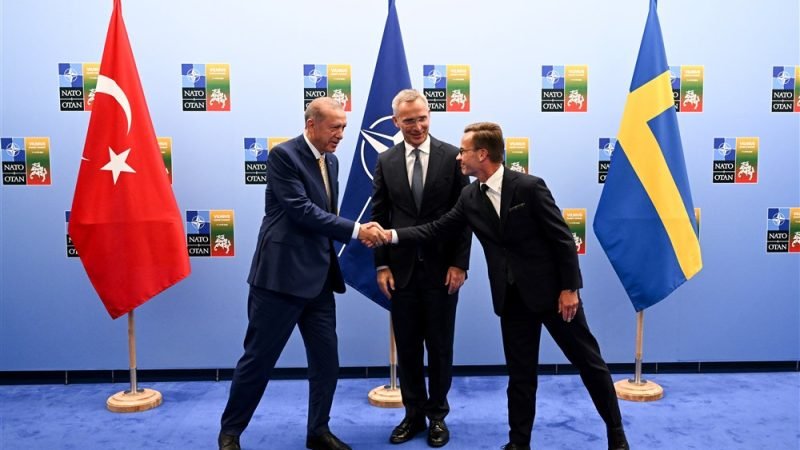
As Nato leaders converge in Vilnius, Lithuania, on Tuesday, a contentious question looms large: how should the transatlantic alliance approach Ukraine’s pursuit of membership? President Volodymyr Zelensky and his compatriots are fervently lobbying Nato members, seeking the coveted club status. However, within the Western camp, a profound unease exists. While expressions of ‘unity’ and ‘solidarity’ with Ukraine are professed, the uncomfortable truth remains that embracing Kyiv would ignite a direct war with Russia — a cataclysm of unimaginable consequences, capable of engulfing Europe in conflict.
On the surface, Western states maintain the official stance that Ukrainian membership can only be contemplated once the war with Russia concludes. Privately, though, there is a palpable understanding that any admission of Kyiv into the alliance, be it now or in the future, would inevitably lead to a perilous confrontation with a nuclear-armed Moscow. Article 5 of the North Atlantic Treaty underscores the principle of collective defense, meaning that if Ukraine were to become a Nato member and hostilities with Russia persisted, other member states would be bound to intervene directly in defense of Kyiv. Such a scenario is fraught with complexities and risks, casting a shadow of apprehension over Western capitals.
The gravity of the situation cannot be underestimated. Granting Ukraine membership in Nato would fundamentally alter the geopolitical landscape, potentially triggering a chain reaction that escalates tensions and perpetuates a cycle of violence. The sobering reality is that the current conflict pales in comparison to the catastrophic ramifications of a direct confrontation with Russia. The devastation would be felt not only in Ukraine but also reverberate throughout Europe, casting a dark cloud of uncertainty over the continent’s future.
While the Ukrainians passionately pursue their aspirations of Nato membership, Western leaders find themselves entangled in a precarious balancing act. On one hand, they genuinely sympathize with Ukraine’s aspirations and acknowledge the importance of unity in the face of Russian aggression. On the other hand, they grapple with the profound repercussions and potential human cost that a confrontation with Russia would entail.
Strategic calculations must be made, weighing the immediate interests of Ukraine against the long-term stability of the region. The Western camp, despite rhetorical commitments, recognizes that the current state of affairs demands caution and a pragmatic approach. It is a delicate dance between standing in solidarity with Ukraine and safeguarding the broader interests of the transatlantic alliance.
Ultimately, a delicate compromise must be struck—one that provides reassurance to Ukraine while ensuring the collective security and stability of the region. This may involve intensified diplomatic efforts, bolstered economic support, and a robust presence of deterrence measures to dissuade further Russian aggression. An alternative path lies in pursuing avenues of de-escalation, engaging in meaningful dialogue, and seeking diplomatic solutions that promote peace and cooperation.
The uncomfortable reality is that the question of Ukraine’s Nato membership is not merely a strategic puzzle; it encompasses the lives, livelihoods, and futures of millions. Prudence and circumspection must guide the deliberations of Nato leaders, as they weigh the potential consequences and strive to strike a delicate balance that safeguards the interests of all stakeholders involved.
In Vilnius, a challenging and consequential chapter in the transatlantic alliance’s history unfolds. The decisions made will shape the future not only for Ukraine but for the entire region. It is a moment that calls for astute leadership, careful consideration, and a steadfast commitment to preserving peace and stability in Europe.
Don’t forget to Subscribe our channel & Press Bell Icon.
Amidst the intricate geopolitical dynamics at play, the Western bloc finds itself engaged in a calculated game in Ukraine. Seizing upon Russia’s ill-conceived incursion into its western neighbor, Nato states craftily exploit the situation to chip away at Moscow’s resolve. The United States, for instance, has cunningly approved the delivery of cluster munitions to Kyiv, despite acknowledging the inherent risk to civilian lives. This contentious decision has faced opposition from Germany and even drawn criticism from the UN Secretary-General. These weapons, alongside a parade of sophisticated armaments, have flooded the Ukrainian battleground, masquerading as tools to teach Russia a ‘lesson’. While the likelihood of a direct clash between the West and Russia looms larger, extending a formal invitation to Ukraine to join Nato would undoubtedly escalate tensions further. Hence, issuing the invitation in Vilnius would be a perilous step, exacerbating the crisis and imperiling the security of Europe and beyond.
The complexity of the situation demands a prudent approach. It is vital to recognize that the mounting Nato threat, along with its arsenal stationed near Russia’s borders, served as a key catalyst for Vladimir Putin’s audacious invasion. In such a charged environment, extending an invitation to Ukraine would only plunge the region deeper into turmoil, potentially shattering the fragile equilibrium. The security of Europe hangs in the balance, requiring astute navigation of the intricate web of alliances and rivalries.
While Nato states may be tempted to push the boundaries, it is crucial to acknowledge the far-reaching consequences of their actions. The delivery of advanced weaponry already heightens the risk of direct confrontation. A formal invitation to Ukraine would push the proverbial envelope to its breaking point, culminating in an escalation that spells disaster for the entire region. A prudent path forward lies in strategic restraint, pursuing diplomatic channels, and fostering dialogue that seeks to deescalate tensions rather than stoke the flames of conflict.
The cunning game being played by the Western bloc must be carefully reconsidered. While the desire to curtail Russian aggression is understandable, the potential fallout of an invitation to Ukraine demands a sober evaluation of the risks involved. A wiser approach lies in prioritizing stability and long-term security over short-term gains. It requires a delicate balance between supporting Ukraine’s aspirations for security and charting a course that avoids triggering a larger-scale confrontation.
The global stage is set for a high-stakes performance, with Ukraine at its epicenter. Each move carries profound implications, not only for the parties directly involved but for the entire international community. Careful consideration and thoughtful action are imperative as leaders gather in Vilnius. The decisions made in this critical juncture will reverberate far beyond the borders of Ukraine, shaping the future of Europe and global security.
In navigating these treacherous waters, it is essential to transcend narrow perspectives and prioritize the greater good. The complexities of the situation necessitate collaborative diplomacy, robust dialogue, and a steadfast commitment to finding peaceful resolutions. Short-sighted actions that fuel confrontation will only exacerbate the crisis and perpetuate the cycle of violence.
As the spotlight falls on Vilnius, the world watches with bated breath. The pursuit of security, stability, and a harmonious coexistence is paramount. The road ahead is fraught with challenges, but with wisdom, prudence, and a genuine commitment to peace, the international community can chart a course that preserves the delicate equilibrium and safeguards the aspirations of all involved.
Subscribe our website for latest updates:
https://republicpolicy.com/shop/
Read More