
Zafar Iqbal
There is a particular kind of applause that greets every announcement of foreign financial support for Pakistan. It is genuine in its relief, understandable in its context, and yet, if one pauses long enough to look past the headline numbers, it carries within it a quiet anxiety that no press release ever quite addresses. The Asian Development Bank’s latest commitment, a $10 billion financing strategy spread across five years as part of a broader $20 billion Country Partnership Strategy over a decade, is welcome. It is also a mirror held up to an economy that has been borrowing to breathe for the better part of its existence as an independent state.
Let us acknowledge what is genuinely good news. Pakistan’s economy has been clawing its way back from the edge. Inflation, which had turned everyday life into an act of financial survival for millions of ordinary citizens, has fallen to 4.5 percent in the current fiscal year. Foreign exchange reserves have crossed $21 billion, a figure that would have seemed improbable not long ago when the country was scrambling to meet monthly import bills. The government deserves honest credit for the discipline, however painful, that produced these outcomes. Stabilisation of this kind does not happen without cost, and the cost in this instance was borne largely by the Pakistani people through a period of genuine hardship.
But stabilisation is not transformation. And it is precisely here, at the boundary between relief and reform, that Pakistan’s story becomes more complicated and more troubling.
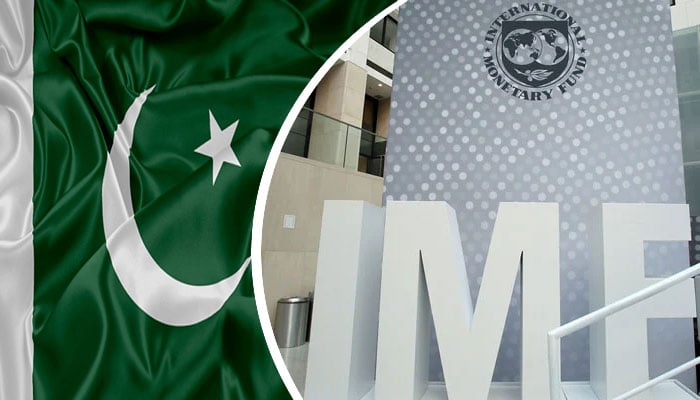
The ADB commitment, for all its welcome substance, also illuminates a structural reality that cannot be wished away with optimistic language. Pakistan’s total external debt now exceeds $130 billion. Nearly one-third of that staggering sum is owed to multilateral institutions, the very category of lender that the ADB represents. More telling still is Pakistan’s relationship with the International Monetary Fund, a relationship that has become so habitual as to be almost definitional. Pakistan has entered twenty-three IMF programmes since independence, a number that stands without parallel among Asian economies. The country currently owes the Fund approximately $9 billion, placing it among the four largest debtors in the Fund’s entire global portfolio and accounting for nearly half of all IMF outstanding loans across Asia. These are not statistics to be cited and set aside. They are a diagnosis.
The question that honest economic analysis demands is this: why, after seven decades of state-building, international engagement, and periodic episodes of growth, does Pakistan still need to borrow in order to build basic infrastructure? Countries that were once considered Pakistan’s peers, nations that faced comparable challenges of underdevelopment, colonial legacy, and political instability, have long since reached the point where they can finance their own growth from domestic resources. They have built the tax bases, the industrial foundations, and the institutional competence that allow them to plan and invest without going, hat in hand, to multilateral lenders every few years. Pakistan has not made that journey. The gap between where Pakistan is and where those peers now stand is not merely a matter of missed opportunity. It is a consequence of decisions deferred, reforms avoided, and electoral calculations placed above national interest across successive governments and generations of leadership.
The taxation picture tells a significant part of this story. Pakistan recently crossed a tax-to-GDP ratio of ten percent for the first time in twenty-five years. This was presented, quite reasonably, as a milestone. But milestones must be measured against destinations, and when the same ratio in comparable economies sits comfortably between fifteen and twenty percent or higher, the milestone starts to look less like an achievement and more like a reminder of how far there is still to travel. A tax base this narrow makes self-financing of public goods and infrastructure nearly impossible. It forces the government into a perpetual cycle of either borrowing from external sources or entering public-private partnership arrangements that may serve investor returns more reliably than they serve the public interest. Neither path leads to the kind of autonomous economic decision-making that development ultimately requires.
There is a concept that a growing number of serious economists are now advancing in the context of Pakistan, and it deserves to be taken seriously by policymakers rather than treated as academic abstraction. The argument is that external support from institutions like the ADB or the IMF must cease to function as a substitute for domestic resource mobilisation and begin to function as a complement to it. The distinction is not semantic. When external borrowing substitutes for domestic reform, it provides just enough oxygen to keep the patient alive without addressing the underlying condition. The debt accumulates, the dependency deepens, and each new programme arrives to manage the consequences of the one before it. When external borrowing complements a genuine domestic effort to widen the tax base, redirect subsidies, build productivity, and create the conditions for private investment and export growth, it can serve a genuinely catalytic purpose. The money does not change. The intention behind it does.
What Pakistan needs, and what has eluded it for most of its history, is an economic framework that outlasts the political cycle. Economic decisions in Pakistan have too often been made with an eye on the next election rather than the next generation. Stabilisation programmes are undertaken under external pressure, their most difficult elements are implemented just long enough to secure the tranche, and then the pressure eases and the reform momentum dissipates. Productivity remains low. The export base remains narrow. The consumption-driven growth model continues to suck in imports and drain reserves. And then the next crisis arrives, and the next programme begins.
The ADB’s ten-year partnership, if structured thoughtfully and conditioned on genuine institutional reform rather than simple project disbursement, could be different. But that difference will not be created by the lender. It must be created by Pakistan itself, through a political consensus on long-term economic direction that has never quite materialised. The financing is available. The question, as it has always been, is whether the will to use it wisely is available too.