
Arshad Mahmood Awan
When the World Food Programme warns that forty-five million more people will be pushed into acute hunger within the next three months, the statement demands more than a passing headline. It demands an accounting. Not merely of logistics or supply chains or commodity prices, but of the political decisions that led directly to this moment. Famines of this kind do not arrive without authorship. Someone writes them. And in this case, the names are not difficult to find.
The coming hunger crisis is not a natural disaster. There is no drought to blame, no plague of locusts, no earthquake that disrupted harvests. This is a man-made catastrophe, constructed piece by piece through deliberate choices made at the highest levels of American and Israeli power. Donald Trump and Benjamin Netanyahu, both of whom carry the distinction of being credibly described as among the most corrupt leaders their respective countries have ever produced, have between them created the conditions for a global food emergency. The war they have unleashed on Iran, whatever its stated justifications, is rapidly becoming one of the most consequential acts of geopolitical arson in recent memory. Its flames are spreading far beyond the region, and the people who will suffer most had no voice in its making.
There is a pattern worth examining here. Both Trump and Netanyahu face serious legal and political pressures at home. Netanyahu has been under criminal indictment for years, navigating a coalition government held together by ideological extremists who demand escalation as the price of their continued support. Trump, likewise, has spent years in the courts and in the headlines fighting battles that threatened to overshadow his return to power. A war, particularly one marketed as a decisive confrontation with a long-designated enemy, has the convenient effect of pushing those domestic problems out of the news cycle. Whether this calculation was explicit or merely opportunistic, the result is the same. Two leaders with strong personal incentives to keep the world’s attention focused elsewhere have found a war to serve that purpose.
What they did not plan for, or chose to ignore, is that Iran did not simply collapse. The expectation, articulated openly by those around both leaders, was that the regime would capitulate quickly under the weight of Israeli and American military superiority. That has not happened. Iran has sustained heavy losses, and the costs of the campaign have been real and significant. But the regime endures, and with each passing day that it does, the narrative of swift decisive victory erodes further. For the architects of this war, that is an embarrassment. For the world, however, the persistence of the conflict means that its economic consequences continue to deepen with no clear endpoint in sight.
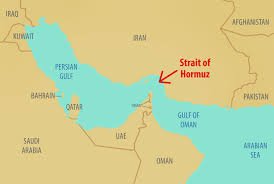
The shipping collapse triggered by hostilities in and around the Gulf is not a secondary effect to be mentioned in a footnote. It is one of the central mechanisms by which this war is producing hunger on the other side of the world. Global food supply chains depend on maritime routes that are now disrupted, delayed, or avoided entirely by carriers unwilling to absorb the insurance costs and physical risks of operating in a conflict zone. The surge in fossil fuel prices that has accompanied the war compounds this directly. Fuel costs are embedded in every stage of food production and transportation, from the farming equipment in the field to the refrigerated containers on the dock. When fuel becomes expensive, food becomes expensive. And when food becomes expensive in countries where the poor already spend the majority of their income on eating, the consequences are not measured in inconvenience. They are measured in starvation.
There is a further layer of damage that preceded the first bomb. Before the war began, the United States had already made the deliberate decision to slash foreign assistance, including food aid contributions and funding to international programmes designed to support the most vulnerable populations on earth. Those cuts were not made in a moment of crisis. They were policy choices, taken calmly and proudly, as part of a broader ideological project of American retrenchment from global responsibilities. The result is that when this war began to drive food prices upward and disrupt supply routes, the safety net that might have caught the most vulnerable was already in tatters. There was less capacity to absorb the shock precisely because that capacity had been deliberately dismantled.
The expansion of the war to include attacks on oil and gas infrastructure makes the timeline of recovery far longer than even pessimistic analysts initially projected. Oil and gas facilities are not repaired quickly. The supply chains for fertiliser, which is produced in large part from natural gas, will remain disrupted for years as production capacity is rebuilt. This means that the agricultural consequences of this war will extend well beyond any ceasefire. Farmers across Africa and Asia who cannot afford fertiliser at current prices will plant less, yield less, and feed fewer people. The hunger this war creates will not end when the shooting stops.
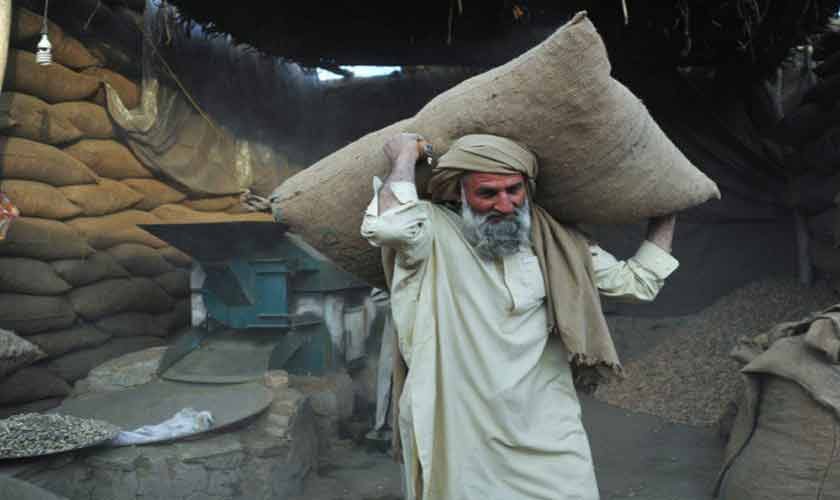
There is a cruelty in the distribution of this suffering that must be named plainly. Israelis may occasionally experience the anxiety of an explosion within their borders, a consequence of Netanyahu’s adventurism that at least carries some element of shared risk. Americans will see inflation rise modestly, feel it at the supermarket, and complain. But the people who will bear the full and savage weight of this war’s food consequences are the poor of Africa and Asia, those for whom a thirty percent rise in grain prices is not an annoyance but a sentence, and for whom cooking fuel becoming unaffordable is not a hardship but a humanitarian collapse. They did not vote for this war. They have no representation in its planning. They will pay for it with their lives.
What makes the situation still more dangerous is the absence of any coherent strategy from the American side. Trump’s critics have long observed that he operates without an endgame, reacting to events rather than shaping them, improvising where architecture is required. In peacetime, that approach produces disorder. In a war with global economic consequences, it produces something far worse. Humanitarian agencies cannot plan relief operations around a leader who cannot be relied upon to follow any consistent logic. Countries cannot build contingency frameworks when the central actor in the crisis might reverse course tomorrow or escalate further without warning. The world is being asked to hope that a man with no discernible strategy will eventually stumble toward de-escalation. History offers little comfort on that front.
Forty-five million people are on the edge. The architects of their hunger have names and addresses. That fact should not be forgotten.