
Hafeez Ahmed Khan
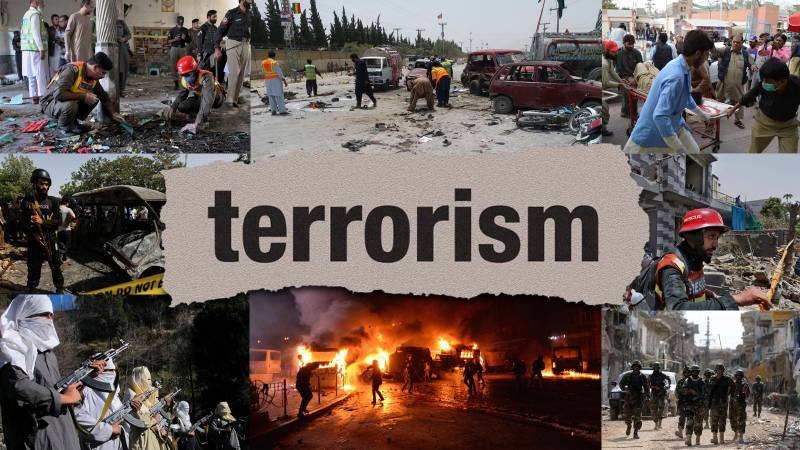
There are weeks in Pakistan’s security calendar that read less like news bulletins and more like casualty registers. This has been one of those weeks. A suicide bomber in Bajaur. An explosion outside a police station in Bannu. A coordinated attack on a police station and customs office in Dera Ismail Khan, followed by gunfire on passenger buses carrying ordinary citizens going about their lives. Twelve dead in Bajaur alone, eleven of them security personnel and one a minor girl who had nothing to do with any war. Two more dead in Bannu. Officers martyred in Dera Ismail Khan. The numbers accumulate with a numbing regularity that should disturb every Pakistani who is paying attention.
The Bajaur attack bears particular weight. A suicide bomber, reportedly belonging to the banned Tehrik-i-Taliban Pakistan, walked into a checkpost and detonated himself among the men stationed there to protect the surrounding population. This is not a random act of criminal violence. It is a deliberate, calculated assault on the state’s presence in one of the country’s most vulnerable regions. The TTP has demonstrated, repeatedly and without ambiguity, that it intends to contest the writ of the Pakistani state through sustained and escalating violence. The question is whether the Pakistani state is responding with equivalent seriousness and sustained strategic clarity.
Prime Minister Shehbaz Sharif, responding to the Bajaur attack, offered a statement that has become almost a ritual in the aftermath of such incidents. He pointed to the Azm-i-Istehkam operation and asserted that security forces are achieving “major success” in the fight against terrorism. There is no reason to doubt that operations are ongoing, or that security forces are performing with courage and dedication under extraordinarily dangerous conditions. But a statement about major success rings hollow when, in the same breath, one must acknowledge that last year was described as the bloodiest year for terrorism in over a decade. Success measured in operational terms must eventually translate into reduced violence on the ground. Until it does, the language of victory feels premature and, to the families of the martyred, deeply inadequate.
The geography of this violence tells its own story. Khyber Pakhtunkhwa bears the heaviest burden by far, with Bajaur, Bannu, and Dera Ismail Khan all recording attacks within the span of days. But the problem is not confined to one province. Earlier this month, an imambargah in Islamabad was attacked, bringing the violence into the federal capital itself and producing casualties among worshippers who had gathered in a place of prayer. Before that, coordinated attacks struck Balochistan. The threats differ in their ideological character: separatist violence in Balochistan, religiously motivated militancy in KP, and the ever-present danger of spillover into urban centres. What they share is a common purpose, which is to demonstrate that the Pakistani state cannot protect its own citizens in their homes, their houses of worship, and on the roads they travel every day.
This breadth of threat demands a response that is equally broad and equally serious. A counterterrorism strategy that addresses only one front while another remains poorly managed is not a strategy at all. It is triage, and triage is not a permanent solution. Pakistan needs a genuine national-level response, one that is coordinated across federal and provincial lines, sustained across political cycles, and honest about the complexity of what it faces.
There has been some movement in this direction. The KP provincial government and the federal centre have recently shown a degree of cooperation on counterterrorism that had previously been absent, particularly given the political tensions between Islamabad and Peshawar. This cooperation is welcome and necessary. KP is the hardest hit province in the country, and it cannot be expected to manage an insurgency of this scale with provincial resources and political will alone. Federal support, both in terms of resources and strategic coordination, is not optional. It is essential.
But cooperation between two levels of government, however necessary, is not sufficient on its own. A genuine whole-of-nation approach means something more demanding than coordination between executives. It requires the legislature to engage seriously with counterterrorism legislation and oversight rather than treating security as an issue to be delegated entirely to the military and intelligence apparatus. It requires counterterrorism experts and analysts to be brought into policymaking conversations rather than left to comment from the outside. It requires sociopolitical interventions in the regions where militant recruitment and radical ideology take root, because no kinetic operation, however successful in the short term, can permanently eliminate violence if the underlying conditions that generate it remain unaddressed.
The distinction between military operations and intelligence-based operations on one hand, and sociopolitical intervention on the other, is not merely academic. Communities in Bajaur, in Bannu, in the tribal belt that has borne the weight of this conflict for two decades, are not merely passive victims of terrorism. They are also the potential partners of the state in building lasting security, if the state demonstrates that it is present in their lives not only in the form of checkposts and operations, but in the form of schools, courts, economic opportunity, and responsive governance. When the state is absent except in its security function, the space it leaves behind is filled by those who offer an alternative order, however violent and coercive that alternative may be.
Pakistan has heard versions of this analysis before. The frameworks exist. The language of comprehensive counterterrorism strategy, combining hard power with soft power, kinetic operations with development, military presence with political inclusion, is well established in policy circles. What has been consistently lacking is the political will and institutional discipline to implement such a strategy coherently and continuously, across government transitions and shifting political priorities.
The dead of Bajaur, of Bannu, of Dera Ismail Khan, of the Islamabad imambargah deserve better than a response that ends with a press statement and resumes with the next attack. They deserve a state that takes their sacrifice and their loss with the full seriousness it demands. That means not just mourning the martyred. It means building, finally, a response equal to the threat.