
Hafeez Ahmed Khan
The Supreme Court’s recent hearing on disqualification in Pakistan lays bare a labyrinthine puzzle, intertwined with legal contradictions, political machinations, and the looming shadow of the upcoming elections. This analysis delves deeper into the complexities of this issue, exploring its historical roots, potential consequences, and avenues for reform.
1. From Zia to the Ballot Box: Tracing the Disqualification’s Lineage
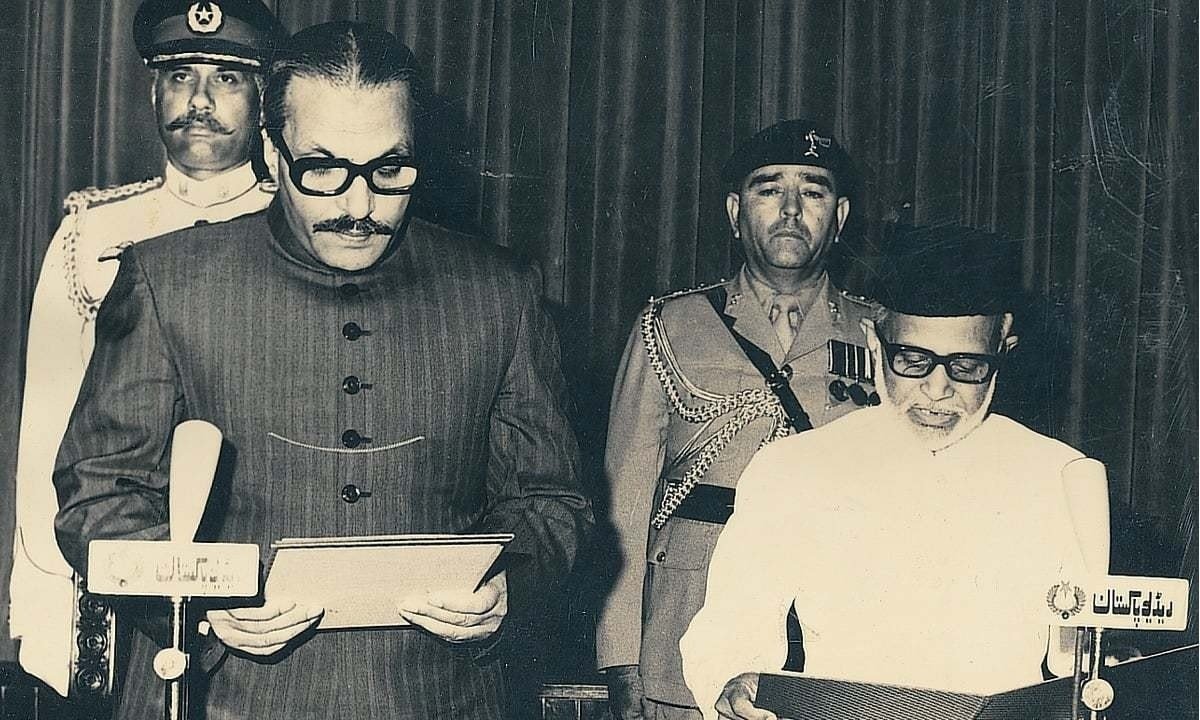
The origin story of Article 62(1)(f) is itself contentious. Inserted during the Zia era, it was initially wielded as a political weapon to purge opponents. While intended to uphold ethical standards, its vagueness, particularly around terms like “good character,” created fertile ground for subjective interpretations and selective targeting.
2. Clashing Titans: Judicial Pronouncements vs. Legislative Will
The Panama Papers case marked a turning point. The Supreme Court, invoking Article 62(1)(f), imposed lifetime disqualifications, setting a stark precedent. Parliament countered through an Elections Act amendment, limiting the disqualification period to five years. This clash between judicial pronouncement and legislative will lies at the heart of the current conundrum.
3. Beyond Legal Technicalities: The Political Quagmire
The disqualification debate transcends legal minutiae. Politicians see it as a tool for both self-preservation and elimination of rivals. The upcoming elections heighten the stakes, with disqualifications potentially altering the electoral landscape and impacting party fortunes. This intertwining of legal intricacies with political calculations muddies the waters further.
4. Consequences Galore: A Ripple Effect beyond the Courtroom
The Supreme Court’s decision will have far-reaching repercussions. A lifetime disqualification could disenfranchise voters and undermine fair representation. Conversely, a five-year limit might be perceived as diluting ethical standards and undermining the Constitution’s intent. Public trust in the electoral process and the legitimacy of the elected government hang in the balance.
5. Beyond Adjudication: Charting a Path towards Reform
To navigate this labyrinth, mere pronouncements from the apex court are insufficient. A multi-pronged approach is required:
- Constitutional Clarity: Amending the Constitution to clearly define the disqualification criteria and duration is crucial for eliminating ambiguity and arbitrariness.
- Independent Oversight: Establishing an independent vetting body to objectively assess candidates’ qualifications could depoliticize the process and enhance trust.
- Strengthening Civil Society: Empowering civil society organizations to monitor the disqualification process and hold institutions accountable can safeguard against manipulation and ensure transparency.
The disqualification debate is not just a legal quagmire; it is a crossroads for Pakistan’s democracy. The Supreme Court’s decision will resonate far beyond the courtroom, shaping the future of Pakistani politics and the very legitimacy of its electoral process. Choosing a path that prioritizes clarity, fairness, and institutional integrity is the only way to emerge from this labyrinth and strengthen the foundations of a truly democratic Pakistan.
Furthermore, the Supreme Court of Pakistan’s recent hearing on the issue of lifetime disqualification paints a complex picture of legal contradictions, political implications, and the need for a swift resolution before the upcoming elections. Here’s a detailed analysis:
The Disqualification Conundrum:
- Conflicting Interpretations: The core issue revolves around the interpretation of Article 62(1)(f) of the Constitution, which sets eligibility requirements for candidates. The Constitution remains silent on the duration of disqualification, leading to conflicting interpretations.
- Judicial vs. Legislative Disagreements: A Supreme Court decision in the Panama Papers case declared lifetime disqualification for violations of Article 62(1)(f), while Parliament, through an amendment to the Elections Act, set the period to five years. This creates a clash between judicial pronouncements and legislative will.
- Political Stakes: The issue is politically charged, with implications for the upcoming elections. The duration of disqualification can impact the eligibility of various candidates and potentially influence the electoral landscape.
Key Points from the Hearing:
- Supreme Court’s urgency: Chief Justice Isa emphasized the need for a quick resolution to avoid confusion for election officials. The court aims to conclude the case before the January 11th deadline.
- Attorney General’s Argument: The Attorney General called for revisiting the lifetime disqualification ruling and aligning with the five-year limit set by the Elections Act. He cited inconsistencies and the need for legal harmony.
- Divergent Stances: While some petitioners supported lifetime disqualification, others, including the provincial advocate generals, aligned with the Attorney General’s position. This highlights the lack of consensus and the complexity of the issue.
- Constitutional considerations: The CJP raised concerns about the subjective nature of some criteria in Article 62(1)(f), such as “good character.” He questioned the feasibility of assessing such qualities objectively.
- Historical context: The discussion delved into the evolution of Article 62(1)(f) and raised questions about the character of historical figures. This underscores the historical and political context surrounding the disqualification clause.
Challenges and Implications:
- Legal ambiguity: The lack of clarity in the Constitution and the conflicting interpretations create legal uncertainty for candidates and election officials.
- Political influence: The potential for political maneuvering and manipulation around the disqualification issue poses a risk to the fairness and integrity of the electoral process.
- Public trust: The ongoing debate and conflicting interpretations can erode public trust in the judicial and electoral systems, leading to cynicism and decreased participation.
Possible Outcomes and Recommendations:
- Judicial pronouncement: The Supreme Court could issue a definitive ruling on the duration of disqualification, either upholding the lifetime disqualification or accepting the five-year limit as per the Elections Act.
- Legislative intervention: Parliament could amend the Constitution to explicitly define the period of disqualification, providing greater clarity and ensuring consistency between legal frameworks.
- Open and transparent dialogue: Engaging in open and transparent dialogue among all stakeholders, including political parties, civil society, and the judiciary, can foster consensus and build trust in the electoral process.
The Supreme Court’s upcoming decision will have a significant impact on the upcoming elections and the future of Pakistani politics. It is crucial to ensure a resolution that upholds the constitutionality, legality, and fairness of the electoral system while maintaining public trust in its integrity.
This analysis provides a comprehensive overview of the disqualification debate in Pakistan, highlighting the key points from the recent hearing, the challenges and implications, and potential outcomes. It emphasizes the need for a swift and transparent resolution that prioritizes legal clarity, political neutrality, and public trust in the electoral process.
Please, subscribe to the YouTube channel of republicpolicy.com