Zafar Iqabl
Privatization is the transfer of ownership, management, and control of public assets and enterprises to the private sector. This can involve selling government-owned businesses entirely or contracting out specific services previously handled by the public sector.
Pakistan, like many other countries, has embraced privatization in recent decades. There are several reasons why this is seen as necessary for the country’s development.
Proponents of privatization argue that private companies are generally more efficient and productive than state-owned enterprises. Private firms are driven by profit motives, incentivizing them to cut costs, innovate, and improve efficiency. This can lead to better quality services and lower prices for consumers.
Many state-owned enterprises in Pakistan are financially troubled, draining government resources. Privatization can generate revenue for the government, which can then be used to fund vital public services like education and healthcare. Additionally, by removing the burden of managing inefficient businesses, the government can free up resources to focus on core functions.
Privatization can make Pakistan more attractive to foreign investors. Investors are often wary of investing in countries with large, inefficient state sectors. By opening up industries to private ownership, Pakistan can create a more attractive business environment and encourage investment, which can lead to economic growth and job creation.
Private companies often have access to superior expertise and technology compared to state-owned enterprises. Privatization can bring this expertise and technology into Pakistan’s economy, leading to better products and services.
However, it’s important to acknowledge that privatization is not without its critics. Some argue that essential services, like water or electricity, should remain in public hands to ensure affordability and accessibility. There are also concerns about potential job losses and a decline in service quality if privatization is not managed effectively.
Overall, privatization is a complex issue with both potential benefits and drawbacks for Pakistan. The success of privatization efforts will depend on careful planning, implementation, and ensuring that safeguards are in place to protect public interests.
Privatization of loss-making public enterprises has been a topic of discussion in Pakistan for several years now. The country’s state-owned entities (SOEs) have been incurring massive annual losses, which have become a major drag on the national budget. The financial burden of these resource-guzzlers has also become a source of systemic risk for the financial sector.
Despite being cash-strapped, successful governments have gladly bankrolled these SOEs with borrowed money. However, with little easy money available to continue financing their losses through borrowings, the government has no option but to eliminate them.
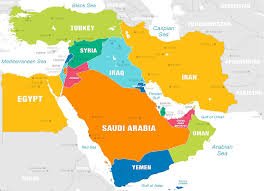
The current privatization initiative, undertaken under the army-backed Special Investment Facilitation Council (SIFC), aims to sell shares of certain public assets to investors from friendly Gulf countries. The authorities expect a massive investment of more than $50bn from the United Arab Emirates (UAE) and Saudi Arabia alone over the next five years.
The Privatisation Commission of Pakistan is reportedly busy devising a new three-phase strategy to privatize state-owned entities (SOEs), barring those considered of national or strategic importance. The current privatization list focuses on loss-making public enterprises and prioritizes entities like Pakistan International Airlines (PIA) and power distribution companies to reduce the government’s involvement and haemorrhage of taxpayers’ money.
The World Bank has pointed out in a report that the profitability of SOEs in Pakistan had been declining and turning into losses for about a decade. Things have come to a stage now where “the profitability of Pakistan’s federal SOEs is the lowest in the South Asian Region” as their aggregate profit at 0.8 per cent of GDP in 2014 turned into losses worth 0.4pc of GDP in 2020 and, growing, thus becoming a major driver of fiscal deficit and source of substantial fiscal risk.
However, people like former investment minister Haroon Sharif think the government must decide as to why it wants to privatize SOEs. “Before heading into privatization, the government and SIFC should clearly state and communicate the reasons for their decision to choose this path. Do they want to get rid of loss-making entities because they can’t manage them? Or have they determined, in principle, that it is not the government’s job to run these businesses? There is a difference between the two,” Mr Sharif told Dawn.
The World Bank has also raised concerns over Pakistan’s approach to privatizing its SOEs. The bank has identified economic volatility, judicial activism and resistance from trade unions, litigation, fears of monopoly creations, weak political commitment, and perceptions of corruption cost post-2007 as key factors leading to unsuccessful privatization efforts.
In its Public Expenditure Review 2023, the lender cautioned the government of looming litigation in divestments to foreign states under government-to-government contracts and instead advised public offerings through stock exchanges followed by privatization under the transparent oversight of a special joint committee of the parliament.
The authorities have decided to move ahead with their privatization plans, and it is amply clear that progress will remain chaotic at best without extensive reforms and greater transparency.
Please, subscribe to the YouTube channel of republicpolicy.com