Hafeez Ahmed Khan
China’s diplomatic dilemma in the Middle East due to the Israel-Hamas conflict is a result of its attempt to balance its economic interests, political ambitions, and moral principles in a region that is fraught with complexity and volatility. China has been pursuing a strategy of engagement and cooperation with all parties in the Middle East, regardless of their ideological or religious differences, in order to secure its energy needs, expand its markets, and promote its Belt and Road Initiative (BRI). China has also been seeking to enhance its global influence and reputation by presenting itself as a responsible and constructive actor that can contribute to peace and stability in the region and beyond.
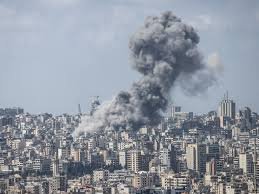
However, the recent escalation of violence between Israel and Hamas, which has caused hundreds of casualties and widespread destruction in Gaza, has posed a serious challenge to China’s delicate balancing act. China has found itself in a difficult position of having to navigate the conflicting interests and expectations of its various partners and stakeholders in the Middle East, as well as the broader international community. China has to consider the following factors in its diplomatic response to the crisis:
- China’s relations with Israel: China and Israel have developed a strong and mutually beneficial partnership over the years, based on trade, technology, and innovation. Israel is a major source of advanced technology and know-how for China, especially in the fields of agriculture, water, cybersecurity, and defense. China is also Israel’s largest trading partner in Asia, and a key investor in its infrastructure and innovation sectors. China has been careful not to antagonize Israel or jeopardize its interests, even as it maintains its traditional support for the Palestinian cause. China has also avoided taking sides in the Israeli-Palestinian conflict, and has advocated for a peaceful and negotiated solution based on the two-state principle. However, China’s stance on the Gaza conflict has been criticized by Israel and its allies, such as the USA and the EU, for being biased and hypocritical. China has condemned Israel’s disproportionate use of force and violation of international law, and has called for an immediate ceasefire and humanitarian access to Gaza. China has also expressed its solidarity with the Palestinian people and their legitimate rights, and has offered to mediate and host peace talks between Israel and Palestine. China has also used its position as the rotating president of the UN Security Council to push for a unified and effective response from the international community to the crisis. Israel has accused China of interfering in its internal affairs and undermining its security, and has rejected China’s role as a mediator or a peace broker. Israel has also questioned China’s credibility and morality, given its own record of human rights violations and repression of ethnic and religious minorities, such as the Uyghurs in Xinjiang.
- China’s relations with the Arab and Muslim world: China has cultivated close and friendly ties with the Arab and Muslim countries in the Middle East, based on mutual respect, non-interference, and win-win cooperation. China has been a major importer of oil and gas from the region, and a major exporter of goods and services. China has also been a key partner in the development and reconstruction of the region, through its BRI projects and investments. China has also been supportive of the Arab and Muslim causes and interests, such as the Palestinian issue, the Iranian nuclear deal, and the Syrian crisis. China has also refrained from criticizing or interfering in the domestic affairs of the region, such as the human rights situation, the political reforms, or the sectarian conflicts. However, China’s response to the Gaza conflict has been met with mixed reactions from the Arab and Muslim world. On the one hand, China has been praised and appreciated by some countries and groups, such as Iran, Turkey, Qatar, and Hamas, for its strong and vocal support for the Palestinian cause and its efforts to end the violence and facilitate dialogue. China has also been seen as a reliable and alternative partner to the USA and the West, which have been perceived as biased and ineffective in dealing with the crisis. On the other hand, China has been criticized and disappointed by some countries and groups, such as Saudi Arabia, Egypt, Jordan, and the Palestinian Authority, for its lack of concrete and decisive action to stop the Israeli aggression and protect the Palestinian people. China has also been seen as a self-interested and opportunistic actor, which is more concerned about its economic interests and political image than the humanitarian and moral aspects of the crisis.
- China’s relations with the USA and the West: China and the USA and the West have been engaged in a strategic competition and rivalry over various issues and regions, including the Middle East. China has been challenging and countering the USA and the West’s dominance and influence in the region, by offering a different model and vision of development and cooperation, based on mutual benefit and respect. China has also been exploiting and filling the gaps and vacuums left by the USA and the West’s withdrawal and disengagement from the region, by expanding its presence and role in the region’s affairs and conflicts. China has also been opposing and resisting the USA and the West’s attempts to impose their values and interests on the region, by defending the principles of sovereignty, independence, and non-interference. However, China’s position on the Gaza conflict has been in contrast and conflict with the USA and the West’s position, which have been largely supportive and protective of Israel and its right to self-defense. China has accused the USA and the West of being hypocritical and irresponsible, by blocking or delaying the UN Security Council’s action and resolution on the crisis, by providing Israel with military and diplomatic support, and by ignoring or downplaying the Palestinian suffering and rights. China has also challenged the USA and the West’s leadership and credibility, by presenting itself as a more impartial and constructive actor, by calling for a multilateral and inclusive approach to the crisis, and by proposing its own four-point plan to end the violence and resume the peace process. The USA and the West have accused China of being cynical and manipulative, by exploiting the crisis for its own agenda and interests, by undermining the existing mechanisms and frameworks for the peace process, and by inflaming the tensions and divisions in the region.
To sum up, China’s diplomatic dilemma in the Middle East due to the Israel-Hamas conflict is a reflection of its complex and contradictory interests and roles in the region, as well as its growing and evolving global status and aspirations. China has to balance its economic interests, political ambitions, and moral principles in a region that is fraught with complexity and volatility. China has to navigate the conflicting interests and expectations of its various partners and stakeholders in the Middle East, as well as the broader international community. China has to consider the wider geopolitical implications and consequences of its position and actions on the crisis, as well as the potential opportunities and challenges for its future engagement and cooperation with the region. China has to demonstrate its ability and willingness to play a positive and constructive role in the region, as well as its responsibility and accountability as a major global power.
Please, subscribe to the YouTube channel of republicpolicy.com