
Arshad Mahmood Awan
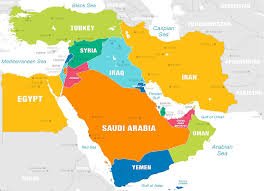
War has a way of making statistics of human beings. It reduces entire lives to numbers: casualties counted, buildings destroyed, missiles launched. But behind every figure lies something that resists reduction. Behind every number is a family that packed what it could in the dark, locked a door it may never open again, and walked towards an uncertain safety that may itself prove temporary. This is the reality now unfolding across Iran and Lebanon, where a widening Middle East conflict has set hundreds of thousands of people in motion, not as combatants or decision-makers, but as the collateral consequence of a war they did not choose and cannot stop.
The scale of displacement emerging from Iran is difficult to absorb. The UN refugee agency has estimated that between 600,000 and one million Iranian households have been displaced within the country as US-Israeli bombardment continues. These are not small, contained movements of population. They represent a social upheaval of enormous proportions, with families abandoning Tehran and other urban centres and moving towards rural communities in search of whatever safety the countryside can offer. The calculation driving this migration is elemental: distance from targeted cities, distance from the sound of air raids, distance from destruction. It is a calculation made not by strategists but by parents carrying children and whatever possessions a moment of panic allows.
Among those caught in this displacement are Afghan refugee families who had already sought refuge in Iran, many of them having fled conditions in their own country that left them with no viable alternative. For these families, the current crisis is not their first displacement. It is their second, and in some cases their third. They arrived in Iran already stripped of the stability that most people take for granted. They built fragile routines and modest livelihoods in a country that was itself not always welcoming. Now they are uprooted again, this time by a war imported from outside and fought over interests that have nothing to do with their survival. Their vulnerability does not register on the screens of those directing the bombardment, but it is absolute.
Lebanon tells a parallel story, shaped by its own long history of absorbing the consequences of regional conflicts it cannot control. Israeli attacks have forced thousands of Lebanese families from their homes, with estimates suggesting that more than 800,000 people are now displaced. Many are crowded into collective shelters where sanitation is inadequate and basic supplies are stretched thin. The conditions in these shelters are not merely uncomfortable. They are dangerous. Where large numbers of displaced people are concentrated in spaces ill-equipped for their needs, the risks compound. Women and children face elevated exposure to exploitation and abuse. Disease spreads more easily where hygiene systems break down. Desperation rises as days in temporary shelter extend into weeks.
The consequences of displacement do not end when families find a temporary roof. They extend across social systems that were already under strain before the crisis began. Schools close when teachers flee and buildings are damaged or commandeered. Hospitals are overwhelmed by casualties while simultaneously losing staff and supplies. Livelihoods disappear overnight as businesses shut, employers evacuate, and the economic activity that sustains daily life grinds to a halt. Communities that absorb the displaced face their own pressures: rising demand for water, food, shelter, and services in cities that were already contending with economic difficulty before the bombs fell.
Iran and Lebanon share this burden of absorption, and both are doing so from positions of prior vulnerability. Lebanon has been navigating a prolonged economic collapse that predates the current conflict and had already pushed large portions of its population into poverty. Iran has been living under the weight of international sanctions that have constrained its economy and depleted public resources. Neither country entered this crisis with reserves of resilience to spare. The displacement of hundreds of thousands of additional people into systems already near their limits is not a manageable challenge. It is a compounding catastrophe.
There is a question that hangs over all of this, and it is not a comfortable one. What does the international community take from the experience of Gaza? The devastation visited upon that territory, the mass displacement of its civilian population, the destruction of its hospitals and schools and infrastructure, unfolded in full view of the world over an extended period. Humanitarian agencies documented it. International bodies debated it. Leaders issued statements, held summits, and expressed concern. And yet the patterns that produced Gaza’s suffering appear to be reproducing themselves across a wider geography, with the same logic of air power and the same indifference to civilian cost.
Humanitarian response matters, and the agencies working in Iran and Lebanon are doing essential work under impossible conditions. But relief operations cannot address the cause of displacement. They can treat its symptoms. They can distribute food and water and provide shelter. They cannot, by themselves, stop the air strikes that continue to empty homes and drive families onto roads leading away from everything familiar. Only political will and deliberate effort to protect civilian populations and halt escalation can address the root of the crisis.
Every strike that falls on an urban centre sends another wave of families into displacement. Every week the conflict extends deepens the social damage that will take years, perhaps decades, to repair. The most enduring victims of this war are not those prosecuting it. They are the families walking away from homes they may never return to, carrying their children and their fear and very little else, into an uncertainty that the world’s leaders have shown little urgency in bringing to an end.
The Republic Policy book The Bureaucratic Coup is available at vanguard books LHR, ISB and across Pakistan. PL contact at +92 300 9552542