
Khalid Masood Khan
The economy of marine and freshwater fisheries is a significant sector globally, as it provides food, income, employment, and trade for many countries. According to the Food and Agriculture Organization (FAO), global fish production was 179 million tonnes in 2018, of which 156 million tonnes were used for human consumption and 23 million tonnes were used for non-food purposes. The global fish trade was valued at 164 billion US dollars in 2018, of which 67% was from developing countries. The global fish consumption was 20.5 kg per capita in 2018, which is an important source of protein, micronutrients, and essential fatty acids for human health.
Pakistan is one of the major fish-producing countries in the world, with a total fish production of 0.8 million tonnes in 2018, of which 0.4 million tonnes were from marine fisheries and 0.4 million tonnes were from inland fisheries. The major fish varieties and their economic significance in Pakistan are:
Marine varieties: Pakistan’s marine fish resources include about 250 demersal fish species, 50 small pelagic fish species, 15 medium-sized pelagic species, and 20 large pelagic fish species. Some of the commercially important marine fish species are Indian mackerel, sardine, anchovy, pomfret, tuna, shark, croaker, catfish, shrimp, crab, lobster, and squid. The marine fisheries contribute about 0.2% to the national GDP and provide livelihood to about 400,000 fishermen and 600,000 people in the post-harvest sector.
Inland varieties: Pakistan’s inland fish resources include natural lakes, reservoirs, river systems, and ponds, which cover about 8 million hectares of water area. Some of the commercially important inland fish species are carp, catla, rohu, mrigal, trout, mahseer, snakehead, and catfish. The inland fisheries contribute about 0.1% to the national GDP and provide livelihood to about 1.2 million fishermen and 1.8 million people in the post-harvest sector.
The role of fisheries in exports and regional trade in Pakistan is also significant, as it earns about 460 million US dollars from fish exports, mainly citrus, mango, and dates. The main export markets for Pakistani fish products are China, Thailand, Malaysia, Sri Lanka, the Middle East, and the European Union. The main import sources for Pakistani fish products are India, Myanmar, China, and Thailand. The regional trade of fisheries in Pakistan is facilitated by the South Asian Association for Regional Cooperation (SAARC), which aims to promote cooperation and integration among the member countries in various sectors, including fisheries.
However, fisheries in Pakistan face many challenges, such as:
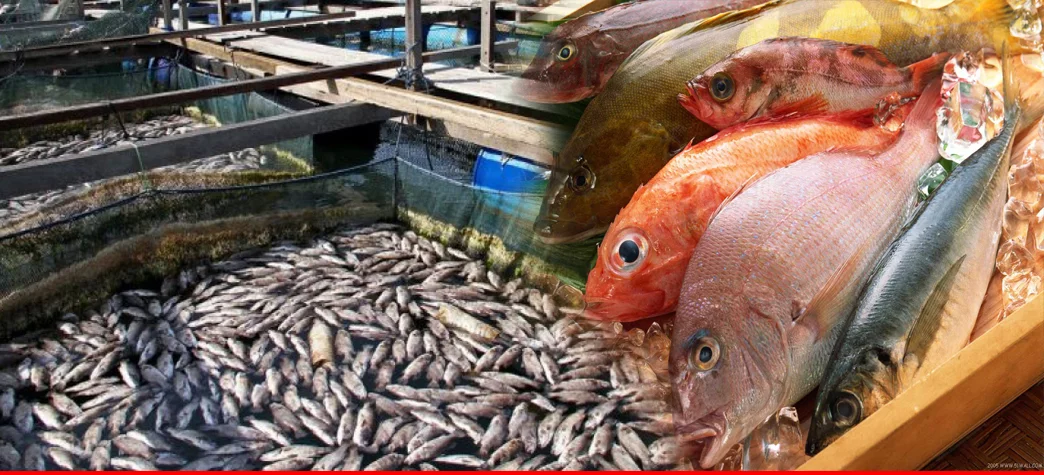
Overfishing: The overexploitation of the fish stocks, especially in the marine sector, due to the increasing fishing effort, illegal fishing, and lack of effective management and regulation. This results in the depletion of fish resources, the decline of fish catch and quality, and the loss of biodiversity and ecosystem services.
Water pollution: The contamination of the water bodies, especially in the inland sector, due to the discharge of industrial, agricultural, and domestic wastes and the use of pesticides and fertilizers. This results in the degradation of the water quality, the increase of the disease and mortality of the fish, and the reduction of consumer demand and acceptance.
Aquatic system: The alteration and destruction of the aquatic habitats, especially in the inland sector, due to the construction of dams, barrages, and canals and the diversion and abstraction of water for irrigation and power generation. This results in the fragmentation and loss of the fish migration routes, spawning grounds, and nursery areas and a decrease in fish diversity and productivity.
Accordingly, it is critical that the government and all economic stakeholders play a vital role in the development and growth of Pakistan’s fisheries industry. Therefore, administration measures are significant to develop the fisheries industry in Pakistan. Some of the administrative, policy, and other measures are to adopt the ecosystem approach to fisheries (EAF), which is a holistic and integrated framework for the management and conservation of the fish resources and the aquatic environment, taking into account the ecological, social, and economic aspects of the fisheries.
Implementing the code of conduct for responsible Fisheries (CCRF), which is a voluntary and international instrument that provides principles and standards for the responsible and sustainable use of fish resources and the aquatic environment in accordance with the relevant laws and agreements, is critical. It is also critical to strengthen the capacity and coordination of the fisheries institutions and stakeholders, such as the Fisheries Development Board (FDB), the Marine Fisheries Department (MFD), the Pakistan Agricultural Research Council (PARC), the provincial fisheries departments, the fisherfolk organizations, and the private sector, to improve the planning, implementation, monitoring, and evaluation of the fisheries policies, programs, and projects.
Furthermore, enhancing the research and development of the fisheries sector, such as the assessment and monitoring of the fish stocks and the aquatic environment, the introduction and improvement of the fish varieties and technologies, and the innovation and diversification of the fish products and markets, is vital. It is also important to promote the aquaculture sector, which is the farming of aquatic organisms, such as fish, shrimp, crab, and seaweed, in controlled or semi-controlled conditions, to increase fish production, income, and employment and to reduce the pressure on the wild fish resources.
Lastly, the fisheries industry in Pakistan is significant for employment and business, as it provides livelihood and income to millions of people who are directly or indirectly involved in the fishing, processing, marketing, and trading of fish and fish products. According to the Economic Survey of Pakistan 2020-21, the fisheries sector employed about 1.6 million fishermen and 2.4 million people in the post-harvest sector and contributed about 0.3% to the national GDP and 1.9% to the agricultural GDP. The fisheries sector also earned about 460 million US dollars from fish exports, mainly to China, Thailand, Malaysia, Sri Lanka, the Middle East, and the European Union. The fisheries sector has the potential to grow and diversify, as Pakistan has a rich and diverse fish resource base, covering about 1,120 km of coastline and 8 million hectares of inland water area. However, the fisheries sector also faces many challenges, such as overfishing, water pollution, aquatic system degradation, and market constraints, which require effective and sustainable management and development.
Please, subscribe to the YouTube channel of republicpolicy.com