
Pareeshay Fatima
The role of young women in society has undergone significant evolution, influenced by cultural, social, economic, and political changes. This evolution is evident across various domains, shaping the experiences and contributions of young women as they navigate their roles in society.
Access to Education: Increased access to education for young women has been a critical factor in their empowerment. Education opens up opportunities for better jobs, higher income, and greater independence. Furthermore, efforts to encourage young women to enter STEM (Science, Technology, Engineering, and Mathematics) fields are ongoing. These fields have traditionally been male-dominated, but increasing female participation is crucial for gender equality in the workforce.
Media Representation: The way young women are portrayed in media influences societal perceptions and their self-esteem. Positive role models and diverse representations can help challenge stereotypes and promote self-confidence. Additionally, young women often face societal pressures regarding body image, which can affect their mental health. Promoting body positivity and mental health awareness is important for their well-being.
Workforce Participation: Young women are increasingly entering the workforce, pursuing careers, and attaining leadership positions. However, gender pay gaps and barriers to career advancement remain challenges. Moreover, there is a growing trend of young women starting their own businesses. Support systems such as mentorship programs and funding opportunities are vital to foster female entrepreneurship.
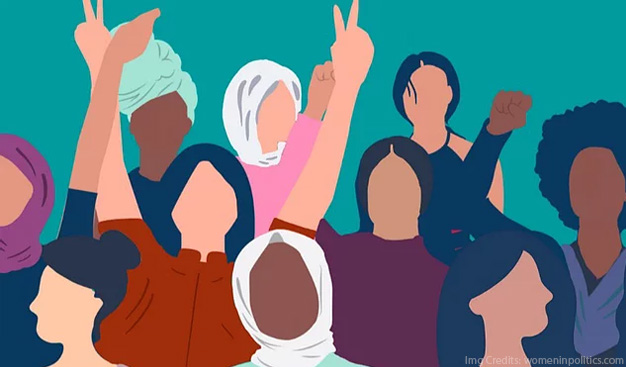
Advocacy and Activism: Young women are at the forefront of many social and political movements, advocating for gender equality, environmental sustainability, and human rights. While there has been progress, young women are still underrepresented in political positions. Efforts to increase female participation in politics are essential for inclusive governance.
In many developing countries, young women face additional challenges such as lack of access to education, early marriage, and limited healthcare. International efforts and policies are needed to address these disparities. Movements like #Me Too and #HeForShe have brought global attention to the issues young women face and have encouraged collective action towards gender equality. Thus, promoting the rights and opportunities of young women is not just a matter of justice but also essential for the overall progress and development of society.
Young women are increasingly taking on leadership roles in politics, advocating for policies that promote gender equality, environmental sustainability, and social justice. Many young women are leading successful businesses, driving innovation, creating jobs, and contributing to economic growth. In communities worldwide, young women are leading grassroots movements and community organizations, addressing local issues such as education, health, and poverty.
Young women who achieve success in various fields serve as role models for younger generations, inspiring them to pursue their dreams and break down barriers. By mentoring others, young women help cultivate the next generation of leaders, providing guidance, support, and encouragement.
Young women are at the forefront of movements advocating for human rights, gender equality, and social justice. They use their voices to highlight issues such as racial discrimination, LGBTQ+ rights, and economic inequality. Many young women are leaders in the fight against climate change, advocating for sustainable practices and policies that protect the planet.
Young women contribute to the arts through literature, music, visual arts, and performance, enriching cultural life and challenging societal norms through their creative works. They play key roles in preserving and promoting cultural heritage, ensuring that traditions and histories are passed down to future generations.
Young women in science, technology, engineering, and mathematics (STEM) are making ground-breaking contributions, from scientific research to technological innovations. They also advocate for greater diversity and inclusion in STEM fields, working to create opportunities for underrepresented groups.
Many young women work as doctors, nurses, therapists, and researchers, improving healthcare outcomes and advancing medical knowledge. They are vocal advocates for mental health awareness, helping to reduce stigma and promote access to mental health resources.
Young women volunteer their time and skills to support humanitarian efforts, whether it’s through local community service or international aid organizations. They play crucial roles in responding to crises, from natural disasters to public health emergencies, providing aid and support to those in need.
Young women face numerous barriers in society that can hinder their personal and professional development, often rooted in systemic inequalities and cultural norms. These barriers include limited access to education, gender pay gap, employment discrimination, gender stereotypes, reproductive health challenges, underrepresentation in leadership positions, lack of support networks, discriminatory laws, technological barriers, and online harassment.
Concludingly, the evolving role of young women in society is a complex tapestry of achievements, challenges, and opportunities. By promoting gender equality, implementing supportive policies, and challenging discriminatory practices, society can help young women achieve their full potential and contribute to positive change.