
Arshad Mahmood Awan
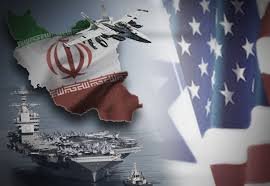
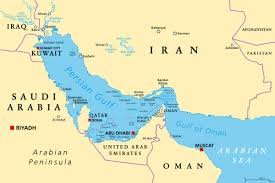
The atmosphere in the Gulf has reached a dangerous threshold. American military assets are massing around Iran at a scale that leaves little room for ambiguity. Warships, bombers, and strike capabilities are being positioned with deliberate visibility, sending a message that Washington wants Tehran to read clearly. Whether that message ultimately serves diplomacy or triggers catastrophe may well define the trajectory of the entire Middle East for a generation.
At the centre of this crisis stands Donald Trump, a president whose communication style has always blended theatrical threat with calculated unpredictability. In recent weeks, he has oscillated between optimism and menace with remarkable ease. He has spoken warmly about the possibility of a nuclear deal with Iran, suggesting that an agreement remains within reach if the right conditions are met. In the same breath, he has warned that “bad things” would happen to Iran if negotiations fail to produce results within ten to fifteen days. He has floated the idea of limited military strikes. He has placed regime change in Tehran back on the table as a live option. This is not a coherent diplomatic posture. It is a psychological campaign, and a dangerous one at that.
The logic behind such an approach is understandable, if not entirely unreasonable. Trump’s team clearly believes that maximum pressure — economic, military, and rhetorical — will compel Iranian negotiators to make concessions they might otherwise resist. The calculation is that a regime already burdened by sanctions, isolation, and internal pressures will prefer a deal to a confrontation it cannot easily survive. On paper, coercive diplomacy has historical precedents. In practice, however, it carries enormous risks. A single miscalculation, an accidental skirmish, a misread signal, or an overzealous commander on either side could transform a pressure campaign into an actual war. The Gulf does not need a planned conflict to explode. It only needs one unplanned moment.
Iran, for its part, has responded with a combination of confidence and caution. Foreign Minister Abbas Araghchi has indicated that a draft deal is close to completion, describing the ongoing nuclear talks in relatively optimistic terms. At the same time, he made clear that the American military posturing surrounding the negotiations is both unnecessary and unhelpful. The Iranians are experienced enough to understand that negotiating under the shadow of an aircraft carrier strike group is not negotiating in good faith. They are willing to talk, but they are not willing to be humiliated. Tehran’s leadership has been explicit: if the United States attacks Iran, the response will not be contained. It will be regional. That is not a rhetorical flourish. It is a strategic commitment backed by decades of alliance-building across the wider Middle East.
The network of Iranian allies in the region reinforces this warning with considerable credibility. Hezbollah in Lebanon, Houthi forces in Yemen, and various armed militias operating across Iraq have all signalled that any American or Israeli strike on Iran will not be absorbed quietly this time. These are not peripheral actors making hollow declarations. They are battle-hardened organisations with demonstrated capacity to strike regional targets, disrupt shipping lanes, and drag multiple countries into an expanding conflict. The assumption that a strike on Iran could be surgically contained flies in the face of everything the region’s recent history has demonstrated.
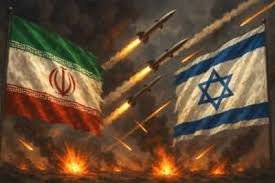
Israel’s role in this unfolding drama deserves particular attention, and particular scrutiny. It is no secret that Tel Aviv views Iran as an existential threat and has been actively lobbying for military action, or at minimum for conditions in any nuclear deal that Iran could never realistically accept. Israeli officials have pushed for demands that go far beyond the nuclear file itself: the complete dismantlement of Iran’s ballistic missile programme and the total cessation of Iranian support for its regional allies. These are maximalist positions. They are not the foundation of a negotiated agreement. They are the architecture of an inevitable impasse, one that would leave military action as the only remaining option. Whether by design or consequence, Israel’s preferred outcome appears to be a deal that cannot happen, followed by a war it does not have to fight alone.
Any realistic nuclear agreement with Iran must focus on what is actually achievable. The primary concern for the international community has always been preventing Iran from developing a nuclear weapon. That goal is attainable through verified limits on uranium enrichment, enhanced inspection regimes, and meaningful sanctions relief that gives Tehran a genuine incentive to comply. Linking a nuclear deal to Iran’s entire regional posture or its conventional military capabilities transforms a difficult negotiation into an impossible one. Diplomacy requires identifying what is essential and setting aside what is merely desirable.
The burden now falls squarely on Trump. He has assembled the military pressure. He has made the threats. He has set the timelines. In doing so, he has also cornered himself. If Iran signals flexibility and the United States responds with escalation anyway, Trump will own the consequences of a war he claimed he did not want. If he walks away from a workable deal because Israeli preferences require conditions Iran will never accept, he will have placed a foreign government’s strategic interests above American ones. This directly contradicts the “America First” doctrine that defined his political brand and carried him back to the White House.
Trump came to power promising to end the era of American entanglement in Middle Eastern conflicts. He spoke repeatedly of forever wars as a national embarrassment, a drain on American blood and treasure with nothing to show for it. A war with Iran would be the definitive forever war. It would make Iraq and Afghanistan look manageable by comparison. No military strike on Iran remains limited for long. Geography, alliance networks, escalation dynamics, and the domestic politics of every country involved guarantee that the first missile does not end a crisis but begins one.
The window for diplomacy is still open, but it is narrowing by the day. Trump must choose between statesmanship and theatre before that window closes entirely.