
Arshad Mahmood Awan
Wars reveal the limits of power faster than any peacetime calculation ever can. The United States and Israel entered this conflict against the Islamic Republic with overwhelming firepower and the unspoken assumption that Iran would break quickly, that its government would fracture under pressure, and that the population would turn against its rulers when the bombs began to fall. Neither assumption has held. What is unfolding now, in the sixth day of a war that was supposed to be swift and decisive, is a recalibration born not of strategy but of desperation.
The turn toward Iran’s Kurdish minority is the clearest signal yet that the original plan has failed.
Reports that CIA operatives have made contact with Iranian Sunni Kurds are not incidental intelligence noise. They represent a deliberate shift in approach. When a military operation stalls, unconventional instruments are reached for. Washington has walked this road before. It has a long and troubled history of mobilising Kurdish sentiment in the region, arming Peshmerga fighters, encouraging separatist ambitions, and then abandoning those same fighters when the strategic calculus changed. The Kurds of Iraq and Turkey know this history intimately and have paid its price in blood. That Washington is again attempting to harness Kurdish grievances, this time among the Sunni Kurdish population inside Iran, who constitute roughly ten percent of the Shia republic’s citizenry, speaks to the frustration accumulating in Washington’s war rooms.
Iran read this move before it was fully made. Tehran’s decision to strike Iranian Kurdish forces based in northern Iraq was not reactive. It was preemptive. Iran understood that if the United States intended to widen the conflict through ethnic mobilisation, the instrument had to be destroyed before it could be assembled. The strikes were a message as much as a military operation. They said, clearly and without ambiguity, that Iran would not wait for threats to materialise at its borders.
The Trump administration’s broader design, if the available evidence is read honestly, appears to rest on a dangerous bet. The theory holds that Iran’s significant ethnic minorities, Kurds in the northwest, Arabs in Khuzestan, Azeris in the north, can be simultaneously agitated to the point where Iran’s internal security apparatus is stretched beyond breaking. The logic is familiar. It is the logic of imperial overreach dressed in the language of liberation. Arm the minorities, stoke the grievances, let internal chaos do what external bombardment could not. The strategy has a seductive simplicity to it and a catastrophic track record.
What the architects of this approach appear to have underestimated is Iran’s capacity for preemption, its deep intelligence penetration of its own minority communities, and the limits of ethnic grievance as a military tool. Minorities who feel aggrieved do not automatically become armies. They become bargaining chips, and Iran has spent decades understanding exactly how to neutralise those chips through a combination of coercion, co-option, and calculated concession.
Meanwhile, the regional consequences of this war are already beyond anything Washington anticipated. Iran has opened new fronts with striking boldness. American interests in the UAE, Jordan, Kuwait, Bahrain, Saudi Arabia and Qatar have come under direct attack. The logic here is not mere aggression. It is calculated coercion. Iran is signalling to the wealthy Gulf states that proximity to Washington comes with a price. It is pushing governments that have spent years normalising relations with Israel and hedging their bets between Washington and Tehran into a whirlpool of fear and difficult choices. The Gulf states, prosperous and deeply invested in regional stability, are watching their certainties dissolve in real time.
The death of Supreme Leader Syed Ali Khamenei, rather than triggering the collapse Washington had likely counted on, appears to have hardened Iranian resolve rather than fractured it. Regime change, that perennial instrument of American foreign policy in the region, has apparently bitten the dust. The Islamic Republic has not imploded. Its security apparatus remains functional. Its leadership has not fled. Its population, whatever its private grievances against the government, has not risen in the numbers or with the determination that external intervention requires to succeed. History offers a consistent lesson on this point. External aggression rarely produces internal revolution. It more often produces internal consolidation around the flag, however imperfect that flag may be.
The ethnic dimension of this conflict is the most alarming development yet. The Middle East is a region of extraordinary ethnic, linguistic and religious complexity. Its borders were drawn by colonial powers with contempt for those complexities, and the tensions embedded in those borders have never fully resolved. To deliberately inflame ethnic sentiment in this environment is not strategy. It is arson. Once lit, such fires do not respect the intentions of those who struck the match. If Kurdish separatism is actively fomented inside Iran, it will not remain confined to Iran. It will ripple into Iraq, into Turkey, into Syria, each of which carries its own unresolved Kurdish question and each of which will respond with its own set of destabilising measures. The geopolitical repercussions for the United States in the Arab world alone could prove unbearable.
Iran, for its part, will not sit idle. It will work aggressively to retain the loyalty of its Kurdish population and extend that effort southward toward the Baluch communities of the southeast. These are not passive populations waiting to be mobilised by whoever approaches them first. They have their own histories, their own calculations, and their own survival instincts. Iran knows its own territory far better than Washington does.
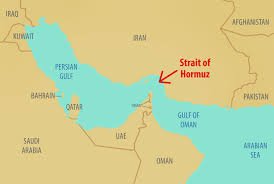
The choking of oil supply lines and the closure of vital shipping corridors have already begun rattling global markets. Stock exchanges are falling. Energy prices are climbing. The economic consequences of a prolonged war are no longer hypothetical.
Six days in, the war has already exceeded its intended script. The Kurdish gambit signals not confidence but confusion. A power that reaches for ethnic mobilisation when its primary strategy has stalled is a power that has lost control of the narrative it wrote for itself. That is precisely where Washington finds itself today. And the road ahead, if wiser counsel does not prevail, leads somewhere nobody should want to go.