
Zafar Iqbal
Pakistan’s economic managers have developed a habit of presenting macroeconomic data as though the data and the lived experience of the population are describing the same reality. They are not. The headline figures, rising foreign exchange reserves, a relatively stable currency, inflation that has come down from its peak, a current account that briefly turned to surplus, tell one story. The country that twenty-five million households wake up in every morning tells another. Understanding the distance between those two stories is not an exercise in pessimism. It is the beginning of honest economic thinking.
Start with the foreign exchange reserves, which have become the centrepiece of the government’s stabilisation narrative. State Bank Governor Jameel Ahmad recently disclosed that the central bank purchased twenty-four billion dollars from the domestic market over the past three years to build up its reserve position. This is a significant admission and it deserves more scrutiny than it has received. Buying dollars already circulating within the local economy is fundamentally different from attracting fresh inflows through exports, foreign direct investment, or other sources that bring genuinely new money into the system. The first method reshuffles what is already there. The second method grows the pool. Pakistan has been doing the first and calling it progress.
The current reserve position of approximately sixteen billion dollars at the State Bank looks adequate on paper until you examine its composition. More than three quarters of that figure consists of deposits placed by friendly countries, primarily Saudi Arabia, the UAE, and China, as acts of bilateral goodwill rather than as responses to Pakistan’s economic attractiveness. These deposits provide breathing space. They do not provide foundations. The UAE’s recent decision to shift from annual to monthly rollovers of its deposits underlines how fragile this arrangement is. A friendly country that chooses to review its commitment every thirty days rather than every twelve months is quietly signalling that the friendship has limits and that Pakistan should not take the generosity for granted indefinitely.
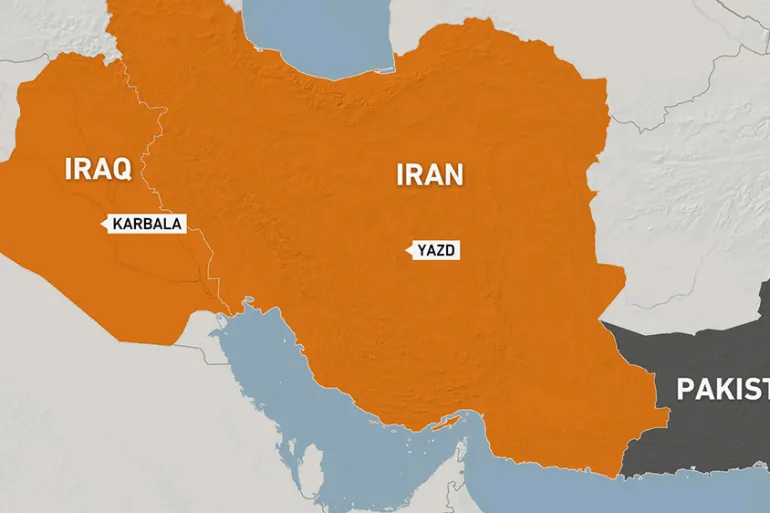
The external sector’s structural weakness becomes even more exposed in the current global environment. The Iran war has sent oil prices sharply higher and constrained supply through the Strait of Hormuz. Pakistan imports nearly all of its petroleum. Every ten-dollar increase in the price of crude oil adds meaningfully to the monthly import bill. If crude reaches a hundred dollars per barrel, which analysts no longer consider an extreme scenario given the current disruption, Pakistan’s monthly import costs could rise by up to three hundred million dollars. That figure would rapidly widen the current account deficit, drain reserves that were already borrowed rather than earned, and put fresh pressure on a currency that has been held stable through administrative management rather than through underlying competitiveness.
This is the core problem that the macroeconomic narrative obscures. Stability achieved through borrowed reserves, suppressed imports, and bilateral deposits is not the same thing as stability earned through a productive, export-oriented, investment-attracting economy. The first kind of stability is conditional. It holds as long as the conditions that created it hold. The moment those conditions change, as they are now changing in the Gulf, the fragility that was always there becomes visible.
Public sentiment has already registered what the official data has not yet fully acknowledged. A recent survey found that only one in four Pakistanis believes the economy is currently strong. That is a remarkable figure when set against the government’s own account of its achievements. Barely a third of respondents expect economic conditions to improve over the next six months, and only sixteen percent expressed confidence in making new investments. These numbers are not the product of ignorance or irrationality. They are the product of lived experience. For the majority of Pakistani households, the stabilisation of macroeconomic indicators has not translated into lower food prices, more available work, or any tangible sense that their material circumstances are improving. Poverty levels have risen. Formal employment has not recovered. The people who were pushed into hardship by the inflation spike of the past three years have not been pulled back out of it by the stabilisation that followed.
This gap between macroeconomic management and human welfare is not unique to Pakistan, but it has particular consequences here because of how narrow the government’s political room for manoeuvre already is. A population that does not believe in the recovery, that does not trust the trajectory, and that is unwilling to invest is not simply a communications problem to be managed with better messaging. It is a structural constraint on growth. Investment follows confidence. Confidence follows evidence of genuine improvement in the conditions of daily life. That evidence, for most Pakistanis, has not arrived.
What does the path forward require. Two things simultaneously, and the difficulty is that they pull in somewhat different directions in the short term. The first is continued, careful management of external sector risks. The oil price shock must be absorbed without triggering a balance of payments crisis. This means maintaining fiscal discipline, managing the import bill intelligently, and sustaining the relationships with bilateral partners that are currently holding the reserve position together, while being honest with those partners about Pakistan’s limitations rather than overpromising and underdelivering. The second is a serious and sustained push for structural reform, of the kind that actually changes the underlying economy rather than stabilising its surface. Export competitiveness. Investment climate. Energy cost reduction. Tax base broadening. These are not new prescriptions. They have been on every reform agenda for twenty years. The reason they have not been implemented is not ignorance of what needs to be done. It is the absence of the political will and institutional capacity to do it under pressure, which is the only condition under which they will ever be done.
The macroeconomic indicators are not lies. Some genuine stabilisation has occurred and it should be acknowledged. But indicators that measure the surface of an economy are not the same as indicators that measure its health. A patient whose vital signs have stabilised after emergency intervention is not yet a patient who is well. Pakistan’s economic managers would serve the country better by saying that plainly rather than treating stability as an endpoint rather than the precondition for the harder work that still lies ahead.