
Dr Bilawal Kamran
Regional fires do not respect borders. They spread, they shift, and by the time a distant country feels the heat, the moment for early preparation has already passed. Pakistan is watching the Israel-Iran confrontation from what appears to be a safe distance. That distance is an illusion, and the sooner Pakistani strategic thinking fully internalises this, the better prepared the country will be for what is coming whether it chooses involvement or not.
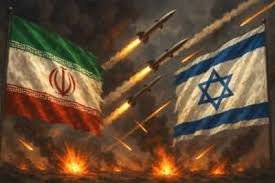
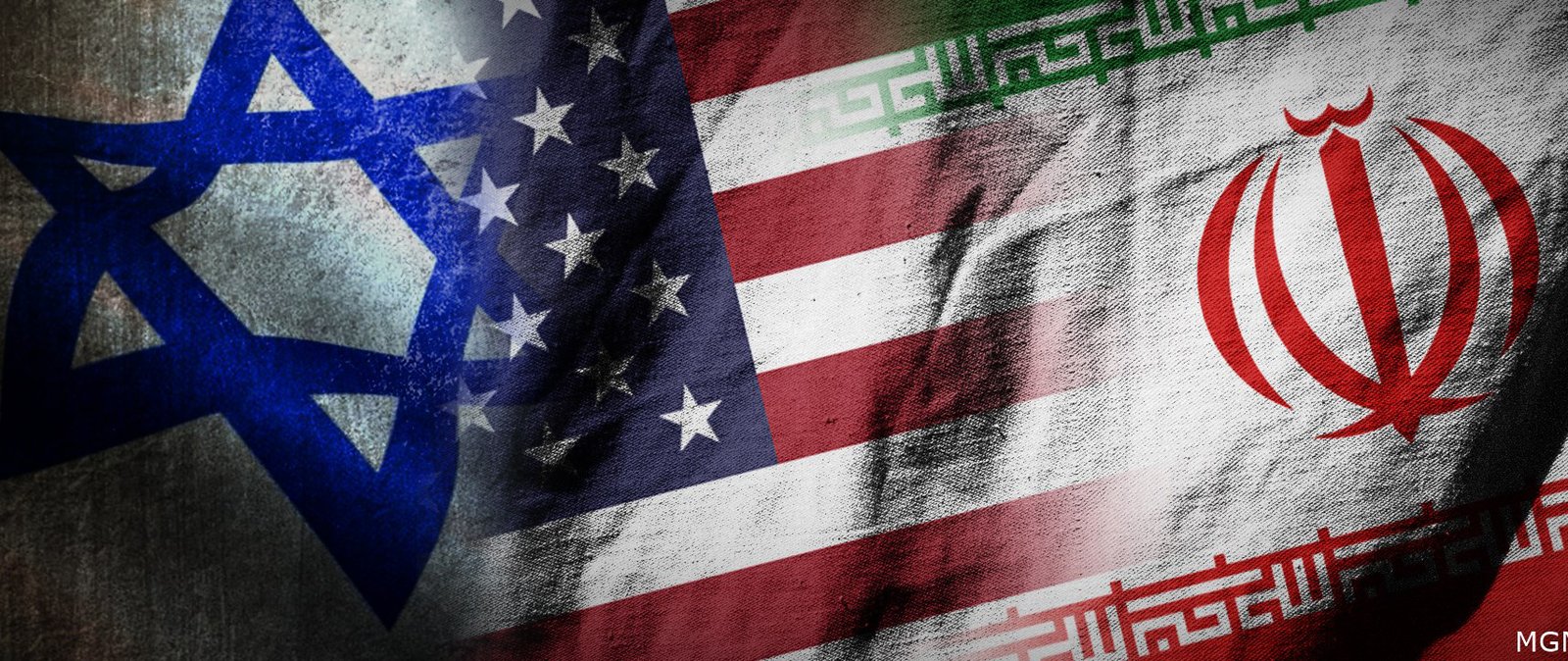
The Israel-Iran conflict is not simply a bilateral confrontation between two hostile states. It is a contest over the entire architecture of Middle Eastern power, and its outcomes will redraw strategic realities far beyond the region where the fighting occurs. Iran is not merely a neighbouring country with which Pakistan shares a long and complicated border. Iran is a buffer, a strategic depth, a counterweight in the regional balance that Pakistan has relied upon, often without fully acknowledging it, for decades. A weakened Iran, a strategically defeated Iran, or an Iran forced into fundamental reorientation of its priorities, changes Pakistan’s external environment in ways that demand serious and urgent attention.
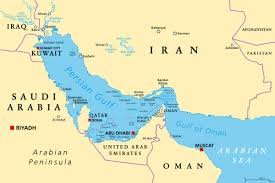
Consider the geography plainly. If Israeli strategic influence, whether through direct military reach, allied proxy arrangements, or the political vacuum created by Iranian retreat, extends effectively to the point where it touches the borders of Pakistan’s southwest, the map of Pakistani security changes overnight. Taftan is not a distant abstraction. It is the physical threshold between Pakistan and what lies beyond. A regional order in which Israeli strategic calculation operates with effective influence up to that threshold is a regional order Pakistan has never faced before and is not currently prepared to navigate.
This geographical pressure does not arrive alone. It arrives alongside something Pakistan’s strategic planners have watched developing for years with growing concern: the deepening alignment between India and Israel. This relationship has matured steadily across defence technology, intelligence cooperation, drone warfare capability, and diplomatic coordination. It is not a casual partnership. It is a purposeful strategic relationship between two states that share, among other things, a particular view of Pakistan’s role in regional instability. If the Israel-Iran conflict accelerates Israeli strategic confidence and expands Israeli regional reach, India’s partnership with Israel becomes correspondingly more valuable to New Delhi and correspondingly more consequential for Islamabad.
The result is what can only be described as a nutcracker situation. Pakistan squeezed from the west by a transformed and potentially hostile post-Iran regional order carrying Israeli strategic fingerprints, and squeezed from the east by an India whose most capable strategic partner has just demonstrated its regional dominance decisively. Between these two pressures, Pakistan’s room for manoeuvre narrows. Balochistan, already a province where external interference has been documented and where internal grievances have been exploited by outside actors, becomes an even more attractive theatre for destabilisation. Pakistan’s nuclear programme, the ultimate guarantor of national survival, comes under renewed international scrutiny in exactly the kind of climate where international pressure is most difficult to resist.
None of this is inevitable. Strategic situations are not destiny. They are warnings, and warnings are useful precisely because they arrive before the worst outcomes rather than after. Pakistan has navigated extraordinarily difficult regional environments before, and it retains assets, geographical, diplomatic, and military, that give it genuine room to act wisely if it chooses to do so now rather than later.
The first requirement is the western border. Pakistan’s relationship with Afghanistan is presently a source of tension, mutual accusation, and periodic violence. This is a luxury Pakistan cannot afford in a deteriorating regional environment. A hostile or unstable western border during a period of eastern pressure and southwestern uncertainty is not a manageable problem. It is a strategic catastrophe waiting to crystallise. Whatever the genuine grievances between Islamabad and Kabul, and they are real and serious on both sides, the imperative of de-escalation must override the satisfaction of being right. Pakistan needs a calm western border. It needs it before the regional situation deteriorates further, not after.
The second requirement is internal. This is harder to discuss honestly in the current climate because it requires naming something that powerful interests prefer not to name. Pakistan is internally polarised to a degree that directly undermines national resilience. Institutions are distrusted. Political opponents are criminalised. Public confidence in the state’s honesty about national challenges is low. This internal fragmentation is not merely a domestic political problem. It is a strategic vulnerability. A country that cannot present a unified front to its own citizens cannot present a credible front to a difficult external environment. History is consistent on this point. States that enter periods of acute external pressure while internally divided do not manage those pressures well.
The government has an obligation, not merely a political option but an actual obligation, to take the nation into confidence. Political parties across the spectrum, institutions, civil society, and the informed public deserve to be briefed honestly about the security challenges the country faces. Transparency of this kind is not weakness. It is the foundation of the national unity that genuine security requires. Citizens who feel informed and included develop the kind of resilience that no military budget can manufacture. Citizens who feel excluded and misled look for explanations elsewhere and find them in narratives that fracture rather than unite.
Pakistan has survived worse external environments than the one approaching. But survival has never been guaranteed, and the cost of unpreparedness has always been paid by ordinary people rather than by those whose decisions created the vulnerability. The Israel-Iran confrontation is not Pakistan’s war. But its consequences are Pakistan’s problem, arriving on Pakistan’s doorstep whether Pakistani leaders are ready to receive them or not.
Regional fires spread quickly. The time for strategic calm, diplomatic balance, honest internal conversation, and early preparation is now, while choices still exist and options remain open. That window does not stay open indefinitely. It rarely does.