
Editorial
Electricity bills in Pakistan are soaring due to several factors, such as the fuel price adjustment (FPA) and taxes imposed by the government, the international commodity price spike, and the inefficiency and mismanagement of the power distribution companies, especially K-Electric and others. The FPA was a mechanism to pass on the difference between the estimated and actual fuel costs to the consumers, which resulted in an increase of up to Rs. 7.5 per unit for some categories. The taxes included general sales tax (GST), income tax, and surcharges, which added up to more than 30 per cent of the bill amount. The power distribution companies were also accused of overbilling, faulty metering, and poor customer service.
Please follow the official website of the republicpolicy.com
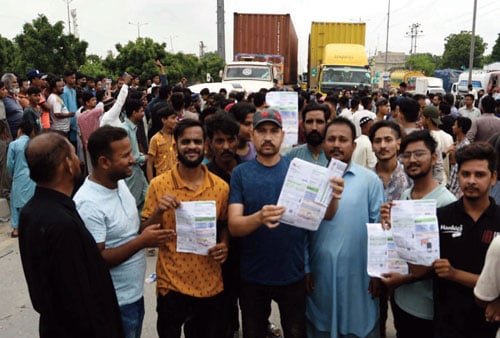
The high electricity bills have triggered widespread protests across the country, especially in Karachi, where traders and workers of Jamaat-e-Islami (JI) held a demonstration outside K-Electric and demanded a reversal of the price hike and additional taxes. The protesters also threatened to turn the markets into ‘no-go areas’ for K-Electric staff if their demands were unmet. Similar protests were also held in other cities, such as Rawalpindi, Multan, Rahim Yar Khan, Gujranwala, Narowal, Kasur, Attock, Sargodha, Peshawar, Haripur, Quetta, Taunsa, Hyderabad, Nawabshah, and Lahore. In some places, protesters burned their electricity bills and chanted slogans against the government and the power authorities. In Islamabad, a citizen reportedly committed suicide after receiving an inflated electricity bill.
Please, subscribe to the magazines of republicpolicy.com
The government faced a difficult challenge to balance the need for fiscal consolidation and debt sustainability with the need for social protection and development spending. The IMF deal signed in July 2023 was a nine-month Stand-by Arrangement (SBA) for $3 billion to support the authorities’ economic stabilization program and provide a framework for financing from multilateral and bilateral partners. The IMF deal required Pakistan to implement specific policy measures, such as fiscal discipline, a market-determined exchange rate, tight monetary policy, and structural reforms in the energy sector, SOE governance, climate resilience, and business climate.
The government have been trying to relieve the people of electricity bills. However, these measures did not satisfy the protesters, who demanded more substantial and immediate relief. They also questioned the transparency and accountability of the power distribution companies and called for an end to their monopoly. They also expressed their concerns about the impact of the IMF deal on the economy and sovereignty of Pakistan.
Lastly, electricity bills in Pakistan are a source of great discontent and anger among those who protested against them nationwide. The government faced a challenging situation due to its economic difficulties and obligations under the IMF deal. The government tried to relieve the people in electricity bills by exempting some consumers from FPA charges, suspending fixed sales tax collection, promoting solar energy production, and waiving off bills for flood-affected people. However, these measures did not appease the protesters, who demanded more radical and immediate relief. The government needs to find more effective and sustainable solutions to address the issue of electricity bills in Pakistan while ensuring macroeconomic stability and social welfare.
Therefore, the government needs to reform tax-collecting agencies and bring the elite of Pakistan under taxation. The power sector needs reforms, and there is a need to work on alternative energy resources.
Please subscribe to the YouTube channel of Republic Policy