
By Bilal Aslam
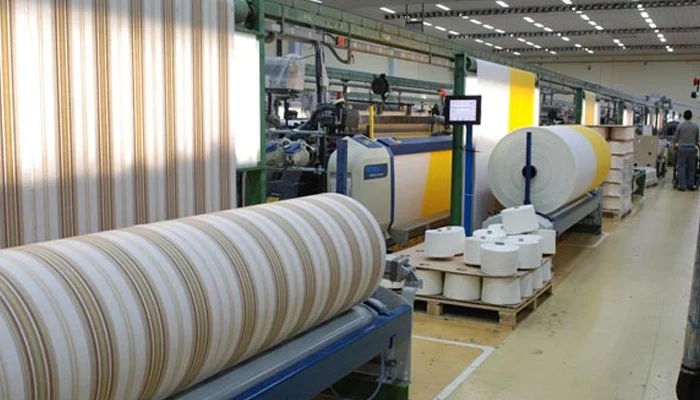
The foreign policy magazine titled the year 2022 “Pakistan’s year of turmoil”, citing the country’s economic conditions. The year 2022 ended with the unpleasant news of the partial shutting down of the textile industry, including Nishat Chunian Limited (NCL), Kohinoor Spinning Mills Limited (KOSM), Suraj Cotton Mills Limited (SURC) and many others due to the prevailing economic crisis. Pakistan entered 2023 with multiple challenges, including rising debt, low foreign exchange reserves, and an energy shortage, in addition to the political chaos it went through in 2022. It is scheduled to repay more than US $26 billion in foreign debt in the 2023 fiscal year. There is massive potential for the textile industry to revamp itself and build upon its potential to invite foreign investment as well as generate much-needed revenue through exports.
According to The Board of Investment (BOI), Pakistan is the eighth-largest exporter of textile products in Asia. It is the fourth-largest producer and third-largest consumer of cotton. The textile industry constitutes 46 per cent of the total manufacturing sector and provides employment to 40 per cent of the entire labour force. It contributes significantly to the country’s industrial exports. Textile exports contributed around 61 per cent to the total exports of US $31.8 billion during the FY 2021/2022. This industry has seen ups and downs over the years due to a variety of factors and has struggled as a result of high manufacturing costs, frequent power outages, flawed strategies, and a lack of government support policies. https://republicpolicy.com/the-challenges-of-administrative-reforms-in-pakistan/
The United States and the European Union are two of Pakistan’s biggest markets for textiles. Together, they buy 60 per cent of all textiles that come out of Pakistan. According to the Pakistan Credit Rating Agency (PACRA), Pakistan meets only 3 per cent of the United States’ needs for textile imports, as the textile sector hasn’t reached its full potential in recent years and still lags behind other South Asian competitors. Pakistan’s textile industry developed gradually and picked up the pace in the 1990s when it contributed 9.5 per cent of the entire Gross Domestic Product (GDP), while the Economic Survey indicated that the textile sector, which has the highest weight in the Large Scale Manufacturing, grew only by 3.2 per cent in FY 2021-22 as compared to 8 per cent in the FY 2020-21, showing a significant slowdown in growth.
The most significant factor in the decline of the textile industry over the years has been the energy crisis. Other factors include fierce competition in the international market from Bangladesh, Vietnam, India, and Thailand, lack of modernization of the machinery and equipment, lack of investment, rising costs and low production of cotton and other raw materials. Unlike the competitors, the cotton industry of Pakistan is also not utilizing the high-yielding hybrid seed varieties that have fifty per cent higher productivity, and therefore millions of dollars are being spent on cotton imports to fulfil the demand of the indigenous textile industry. Furthermore, there is a lack of adoption of technology. The majority of business operations in the textile sector are still done manually, despite the fact that global procurement procedures have incorporated emerging technologies and digitization. Due to the lack of digitization, the entire supply chain of the textile sector is being adversely affected and plagued by inefficiencies.
The need for the utilization of technology has become inevitable and seems to be the only way forward to increase productivity and revolutionize the textile manufacturing landscape. There is also a dire need to establish a linkage between research institutions and the textile industry to create new products and value-added services. The government needs to play an effective role by investing in building R&D institutions to bridge this gap and collaborate with the private sector to facilitate innovation. The future of the textile industry also depends on the optimization of the supply chain from the production and purchase of cost-efficient raw materials to order fulfilment, but that would only be a short-term solution. https://republicpolicy.com/fixing-the-structural-issues-of-the-economy-of-pakistan/
In the longer run, for sustainable growth, the textile industry needs a paradigm shift from providing services to international brands to designing and developing their own products and establishing international standard brands, as the bulk of the profit margin is generated by brand recognition and identity in the clothing and apparel industry. Development efforts should be focused towards ramping up the production of value-added products as they net higher revenues. The current business model of relying on cheap labour and inefficient processes is not sustainable as a long-term approach.
Apart from technological and scientific advancements, the textile industry in Pakistan requires functional human resources. The world is moving towards smart human resources. The fundamental challenge faced by the industry is the need for more qualified human resources. Then, public administrative procedures should facilitate the people in the business than complicate the whole process of executing, exporting and financial management. The industry’s revival is directly linked to Pakistan’s economy’s resurrection. The gross material to the finished goods requires innovation and local production. The industry can not survive on imported raw materials. Hence, it is critical to make the sector indigenous, from essential products to finished goods.
Bilal Aslam is a Researcher at the Centre for Aerospace and Security Studies (CASS), Lahore, Pakistan. He may be reached at casslahore@gmail.com