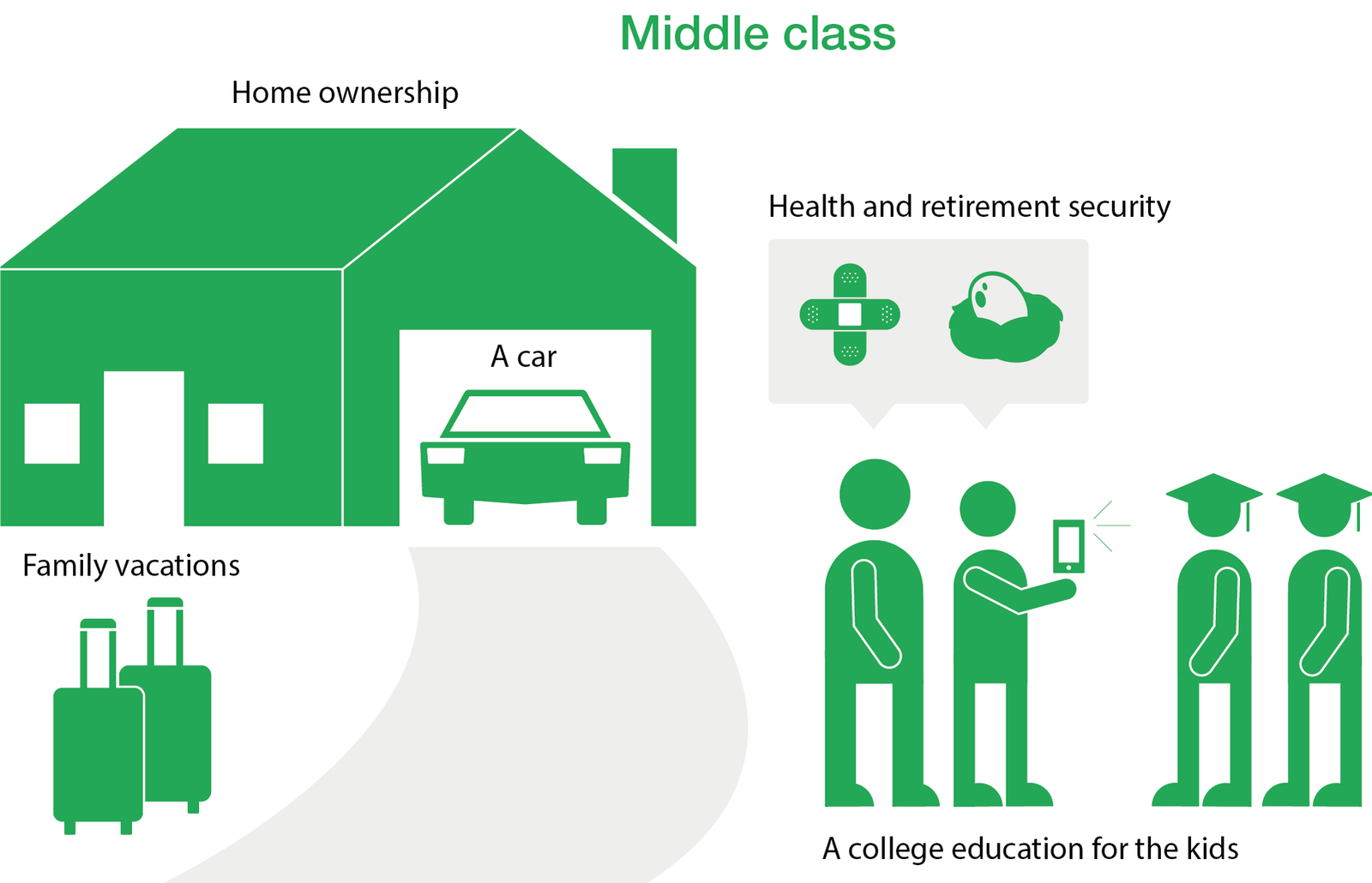

The middle class plays a crucial role in the taxation of an economy for several reasons. Firstly, the middle class is often the largest contributor to tax revenue in many countries. Their consistent income levels and high employment rates make them a reliable source of tax revenue for the government.
Secondly, the middle class is essential for supporting government spending on public services and infrastructure. The taxes paid by the middle class contribute to funding education, healthcare, transportation, and other essential services that benefit society as a whole.
Additionally, the middle class’s consumption patterns contribute significantly to indirect taxes, such as sales taxes and value-added taxes. Their spending on goods and services provides a substantial portion of government revenue.
Moreover, a thriving middle class is essential for overall economic growth and stability. By taxing the middle class fairly and effectively, the government can ensure that income inequality is reduced, and the economy is more balanced and sustainable.
Furthermore, a strong and prosperous middle class contributes to social and political stability. Fair taxation of the middle class can help in reducing social disparities and promoting a sense of equity and justice within society.
In summary, the middle class is vital for taxation in an economy due to its substantial contribution to tax revenue, support for government spending, significant role in indirect taxes, and its overall impact on economic and social stability.
The middle class, as the backbone of the economy, plays a pivotal role in driving economic progress in Pakistan. Their contributions to economic growth through consumption, productivity, taxes, and investments in education and skills are significant. However, despite their crucial role, the middle class faces challenges. They bear a heavy tax burden and receive few compensatory benefits, making upward social mobility difficult.
The middle class, as the largest consumer segment, not only drives demand for products and services but also creates employment opportunities. Many middle-class individuals, as entrepreneurs and professionals, are at the forefront of innovation and the establishment of new businesses. Their role in promoting political and social stability through democratic procedures and moderation is equally commendable.
However, the middle class faces significant challenges with the current tax system. They are subject to high direct and indirect taxes, which erode their available income. Despite their efforts to improve their circumstances through education and professional development, the tax system deprives them of a substantial portion of their earnings without providing adequate public services in return.
Furthermore, the middle class indirectly sustains the upper class through the current tax system. Many affluent individuals and firms, due to loopholes and lack of enforcement, evade their tax obligations, leaving the middle class to bear the majority of the tax burden. For instance, the lack of proper property tax enforcement allows the wealthy to avoid their fair share, while the middle class continues to pay their taxes. This unjust tax system traps many middle-class households in a financial cycle that prevents them from saving or investing for the future.
To address these challenges, it is important to expand the tax base to ensure that the most affluent individuals and major enterprises contribute equally. This can be achieved by eliminating legal gaps and enhancing the implementation of tax regulations. Additionally, reducing the government’s dependence on indirect taxes and enhancing public services, such as healthcare and education, is crucial. Reforms of state-owned businesses are also necessary to allocate resources towards critical sectors and mitigate financial inefficiencies.
Therefore, the challenges faced by the middle class demand a comprehensive strategy. This strategy should include tax reforms, improved public services, and restructuring of government institutions. By establishing a fairer tax system and enhancing public services, Pakistan can create a more robust and resilient middle class, leading to a more affluent and prosperous society for all.