Zafar Iqbal
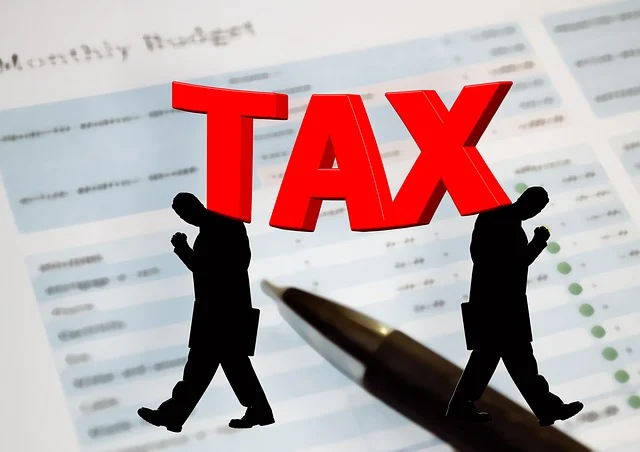
There are moments when a government policy, even one with legitimate intentions behind it, lands on the public in a way that reveals exactly how little the state understands about the lives of ordinary people. The Federal Board of Revenue’s push to install point-of-sale systems in medical clinics and healthcare facilities is one of those moments. The Pakistan Medical Association has responded with alarm, calling it the opening move in a campaign to tax basic health services. The FBR has not yet provided the kind of clear, credible, public clarification that would put those concerns to rest. And until it does, the alarm is entirely reasonable.
Let us begin with the principle, because the principle matters more than the mechanics. Taxing basic medical care is wrong. Not inconvenient, not suboptimal, not something that requires balancing against revenue targets. Wrong. In every country that has built a functional relationship between the state and its citizens, healthcare sits in a protected category. The reasoning is not complicated. Illness is not a choice. When a person walks into a clinic, they are not exercising a consumer preference. They are dealing with a condition their body imposed on them without consultation. To place a tax on that interaction is to extract money from people at the precise moment they are most vulnerable, least able to absorb additional costs, and most in need of the state’s protection rather than its appetite.
This is not a radical position. It is the settled consensus of virtually every developed country and most developing ones. Governments that tax physician income do so because income is a fair subject for taxation. Governments that tax medically necessary procedures do so because they have either run out of ideas or run out of scruples. Pakistan has been doing both, and the FBR’s latest initiative risks making a bad situation worse.
The existing picture is already difficult to defend. Most medicines in Pakistan carry a nominal one percent tax, which sounds reasonable until you look at the other end of the supply chain, where the ingredients those medicines are made from can attract taxes as high as eighteen percent. That gap between what is declared and what is actually paid along the production chain feeds directly into the consumer prices that patients face at the pharmacy counter. A person buying medication for a chronic condition is not buying a luxury. Every rupee added to that price by a tax somewhere in the chain is a rupee that person must find from somewhere else, often from food, from a child’s school expenses, from savings that do not exist.
Medical devices face a similar problem. In countries that have thought seriously about healthcare accessibility, essential medical equipment receives tax exemptions because the people who need that equipment are already paying enough. In Pakistan, many of these devices carry tax burdens that their equivalents elsewhere do not. The result is higher costs passed to patients, reduced investment in modern clinical equipment, and a healthcare sector that operates with one hand tied behind its back while being asked to serve a population of two hundred and forty million people.
Now into this landscape arrives the POS requirement, and the PMA’s concern is that it signals a new phase of extraction rather than administration. That concern deserves an honest answer, not a bureaucratic non-response. If the FBR’s genuine purpose is income estimation, meaning using transaction data to establish a clinic’s revenue and from that revenue determining whether the owner is accurately declaring their taxable income, then the policy has a defensible logic. The tax evasion problem among self-employed professionals in Pakistan is real and serious. Salaried workers, including employed doctors, are taxed at source and have no room to hide. Business owners and independent practitioners operate under an entirely different set of practical arrangements, and a significant number of them report incomes that bear no credible relationship to the scale of their practices. If POS data helps close that gap, it serves a legitimate purpose.
But the FBR needs to say this plainly and build the system accordingly. The PMA has raised the question of patient privacy, which is not a trivial concern. Medical records carry a different weight than a restaurant receipt. A system that records transaction values without recording patient identities or medical details can address the revenue estimation purpose without creating a database of who went to which doctor for what condition. That is a design choice, not a technical impossibility, and the government should commit to it clearly and in writing rather than leaving the question open while anxiety builds in both the medical profession and the patient population.
The deeper issue, though, is not the POS system in isolation. It is the direction of travel. Pakistan’s healthcare sector is already taxed in ways that contravene international norms. The government’s obligation is to move the healthcare tax burden down, not up. Quality healthcare is not a government favour. It is a state responsibility, and a government that treats the sick as a revenue source is a government that has confused its function. The state exists to protect its citizens, and protection from illness and its financial consequences is among the most basic forms that protection can take.
There are many places in Pakistan’s economy where the FBR should be looking harder and collecting more aggressively. Untaxed agricultural income above a certain threshold. Real estate transactions reported at rates that bear no relationship to actual values. Commercial activity in sectors where documentation has been deliberately avoided for decades. These are the frontiers of tax expansion that would raise revenue without punishing the sick.
A functioning tax system is one where those who earn more pay more, where economic activity is documented honestly, and where essential services are protected rather than raided. Pakistan is working toward that system, or at least it should be. The healthcare sector is not where that work should show its teeth.
Do not tax the sick to fund the state. The sick have already paid enough.