
Khalid Masood Khan
There are failures of governance that announce themselves loudly, through crises, protests, and headlines. And then there are failures that persist quietly for decades, accepted as background noise, never quite urgent enough to force the kind of reckoning they deserve. Balochistan’s healthcare collapse belongs to the second category. It has been visible for years. It has been documented, discussed, and lamented. Yet the numbers keep telling the same story, and the people keep bearing the same burden.
The provincial health secretary’s recent admission that more than eighty percent of Balochistan’s residents have no access to primary healthcare is not a revelation. It is a confession. A confirmation, delivered in official language, that the state has failed its most basic obligation to the majority of the people living in Pakistan’s largest province by area. Primary healthcare is not a luxury. It is the first line of defence between a population and preventable suffering. When eight out of ten people cannot reach it, the word reform becomes almost meaningless. What is being reformed, and for whom?
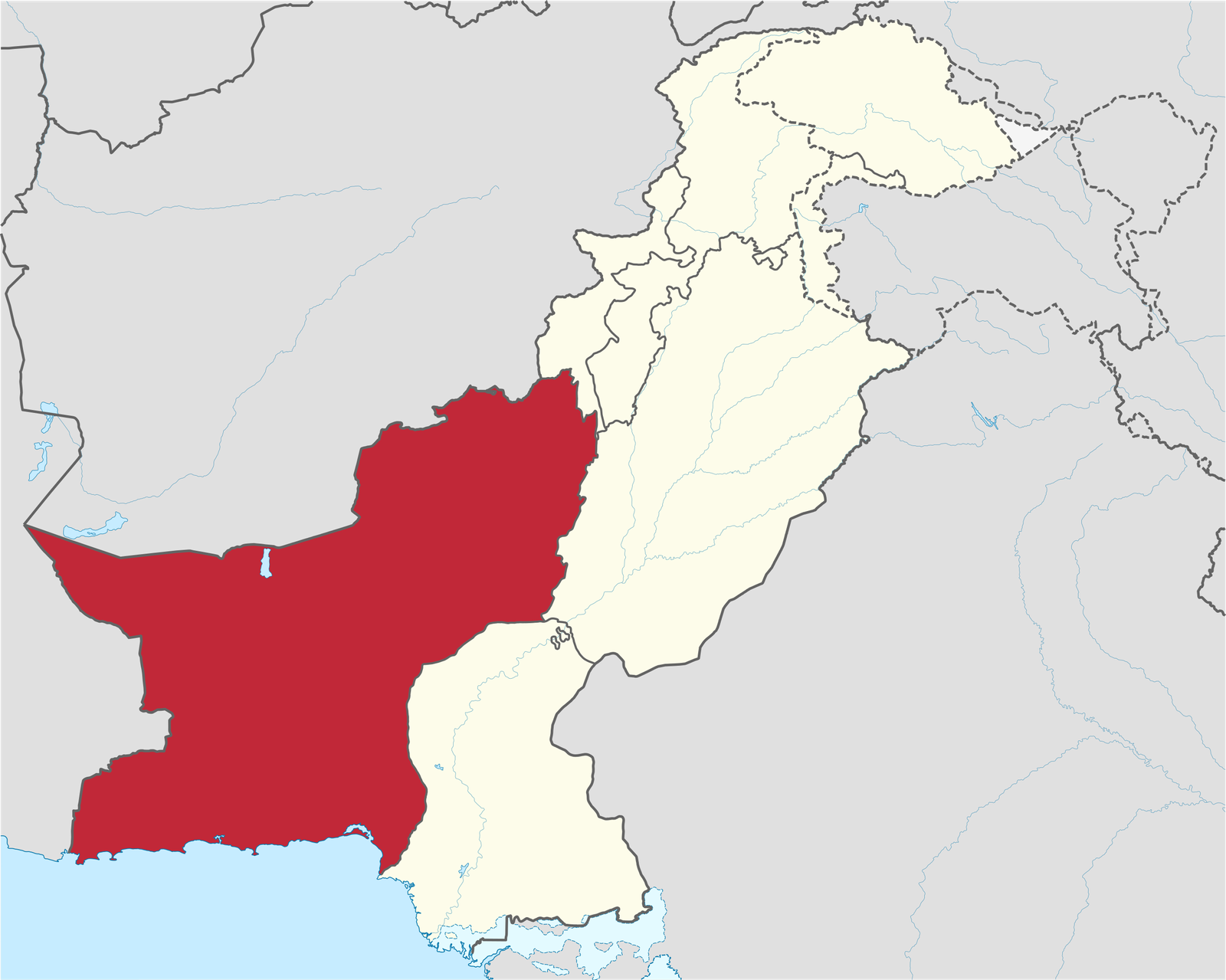
The standard response to questions about Balochistan’s healthcare crisis leans heavily on geography. The province is vast. Its population is scattered across terrain that would challenge any service delivery model. Roads are poor. Distances are enormous. These points are all true, and they are not trivial. Running a functioning health system across Balochistan’s 347,000 square kilometres, with communities separated by mountain ranges and desert, is genuinely harder than doing the same in a compact, densely populated province like Punjab. Anyone who dismisses those challenges without acknowledging their real weight is not being serious.
But here is the problem with leaning too hard on geography: these conditions are not new. The mountains were always there. The distances were always there. The scattered settlements were always there. What changed over the decades is not the terrain. What changed, or rather what failed to change, is the political will and the financial commitment to build a health system that actually fits the province it is supposed to serve. Geography explains the difficulty. It does not explain the neglect.
The budget comparison is where the structural imbalance becomes impossible to ignore. Punjab’s health budget alone stands at Rs550 billion. Balochistan’s entire development budget, covering every sector from health to education to infrastructure, amounts to Rs250 billion. That is not a gap. It is a chasm. And it reflects something deeper than poor planning. It reflects a federal and provincial resource allocation logic that has consistently treated Balochistan as a residual concern rather than a priority. When a province with roughly five percent of the national population sits on a vast share of the country’s natural resources and still cannot fund a basic health system, the questions being raised are not administrative. They are political.
Human resource shortages are real and the promotion of several hundred medical officers is a genuine step, one that should be acknowledged. But steps taken on a road leading nowhere in particular do not amount to progress. A doctor who has been promoted is still a doctor working in a facility without reliable electricity. A paramedic with a better pay grade is still a paramedic trying to provide care in a building that should have been condemned years ago. The honest acknowledgement of workforce challenges risks becoming, as it often does in policy discussions, a way of shifting responsibility onto the workers themselves. A committed, trained, and dedicated health workforce is essential. But commitment has limits. No amount of professional dedication compensates indefinitely for the absence of functioning equipment, medicines, or infrastructure. To keep praising the workforce while failing to fix the conditions they work in is not governance. It is exploitation dressed up as gratitude.
There are brighter notes worth recording. Digitisation efforts and satellite connectivity for telemedicine represent genuine attempts to close gaps using available technology. In a province where physical access is so constrained, the ability to consult a specialist remotely can make a real difference for communities that would otherwise receive no specialist input at all. These initiatives deserve support and expansion.
Yet technology operates within constraints that it cannot dissolve on its own. Telemedicine requires a device, a connection, and a literate or assisted user at the other end. It requires power. It requires a basic-level facility that can act on whatever advice the remote consultation provides. And crucially, it does not move patients to operating theatres, deliver babies safely, or treat injuries from road accidents or violence. For a province where many communities are effectively cut off by the absence of roads, even the most advanced digital health infrastructure remains partial. You cannot telemedicine a surgery. You cannot video-call your way out of a complicated childbirth in a village twelve hours from the nearest hospital. Without roads, without physical infrastructure, technology is a supplement at best. It cannot be the strategy.
What Balochistan needs is not the next pilot project or the next round of announcements about digital transformation. What it needs is something far less exciting and far more demanding: sustained political commitment over a long period of time, backed by substantially increased funding and designed around the actual conditions of the province rather than borrowed from a template written for somewhere else. Health must be treated not as a line item to be managed but as a constitutional obligation to be fulfilled. The 1973 Constitution does not exempt the state from its duty to citizens based on their postcode or the complexity of their terrain.
The people of Balochistan have waited long enough. They have watched the announcements come and go. They have seen reform packages arrive, generate some coverage, and quietly fade without the transformation they promised. The eighty percent figure is not a statistic to be managed in a press conference. It is an indictment. It describes a population that the Pakistani state has, in practice, left to manage illness, childbirth, and emergency on its own.
Until genuine investment arrives, until the funding gap is taken seriously, and until the political class treats Balochistan’s healthcare crisis as a national emergency rather than a provincial inconvenience, the burden will continue to fall on the workers who are already overstretched and on the people who have already been waiting far too long.