
Editorial
Pakistan’s election regulator announced on Wednesday that the printing of 260 million ballot papers is in progress and will be done by February 3, after the allocation of election symbols. It also cautioned that some constituencies may face election delays if the requests to change symbols continue. Pakistan’s election process has dozens of political parties and symbols, with thousands of candidates competing. For this election, 150 symbols have been given to political parties and 174 to independent candidates. “The ECP has instructed three printing corporations to print the ballot papers, and the printing work has begun, which will be finished by February 3,” ECP spokesperson Syed Nadeem Haider told the press that “18,059 candidates are contesting in this year’s election and 260 million ballot papers are being printed for both national and provincial assemblies,” he said.
Haider said that 40 million more ballot papers were being printed than the 220 million printed in 2018 and that 800 tons of paper were used in 2018, while an estimated 2070 tons would be used in the upcoming elections. Haider warned that many candidates’ appeals to change their election symbols could delay the voting in some constituencies. “If the trend of changing election symbols does not stop, there is a possibility of election postponement due to the need to reprint the ballot papers within the limited time available, and there is worry about wasting the special paper used for the ballots as reprinting will be necessary,” he said. “The idea is also being considered that if the changing of election symbols does not end, the only option left will be to delay the elections in such constituencies,” Haider added.
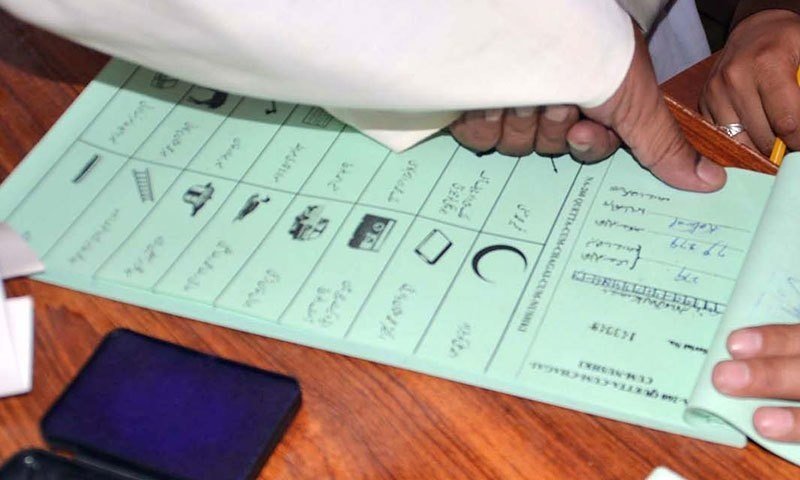
The requests to change symbols came after the Pakistan Tehreek-e-Insaf (PTI) party of former Pakistani prime minister Imran Khan lost its election symbol of a cricket bat because it did not hold internal party elections, which is a requirement for any party to participate in the February 8 vote. Khan’s party now has no single electoral symbol to unite behind, and instead, each of his hundreds of candidates has been assigned different symbols from an independent symbol list. The symbols are displayed on the ballot papers, and voters can mark their preferred symbol. The ballot paper also has names, but over 40 per cent of Pakistan’s 241 million population cannot read or write, making the images more important for identification. Separate symbols for each PTI candidate will also mean more expenses to create different campaign materials for each candidate.
Apart from the statistics provided by the ECP, it is imperative that elections are held on time and also in a transparent manner so that political stability may be ensured in Pakistan.
Please, subscribe to the YouTube channel of republicpolicy.com