
Mudassir Rizwan
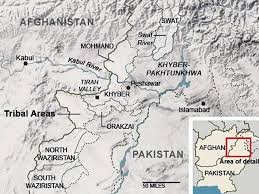
That the Tirah Valley remains a deeply troubled region is hardly a matter of debate. Nestled along the Afghan border and spread across Orakzai District and the southern parts of Khyber District in Khyber-Pakhtunkhwa, the valley has long been vulnerable due to its geography, history of militancy, and weak state presence. Credible security reports now suggest that Tirah has once again become a sanctuary for militants belonging to several banned outfits, including Islamic State–Khorasan (IS-K), Lashkar-i-Islam, and Jamaatul Ahrar. These groups have not only challenged the writ of the state but have also endangered civilian life and regional stability.
In such circumstances, the federal government is well within its constitutional mandate to act. In fact, it is duty-bound to restore state authority, eliminate terrorist hideouts, and ensure that Pakistani territory is not used to threaten internal security or regional peace. Counterterrorism operations, including the use of military force where necessary, are legitimate tools of the state when faced with armed groups that reject the constitution and operate outside the law.
At the same time, the role of the provincial government cannot be reduced to that of a silent spectator. As the elected representative of the people of Khyber-Pakhtunkhwa, the provincial government has both the right and the responsibility to raise concerns, safeguard civilian interests, and ensure that any state action does not trample upon the rights and dignity of its citizens. Federal authority and provincial autonomy are not mutually exclusive; they are meant to complement each other, particularly in matters as sensitive as internal security.
What is deeply concerning, however, is the manner in which the centre and the province have publicly clashed over the Tirah situation. Instead of coordinated decision-making, joint planning, and shared ownership of both the security operation and its humanitarian consequences, the two tiers of the state appear locked in a blame game. This public discord sends a damaging signal: that there is no unified national approach to counterterrorism. Such visible disunity weakens the state’s moral and political authority and creates openings for anti-state elements to exploit confusion and mistrust.
More tragically, this institutional friction has diverted attention from the real victims of the crisis: the people of Tirah. As military pressure mounts and militant activity intensifies, local residents have been forced to leave their ancestral homes. These are not nomads engaged in routine seasonal movement, as some official narratives suggest. They are settled communities, uprooted by fear, uncertainty, and the looming threat of violence. Families are fleeing under duress, not choice.
The timing makes their suffering even more severe. Winter in these mountainous regions is unforgiving, and climate change has only intensified the hardship through harsher weather patterns and reduced predictability. Displacement under such conditions is not merely inconvenient; it is life-threatening. Elderly people, women, and children bear the brunt of this forced migration, often without adequate transport, shelter, or medical care.
Here, the responsibility of the state becomes even clearer. Security operations may be unavoidable, but humanitarian obligations are non-negotiable. Both the federal and provincial governments must immediately shift focus toward the displaced population. Safe and dignified evacuation routes, temporary shelters protected from extreme weather, adequate food supplies, clean water, and medical facilities are not acts of charity; they are constitutional duties.
Moreover, communication with affected communities must be honest and respectful. Downplaying displacement as “seasonal migration” erodes trust and deepens resentment among people who already feel marginalised. The residents of Tirah have paid a heavy price over decades of conflict. Treating their suffering as an administrative footnote risks alienating precisely those citizens whose cooperation is essential for lasting peace.
Equally important is the need for a clear, coordinated post-operation plan. Military action, by itself, cannot secure Tirah Valley in the long term. Once militants are cleared, the vacuum must not be left unfilled. Civil administration, policing, development projects, schools, healthcare, and economic opportunities must follow swiftly. Otherwise, history will repeat itself, and the valley may once again slide into instability.
Ultimately, the crisis in Tirah Valley is not only a test of Pakistan’s counterterrorism capacity but also of its governance maturity. A divided state cannot effectively confront militancy, nor can it convincingly claim to protect its citizens. Unity of purpose, clarity of policy, and compassion for those caught in the crossfire are essential.
If the federal and provincial governments can rise above political point-scoring and act as partners rather than rivals, Tirah Valley can move toward stability. If not, the cost will continue to be borne by ordinary people—displaced, unheard, and left to endure yet another winter away from home.