
Dr Shabana Safdar Khan
The recent withdrawal of Danish badminton player Mia Blichfeldt from the India Open, citing “extreme pollution” in New Delhi, is more than a sports story. It is a stark reminder of the public health emergency that plagues South Asia, where millions of people breathe some of the world’s most toxic air daily. While the incident technically involved India, it highlights a problem that transcends borders. India, Pakistan, and Bangladesh consistently rank among the countries with the worst urban air quality, with cities such as Delhi, Noida, Dhaka, Lahore, and Peshawar topping global pollution lists. Kabul, too, struggles with worsening air quality, underscoring the fact that air pollution is a crisis affecting nearly every major urban center in the region.
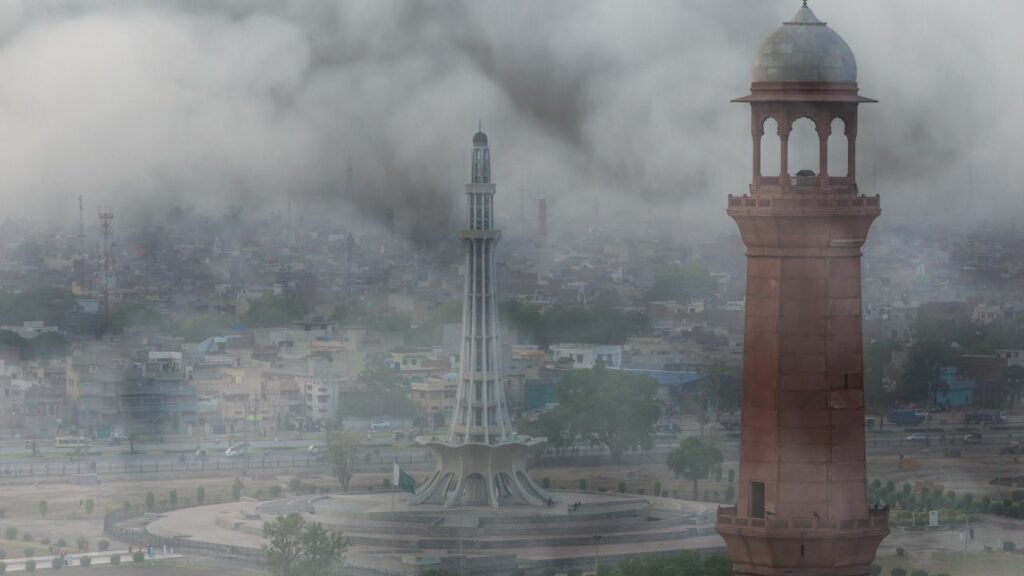
The Indo-Gangetic Plains, shared by India and Pakistan, constitute one of the world’s most polluted airsheds. A recent report highlighted that India alone hosts 17 of the 30 most polluted cities globally, while Pakistan ranks as the third most polluted country in the world. Delhi and Lahore, in particular, compete for the unenviable distinction of the world’s most polluted major city, with PM2.5 concentrations regularly exceeding twenty times the World Health Organization’s safe limit. These fine particulate matters penetrate deep into the lungs, aggravating respiratory illnesses, cardiovascular disease, and a host of other chronic conditions. Children, the elderly, and those with preexisting health conditions are especially vulnerable, creating a public health crisis of unprecedented scale.
The causes of this environmental catastrophe are well known but stubbornly persistent. Vehicular and industrial emissions, uncontrolled construction dust, and the widespread practice of crop stubble burning, which is illegal but still prevalent, combine with winter weather patterns to trap pollutants in the air, creating the infamous smog that blankets cities like Delhi and Lahore each year. Despite efforts by both India and Pakistan to control pollution, progress has been uneven at best. Every winter brings new pollution highs, making headlines around the world and raising questions about the region’s environmental governance.
The health risks, however, are only part of the story. Pollution in South Asia has economic, social, and geopolitical ramifications. International athletes refusing to compete in New Delhi or other polluted cities threatens India’s aspirations to host global sporting events, including the Olympics. Beyond sports, urban air pollution undermines productivity, increases healthcare costs, and contributes to premature deaths, creating a burden that no city or nation can tackle alone.
The regional nature of the problem demands a coordinated, airshed-based approach. Air pollution does not respect national borders. The winds that carry smog from Punjab to Delhi or Lahore are indifferent to human-drawn lines on a map. The World Bank has repeatedly stressed that isolated national efforts, however well-intentioned, cannot solve a crisis of this magnitude. Cooperation between India, Pakistan, Bangladesh, and other affected countries is essential, focusing on joint monitoring, coordinated policy measures, and enforcement against agricultural and industrial pollution sources.
Public awareness and engagement also play a critical role. Citizens in Delhi, Lahore, Dhaka, and other cities have started to demand cleaner air, but without strong regulatory enforcement and cross-border cooperation, these efforts remain limited. Regional governments need to invest in cleaner technologies, public transport, renewable energy, and urban green spaces to create sustainable solutions. Importantly, addressing agricultural practices like stubble burning will require incentives for farmers, adoption of modern harvesting techniques, and stricter compliance mechanisms.
The Indo-Gangetic air pollution crisis is also a moral and developmental issue. Millions of people are forced to live in a toxic environment because national and regional leadership has failed to treat clean air as a fundamental right. Children grow up in smog, workers commute through haze, and hospitals overflow with patients suffering from pollution-related ailments. This crisis will only worsen as urbanization accelerates unless South Asian countries recognize that pollution is a shared threat requiring shared solutions.
The case of Mia Blichfeldt serves as a wake-up call not just for India, but for the entire region. If elite athletes refuse to compete, it is a symptom of a deeper problem: South Asia is paying a global reputation cost for its environmental neglect, and the consequences extend far beyond sports. Collaboration on air quality management is no longer optional; it is a necessity for public health, economic stability, and international credibility.
The solution lies in regional dialogue, policy alignment, and joint implementation, supported by international organisations and scientific expertise. Clean air cannot be achieved by borders, walls, or isolated initiatives. Only a cooperative, region-wide strategy can hope to bring down pollution levels in Delhi, Lahore, Dhaka, and across the Indo-Gangetic Plains, ensuring that millions of people breathe freely, safely, and without fear of preventable disease.
South Asia’s toxic skies are a shared burden, and the responsibility to address them is collective. Without urgent action, the consequences for health, economy, and global perception will continue to mount. The time for coordinated, cross-border, and scientifically grounded action is now.