
Bilawal Kamran
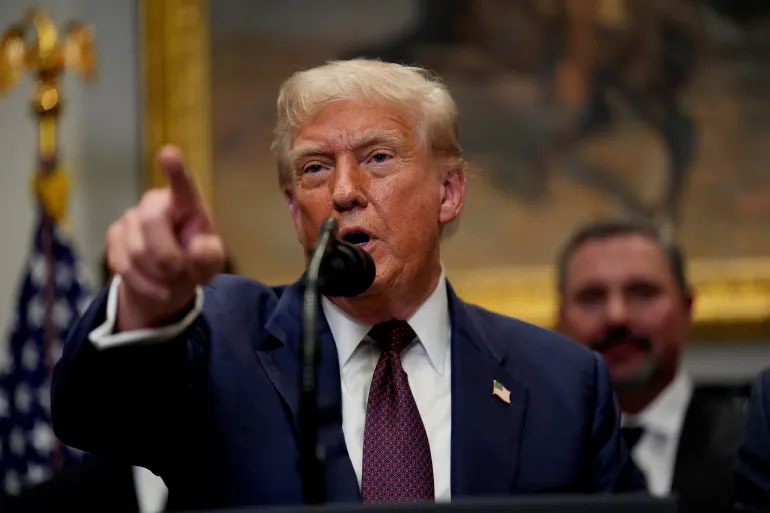
President Donald Trump’s new National Security Strategy (NSS 2025) reflects a clear continuation of his “America First” vision, signaling a decisive departure from traditional U.S. interventionist policies. Unlike previous administrations, the Trump White House emphasizes a non-interventionist approach, promising minimal interference in the domestic affairs of major powers, particularly China and Russia. While this approach has avoided friction with Beijing and Moscow, it presents a more ambiguous stance towards Europe. The NSS urges European allies to increase their defense spending and reduce reliance on U.S. military support, challenging decades of established transatlantic security arrangements. By prioritizing national interests over ideological commitments, the strategy signals a shift away from promoting global democracy, placing strategic pragmatism at the center of U.S. foreign policy.
<a href=”http://republicpolicy.com”>Follow republicpolicy.com</a>
The NSS 2025 has already led to tangible geopolitical realignments. Russian President Vladimir Putin’s expedited visit to New Delhi to strengthen defense agreements underscores the implications of Washington’s recalibrated approach in Asia. India’s refusal to publicly credit the U.S. for brokering the ceasefire in its May clash with Pakistan further highlights America’s shifting priorities. Washington’s tilt towards China in economic and technological spheres, including cooperation on trade and rare earth metals, demonstrates an overt attempt to consolidate strategic partnerships in the Western Pacific. The policy reflects a dual objective: maintaining robust military deterrence with allied nations while simultaneously engaging China as a key economic partner, a move that indirectly challenges India’s ambition for regional preeminence.
<a href=”https://www.youtube.com/watch?v=uL3-dG9koD4&t=229s&ab_channel=RepublicPolicy”>Follow Republic Policy YouTube</a>
Trump’s NSS frames him as a ‘peace-maker,’ outlining U.S. ambitions to mediate ongoing conflicts, notably the Russo-Ukrainian war. While the strategy underscores the U.S. role in easing India-Pakistan tensions, it maintains a strong focus on China as a central strategic concern. Analysts have described this as “flexible realism”—a pragmatic doctrine that balances engagement and deterrence. By reviving elements reminiscent of the 19th-century Monroe Doctrine, the strategy asserts U.S. influence over the Western Hemisphere, while simultaneously prioritizing economic and security interests in the Indo-Pacific. Such a stance reinforces U.S. dominance in critical global trade routes without committing to direct military involvement in regional conflicts, including Taiwan.
<a href=”https://x.com/republicpolicy”>Follow Republic Policy X/Twitter</a>
The NSS 2025 marks a clear departure from prior administrations that often intertwined U.S. strategic interests with the promotion of democratic values worldwide. Trump’s approach is national-interest driven, emphasizing tangible benefits over ideological commitments. For Europe, the strategy’s message is both stark and strategic: allies must contribute more financially and militarily to their own defense, signaling a long-overdue recalibration of NATO funding and operational responsibilities. This stance could reshape European security policies, compelling nations to rethink their defense strategies and reliance on the United States as the primary guarantor of continental security.
<a href=”https://facebook.com/republicpolicy”>Follow Republic Policy Facebook</a>
In Asia, the NSS 2025 has catalyzed a complex web of strategic interactions. The U.S. has signaled increased economic cooperation with China while maintaining military deterrence through alliances in the Western Pacific. This dual-track policy affects India’s regional calculations, especially in defense procurement and technology partnerships. Putin’s engagement with New Delhi illustrates that global actors are adjusting to the recalibrated U.S. stance, seeking alternative security arrangements and trade agreements to mitigate potential uncertainties. The NSS suggests a U.S. approach that balances competition with cooperation, where economic interdependence is leveraged alongside selective military commitments.
<a href=”https://tiktok.com/@republic_policy”>Follow Republic Policy TikTok</a>
The Indo-Pacific emerges as the linchpin of NSS 2025, both economically and geopolitically. While the U.S. emphasizes regional stability, it clearly discourages conflict escalation, particularly over Taiwan. By prioritizing economic integration and maintaining strategic deterrence, the policy seeks to prevent regional wars while securing U.S. access to critical trade routes, technology, and natural resources. This pragmatic stance suggests that Trump envisions a U.S.-led order that secures influence without entangling the nation in open-ended military engagements.
<a href=”https://instagram.com/republicpolicy”>Follow Republic Policy Instagram</a>
The NSS also underscores the importance of technological and economic partnerships as central pillars of modern security. U.S.-China collaboration in rare earth metals, semiconductors, and digital infrastructure highlights an acknowledgment that contemporary power is as much economic as it is military. Trump’s strategy implicitly recognizes that U.S. leadership cannot rely solely on traditional military preeminence; it must adapt to the globalized, technology-driven context of the 21st century. Economic engagement with strategic competitors, underpinned by military deterrence, represents a recalibrated formula for maintaining U.S. influence globally.
<a href=”https://whatsapp.com/channel/0029VaYMzpX5Ui2WAdHrSg1G”>Follow Republic Policy WhatsApp Channel</a>
Strategically, NSS 2025 reflects a delicate balance between engagement and restraint. While it positions the United States as a stabilizing force in global conflicts, it simultaneously limits intervention in internal affairs of major powers. By doing so, the policy reduces the risk of direct confrontation with nuclear-armed states while fostering opportunities for trade, technological cooperation, and geopolitical influence. Europe, however, must adjust to a new reality where the U.S. prioritizes interests over ideology, asking allies to assume greater responsibility for their own security and economic resilience.
The policy also signals a significant recalibration in South Asia. U.S. mediation in the India-Pakistan dynamic is acknowledged, yet the NSS clearly prioritizes strategic engagement with China. India’s aspirations for regional dominance are therefore indirectly challenged by the U.S. pivot, highlighting the interconnectedness of economic collaboration, military deterrence, and diplomatic engagement in shaping regional order.
NSS 2025 reflects a clear shift in global diplomacy. It signals an era where U.S. foreign policy is pragmatic, transactional, and focused on securing national interests through selective engagement. While the strategy presents opportunities for cooperation, particularly in trade and technology, it simultaneously challenges traditional allies to step up in defense and regional security roles. By prioritizing “America First,” Trump’s administration seeks to consolidate influence in strategically critical regions while avoiding open-ended conflicts.
In conclusion, President Trump’s NSS 2025 represents a bold experiment in flexible realism. The strategy prioritizes non-interventionism, economic engagement, and selective military commitment, challenging both allies and competitors to recalibrate their expectations. Europe is urged to finance and secure itself more independently, while the Indo-Pacific remains the primary theater for U.S. influence and deterrence. Flexible partnerships with China aim to enhance trade and technological cooperation, even as the U.S. maintains its military deterrent in the region. For global actors, the message is clear: U.S. foreign policy under Trump is transactional, interest-driven, and strategically adaptive, setting the stage for a new era of geopolitics. NSS 2025, therefore, is less about ideology and more about pragmatism, signaling a U.S. foreign policy that is prepared to negotiate, deter, and collaborate selectively in pursuit of national objectives.
<a href=”http://republicpolicy.com”>Follow republicpolicy.com</a>