
Editorial
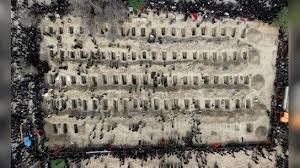
The United Nations Human Rights Council is convening two urgent debates this week that together reveal the full moral weight of a war that has already consumed too many innocent lives. The second of these debates, scheduled for Friday, carries a particular gravity that no serious conscience can afford to dismiss. It concerns the killing of at least 165 people, most of them children, in a single airstrike on a school in Minab, a southern Iranian city, on the very first day of the war on February 28. Preliminary findings reported by The New York Times indicate that a United States Tomahawk cruise missile struck the school due to a targeting error. Iran, China, and Cuba have formally requested the debate, framed around the protection of children and educational institutions in armed conflict.
This is not a matter of geopolitics alone. It is a matter of justice, accountability, and the irreducible value of a child’s life. When a missile, regardless of whose hand launched it, reduces a classroom to rubble and buries children beneath the debris of their own school, the world is obligated to ask hard questions openly and honestly. A targeting mistake does not erase the moral responsibility that follows. States that possess the most advanced weapons systems in human history carry a proportionally greater duty of care. That duty cannot be discharged with a preliminary report and silence.
The parallel debate, initiated by the Gulf Cooperation Council and Jordan, condemns Iranian strikes across the region, demands reparations, and calls for an immediate ceasefire of Iranian military action. Both debates, taken together, establish a single truth: this war is spreading its cruelty without discrimination, and the institutions of international law exist precisely for moments like this. Justice delayed in the face of dead children is not diplomacy. It is moral failure.