
Arshad Mahmood Awan
The Middle East remains one of the most complex geopolitical regions in the world, where history, religion, and identity intersect in ways that deeply shape public opinion and state behavior. Among the many sensitivities that any external actor must consider, Israel occupies a uniquely contentious position. Across Islamic countries, Israel is not merely a political adversary; it is a symbol intertwined with issues of justice, sovereignty, and historical grievance. For many in the Islamic world, the Palestinian cause is not just a territorial or political dispute—it is an emotional and ideological matter embedded in collective memory. Consequently, any international policy that is perceived as advancing Israel’s agenda risks alienating entire societies, regardless of the official stance of governments.
This dynamic creates a profound challenge for the United States. Historically, American foreign policy has often aligned closely with Israeli interests in the Middle East, from military support and diplomatic backing to intelligence sharing. While such alignment may serve short-term objectives, it comes with long-term consequences that are rarely acknowledged. When the U.S. frames its regional policy through the lens of Israel, it limits its ability to engage independently with Islamic nations. Public support, which is crucial for sustainable foreign policy, is significantly undermined when populations perceive American actions as serving Israeli priorities rather than their own regional or global concerns.
The issue is not merely one of state-to-state relations. Islamic countries are diverse, encompassing democracies, monarchies, and authoritarian regimes. Even when governments maintain pragmatic ties with the United States, popular opinion can be deeply resistant to policies seen as favoring Israel. For example, the people of countries like Turkey, Indonesia, Pakistan, and Lebanon may have governments with which the U.S. negotiates, but public sentiment toward Israel remains consistently negative. The U.S. risks creating a scenario in which its official state relationships are decoupled from societal legitimacy, weakening its influence and ability to operate effectively in the region.
The problem intensifies when considering the growing multipolarity of the global order. As emerging powers such as China, India, and Russia expand their influence, and as Islamic countries seek greater autonomy in foreign policy, American hegemony is no longer unchallenged. If U.S. policy continues to operate exclusively through the prism of Israel, it may face resistance not only from popular opinion but also from states seeking to assert their independence. In a multipolar world, policies perceived as biased toward one side risk alienating entire blocs of nations, making cooperation on shared interests—from counterterrorism to trade—more difficult to achieve.
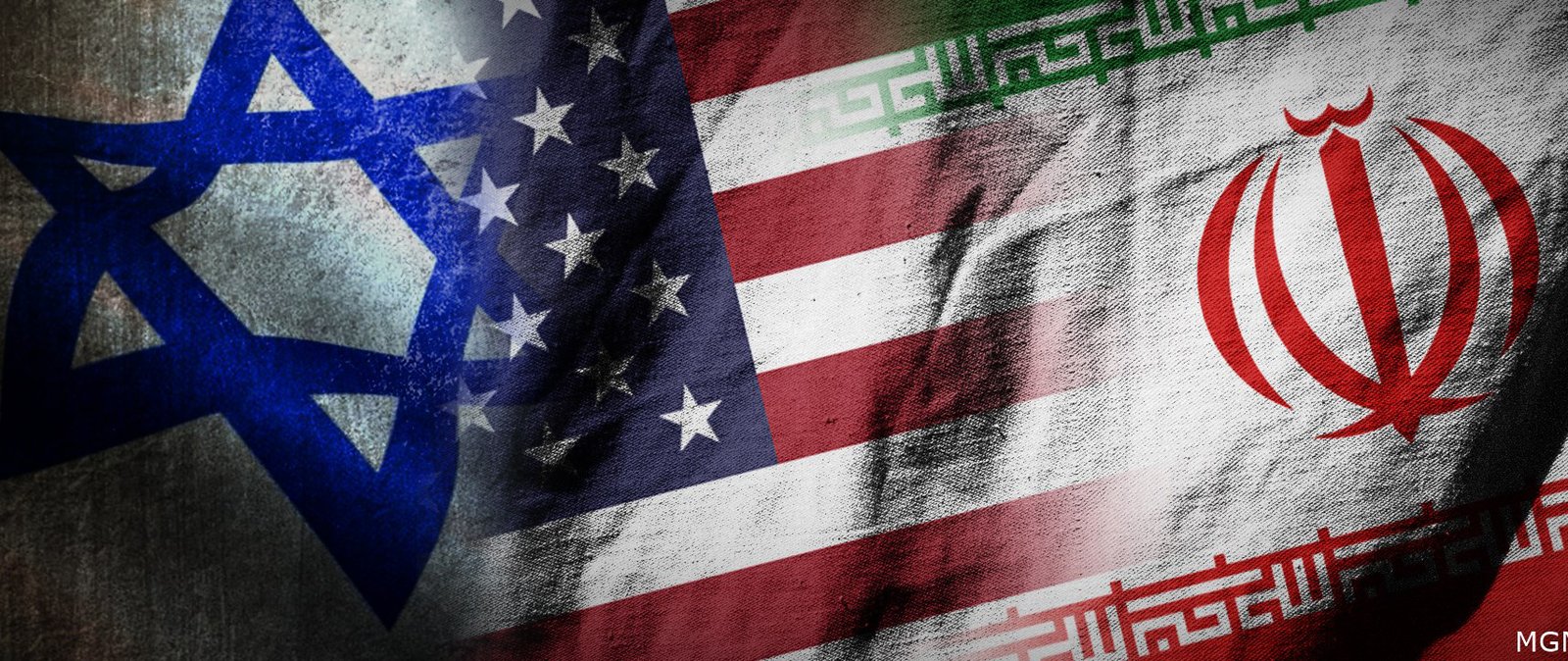
The sensitivity toward Israel extends even to countries with complex relationships with the United States. Iran, for instance, is often portrayed in Western narratives as a primary adversary. Yet, the Iranian regime’s public rhetoric and domestic policies are not solely defined by anti-American sentiment. The regime also draws domestic legitimacy from its stance on Israel and the Palestinian issue. If the U.S. attempts to pursue regime change or coercive policies in Iran while operating through Israel’s interests, it risks unifying Iranians across political divides. Popular resentment toward perceived external interference is magnified when it is associated with Israel, creating an unlikely coalition between the government and opposition forces against U.S. actions. This is not a theoretical concern—history has repeatedly shown that external pressure on states tied to Israel often strengthens, rather than weakens, their domestic legitimacy.
Understanding the depth of this sensitivity requires looking beyond political calculations to the societal and cultural dimensions. Islamic nations are not monolithic, but they share certain historical and cultural connections that foster a sense of collective identity. The Palestinian cause resonates across borders, transcending political and ideological differences. This creates an environment in which Israel-related issues can unite populations that might otherwise disagree internally. Therefore, if U.S. interventions are perceived as advancing Israel’s agenda, they risk generating widespread public opposition not just in one state, but across multiple nations in the Islamic world.
The United States’ reliance on Israel as a regional proxy also limits its flexibility in diplomacy. When policy is filtered through the lens of another nation’s priorities, it constrains the ability to pursue independent strategies that address shared concerns such as economic development, counterterrorism, climate change, or regional security. Independent, impartial engagement is crucial for building durable alliances and fostering cooperation. A policy overly aligned with Israel risks being dismissed as biased or self-serving, reducing the credibility of U.S. initiatives even when they are in the interest of the region.
Moreover, the consequences are not limited to public opinion or regional diplomacy. They can have strategic repercussions on global platforms. Islamic populations are significant worldwide, and public opinion in these societies can influence global discourse on critical issues. Alienating these populations by framing policies through Israel risks undermining American soft power, which is essential for sustaining influence in a multipolar world. Public legitimacy is increasingly intertwined with global strategy; countries that fail to recognize societal sensitivities may find themselves diplomatically isolated or forced into confrontational positions unnecessarily.
To address these challenges, the United States must adopt a policy framework that is independent, balanced, and cognizant of societal sensitivities. Engaging with Islamic countries on shared interests—energy security, trade, education, public health—without conflating these agendas with Israel’s political objectives is critical. Diplomatic efforts must emphasize mutual respect, sovereignty, and non-interference, allowing partnerships to develop organically rather than being perceived as imposed through alignment with another nation’s priorities.
This approach also demands a nuanced understanding of the region’s internal dynamics. Not all opposition to Israel translates into anti-American sentiment. Governments and societies can differentiate between U.S. engagement that respects their interests and foreign intervention framed as a proxy for another state. Policies that respect local perspectives, prioritize dialogue, and demonstrate independence from third-party agendas are far more likely to secure both state and public support.
History provides clear lessons for such an approach. Interventions perceived as advancing Israeli interests—whether in Lebanon, Palestine, or broader Middle Eastern conflicts—have often galvanized opposition, reinforced local regimes, and deepened anti-American sentiment. Conversely, initiatives that focus on mutually beneficial objectives, decoupled from Israel’s agenda, have shown greater potential for cooperation and positive influence.
In conclusion, Israel occupies a sensitive and deeply symbolic position in the minds of many Islamic nations. U.S. policy that is overly filtered through the lens of Israeli interests risks alienating public opinion, undermining state relationships, and complicating long-term strategic objectives. To navigate the complexities of the Middle East effectively, the United States must pursue independent, balanced policies that respect societal sensitivities, prioritize mutual interests, and avoid conflating regional challenges with the priorities of a single ally. Recognizing and addressing this dynamic is essential for building credible, sustainable, and constructive engagement across the Islamic world, ensuring that U.S. foreign policy is both effective and legitimate.