
Tahir Maqsood Chheena
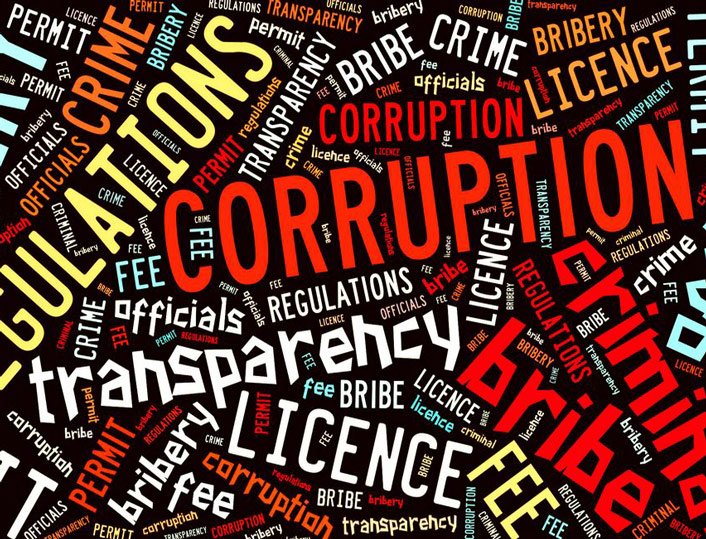
Controlling corruption is the fundamental administrative reform in Pakistan because corruption sits at the centre of almost every governance failure, every service delivery gap and every economic distortion that citizens experience in their daily lives. When public institutions are weakened by bribery, favoritism and political interference, decisions stop serving the public good and begin serving private interests, creating a cycle of inefficiency and mistrust that slows development and erodes state legitimacy. Corruption also drains public finances, discourages investment, undermines merit, weakens the rule of law and fuels inequality by allowing a small group to capture benefits meant for the wider population. As a result, no reform in the civil service, policing, local government or economic management can produce meaningful results unless corruption is tackled at its roots through transparent systems, strict accountability and a culture that rewards integrity. Therefore, addressing corruption is not one reform among many, it is the precondition for every other reform to succeed, and without it Pakistan cannot build a responsive, fair and effective administrative structure capable of meeting the needs of its people.
Corruption in Pakistan has become a deep cultural, social, administrative, and political problem. It is no longer limited to individuals or departments. It has become part of everyday behaviour, expectations, and incentives. People accept corruption as normal because there is no punishment for it, no social shame attached to it, and no political or cultural resistance to it. Pakistan cannot move forward unless corruption is controlled. This requires a detailed understanding of why corruption happens and how each layer of the system contributes to it. Only then can a realistic plan be developed for reducing it. Corruption harms economic development. It weakens institutions. It creates inequality. It destroys public trust. And it allows powerful groups to capture the state. Therefore it is necessary to build a plan that looks at cultural reasons, administrative reasons, legal reasons, financial reasons, human resource reasons, and political reasons, and then develop reforms that can work in a practical way in Pakistan.
The first major problem is cultural. In Pakistan corruption is not seen as a crime. It is seen as a normal part of life. People pay bribes and do not feel guilty. Officials take bribes and feel it is their right. Society does not shame corrupt people. Instead society often respects people who become rich quickly. There is no social accountability. Families do not question the source of wealth. Communities admire influence and power. This cultural acceptance has destroyed the moral foundation on which any anti corruption strategy can work. Therefore cultural reform must be the starting point. Schools must teach ethics and civic responsibility. Media must run campaigns about social harm caused by corruption. Religious leaders must speak about honesty. Communities must create a sense of shame about corrupt behaviour. Without cultural reform administrative accountability will fail because the society itself will continue to accept corruption.
The second major problem is administrative behaviour inside civil services. Many people enter public service for three reasons. They want job security. They do not want strict performance expectations. They know they will not be held accountable for poor work or corrupt practices. Civil services have become powerful groups with great authority and little oversight. These officers can stop files. They can delay approvals. They can misuse discretion. They can also sell their powers. This is a form of corruption that is more serious than simple embezzlement. It is the selling of authority. In Pakistan this type of corruption is common. Officers use their authority for financial gain. They protect each other. There are hardly any inquiries against high ranking officers. Almost no senior officers are removed from service for corruption. This creates a culture where corruption becomes safe, profitable, and consequence free.
The third problem is institutional weakness. Institutions in Pakistan are weak by design. Central power controls the system. Institutions are not allowed to grow independently. Anti corruption agencies are not autonomous. They cannot work freely. Police and bureaucracy hold their own members accountable. This creates a conflict of interest. If civil servants investigate civil servants how can they punish them. If police hold police accountable how can they take action. This protects corruption. The leadership at the top benefits from this weak system. Therefore corruption continues. No system can work when those who benefit from corruption also control the institutions designed to fight corruption.
The fourth problem is the legal structure. Many laws are outdated. Some are vague. Some are overlapping. Some contradict each other. This creates confusion. It creates loopholes. It helps corrupt people escape punishment. Laws such as the Prevention of Corruption Act of 1947 are too old. NAB laws have been amended several times. Some amendments have reduced its ability to investigate public officials. Laws related to money laundering, public procurement, financial crimes, and delegated legislation need major reforms. Without strong and clear laws anti corruption agencies cannot take firm action.
The fifth problem is the performance of anti corruption agencies. NAB, FIA, and provincial Anti Corruption Establishments have not produced the required results. Their conviction rates have fallen. The number of references and challans has reduced. Agencies have shifted their focus to less important cases. Most agencies lack technical skills. They cannot differentiate between criminal corruption and administrative incompetence. They cannot trace complex financial crime. They cannot handle digital evidence. They also face political pressure. Governments use these agencies to target opponents. This destroys credibility. Public trust declines. People stop believing that accountability is real.
The sixth problem is political behaviour. When political governments come into power through manipulation or deals they do not hold others accountable. They protect their allies. They attack their opponents. They influence institutions. They change laws for their own benefit. This creates an environment where corruption is used as a political weapon not a national duty. Political will is the most important component of any anti corruption reform. If the top leadership is honest the system becomes honest. If the leadership is corrupt accountability becomes selective and meaningless.
A roadmap to control corruption must address all these problems together. The plan must be realistic and based on Pakistan’s ground realities. Reform cannot be successful if it only focuses on laws. It cannot work if it only focuses on institutions. It must change culture. It must improve institutions. It must strengthen laws. It must create economic incentives for honesty. It must punish wrongdoing. And it must ensure political neutrality.
The first step is cultural change. This requires a national movement. Schools must include civic education. Media must run long term campaigns. Religious scholars must support ethical behaviour. Public campaigns must highlight how corruption destroys economy and society. Corrupt people must face social rejection. Communities must refuse to celebrate corrupt wealth. This cultural shift will take time but it is necessary.
The second step is institutional reform. Anti corruption agencies must be made autonomous. Leadership must come from outside the civil service. There must be third party investigation panels. Officers must not be allowed to investigate their own services. Agencies must have financial and operational independence. They must have authority to demand records, stop transfers, and freeze assets. They must have modern technology, digital forensic centres, and trained investigators.
The third step is legal reform. All anti corruption laws must be updated. Definitions of corruption must be clear. Conflict of interest laws must be introduced. Delegated legislation must be regulated. Procurement rules must be transparent. Asset declaration laws must be enforced strictly. Plea bargain and voluntary return must be eliminated. Whistleblower protection must be strengthened. Special anti corruption courts must be established for speedy trials.
The fourth step is administrative reform. Civil service structures must change. Training must include ethics. Performance must be measured. Promotions must be linked to integrity. Officers must declare assets annually. Salary structures must be revised. Market based pay must be introduced at senior levels. Discretionary powers must be reduced. Digital systems must replace manual files. E governance must become the default mode of service delivery.
The fifth step is political reform. Elections must be free and fair. Governments must be accountable. Political parties must follow internal democracy. Campaign finance must be regulated. Parliament must provide oversight. Judiciary must act without bias. Military and judicial institutions must also be subject to scrutiny. No institution should be above accountability. Equal accountability is necessary for public trust.
The sixth step is financial integrity. All public spending must be transparent. Procurement must be digital. Development funds must be monitored. Budgets must be public. Audit reports must be accessible. Banks must monitor suspicious transactions. International cooperation must be used to track foreign assets. Public officers must not own businesses. Conflict of interest must be prohibited strictly.
The seventh step is human resource reform. Recruitment must be merit based. Training must include financial management. Officers must learn modern investigation techniques. Anti corruption agencies must hire economists, auditors, data analysts, and forensic specialists. Pay scales must encourage honesty. Punishment must be certain and quick. Incentives must reward integrity.
The eighth step is use of technology. All government processes must be digital. Online systems reduce human interaction. This reduces bribes. Procurement must be digital. Land records must be digital. Licensing must be digital. Police reports must be digital. Tendering must be digital. Data dashboards must be available to decision makers. Technology reduces discretion. It creates transparency.
The ninth step is community participation. Citizens must report corruption. Civil society must monitor government. Media must investigate. Business groups must adopt ethical codes. Universities must research corruption. Youth must participate in integrity campaigns. Community pressure creates social accountability.
The tenth step is leadership. Honest leadership at the top can transform the system. If the top leadership is clean, strict, and committed to fairness, corruption can be controlled. Pakistan needs political leadership that treats corruption as a national emergency, not a political weapon.
If Pakistan wants to reduce corruption it needs a multi dimensional approach. Cultural reform. Administrative reform. Institutional reform. Legal reform. Political reform. Financial reform. Human resource reform. Technological reform. Community reform. And leadership reform. All these must work together. Corruption will not end completely. No country is corruption free. But corruption can be controlled. It can be reduced. Society can become honest. Institutions can become strong. Governance can improve. Economy can grow. Trust can be rebuilt. But this requires honesty at the top and commitment at every level. Pakistan can only control corruption if it understands that corruption is not a single problem. It is a culture. It is a system. And it needs a new system to replace it.