
Amjad Ali
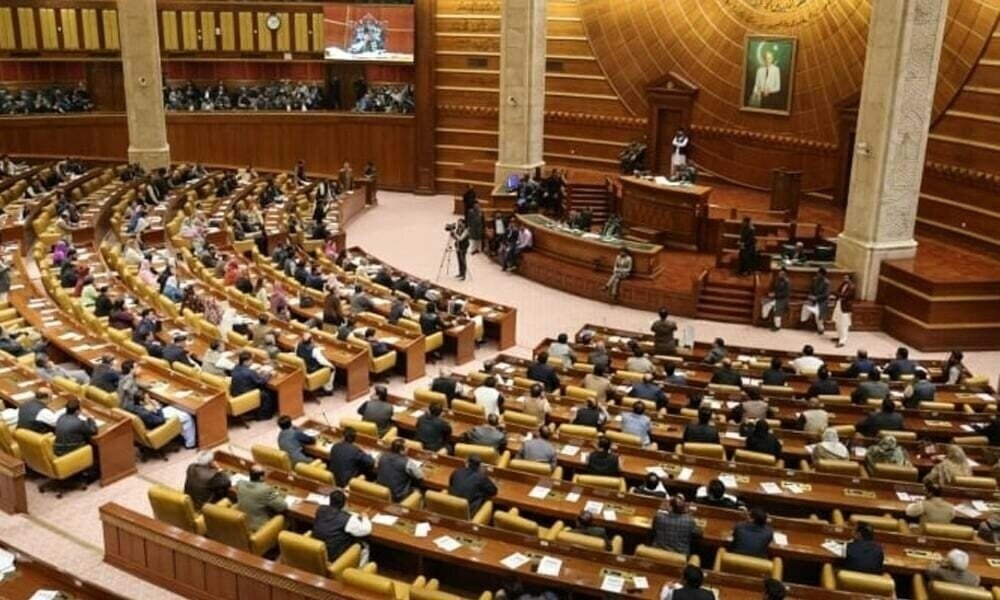
Under Article 240(b) of the Constitution of Pakistan, the provincial assembly has full constitutional authority to regulate provincial services and provincial posts through law. This means that all provincial posts legally belong to the provincial assembly. The Punjab Civil Servants Act 1974 was also enacted under this constitutional power and clearly places authority with the provincial assembly. Under the constitutional design, the assembly may delegate financial and administrative powers to the provincial cabinet, the provincial government, and ministers, but the executive remains answerable to the assembly. In practice, however, since 1954 these powers have been exercised by a federal office, the Establishment Division in Islamabad. This has weakened provincial autonomy and reduced the law-making and oversight role of provincial assemblies. This raises a basic constitutional question. Should provincial assemblies now reclaim their authority to legislate and hold the executive accountable, or should provincial democracy remain symbolic rather than real.
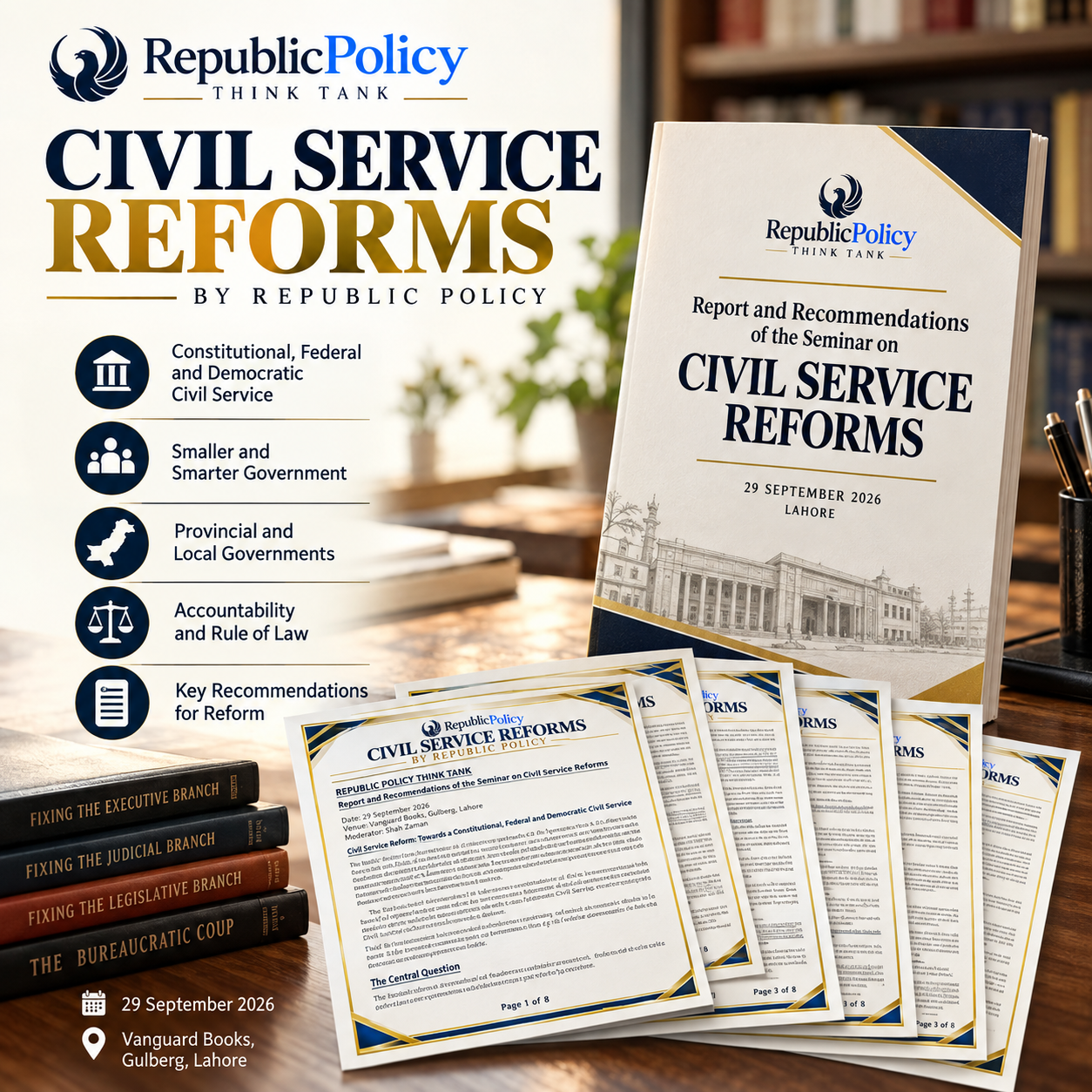
Tariq Mahmood Awan, in his book Fixing the Executive Branch of Government in Pakistan, explains in detail how the Establishment Division has effectively suspended the constitutional role of provincial assemblies and provincial governments. His research shows that control over provincial posts was gradually taken away from elected institutions and placed in bureaucratic hands without constitutional backing. This shift has had deep and lasting consequences for governance and accountability in Pakistan.
To understand white-collar crime in Pakistan, one must first understand the civil service structure. White-collar crime in Pakistan is not only an individual problem. It is an institutional problem built over decades on faulty foundations. At the centre of this structure are the Civil Service of Pakistan Composition and Cadre Rules of 1954. These rules still shape the administrative system today, even though they have no constitutional or legal basis.
These rules were created between 1947 and 1956, a period when bureaucracy held dominant control over the state. Former colonial officers continued to run Pakistan with the same mindset used under British rule. A former ICS officer, Malik Ghulam Muhammad, played a central role in shaping this system. At that time, the state was not democratic in practice. It was controlled by bureaucratic elites.
At independence, a clear and deliberate decision was made to end the colonial service structure. Under Section 10 of the Indian Independence Act 1947, and through the personal intervention of Quaid-e-Azam Muhammad Ali Jinnah, all services under the Secretary of State for India were abolished. This meant the colonial civil service structure was no longer acceptable in Pakistan.
For the same reason, Pakistan’s first interim constitutional arrangement, based on the Government of India Act 1935, removed all provisions related to the Secretary of State. This effectively ended the colonial system under which provincial posts were reserved for central or all-India services. These were conscious decisions by the founders of Pakistan so that provinces could manage their own affairs.
The Objectives Resolution of 1949 also reaffirmed the principle of genuine provincial autonomy. Despite this, the CSP Composition and Cadre Rules were issued in 1954. These rules were not framed under the Constitution, not passed by any legislature, and not approved by parliament or provincial assemblies. They were enforced without legal authority.
The justification given was a supposed agreement between the federation and the provinces of Bengal, Punjab, Sindh, and NWFP. This is the first major deception. No such agreement has ever been produced. Historically, it is well established that Bengal opposed this scheme. Bengal viewed the reservation of provincial posts for central services as a new form of colonial control. Both Zulfikar Ali Bhutto and Sheikh Mujib-ur-Rehman were strong critics of this centralised service structure.
To this day, the alleged agreement remains unavailable. The Establishment Division has declared it secret. Even after clear orders from the Information Commission, the document has not been released. A legal structure built on a hidden or non-existent agreement is, by its nature, fraudulent.
This same service structure was later used to operate the 1956 and 1962 constitutions and the One Unit system, all of which weakened democracy. Bureaucracy provided strength and continuity to these undemocratic arrangements.
In 1973, Zulfikar Ali Bhutto acknowledged this reality and abolished the CSP through administrative reforms. Twelve service groups were created, including the District Management Group. However, another manipulation followed. Without any law, the Establishment Division created the All Pakistan Unified Grades through a simple notification. This act had no legal foundation, yet no accountability followed.
Later, under Rule 7, almost all key provincial posts were reserved for the DMG in 1993. This decision was taken in a caretaker government meeting whose minutes were neither notified nor approved by the cabinet. It had no constitutional cover. Even the cadre strength agreement was declared secret, as if it were a matter of national security.
When provincial civil service associations challenged these arrangements in court in 2010, the Establishment Division simply changed the name of DMG to Pakistan Administrative Service. This did not solve the legal problem. CSP had never been an all-Pakistan service. Reviving abolished rules through an SRO decades later showed the belief that a notification stands above the Constitution, law, and parliament.
In 2021, when courts began questioning this system, the Establishment Division took an even more dangerous step. In the Mustafa Impex case, the court had clearly ruled that “government” means the cabinet. In response, SRO 1046 of 2020 redefined government by transferring powers to the prime minister, chief ministers, or their nominees. This made secretaries and chief secretaries, who are often PAS officers themselves, extremely powerful. They could change schedules and determine the size of government without real political oversight.
This directly contradicts the constitutional principle that authority over posts lies with legislatures. Even when courts suspended parts of the scheme, the Establishment Division continued appointments, openly violating court orders.
Under Rule 15(iv), the appointment of the chief secretary is constitutionally the right of the provincial assembly and provincial government. In practice, this power is exercised by the Establishment Division. Governors have also been given extraordinary powers through these rules, which makes little sense in a federal parliamentary system.
The Establishment Division has also undermined the Council of Common Interests. Under the Constitution, any joint services must be created through the CCI. Instead, provincial assemblies, cabinets, chief ministers, and even local governments have been ignored. Control has been centralised in the hands of unelected officials.
The most troubling reality is that the secretary establishment, the federal cabinet, and provincial chief secretaries now control federal, provincial, CCI, and local government functions through executive rules. Elected representatives remain largely unaware of how authority has been taken from them.
These rules are nothing more than executive orders built on deception. They violate multiple constitutional articles, including Articles 240(b), 142, 137, 97, 117, 121, 153, and 154, as well as the Punjab Civil Servants Act 1974. Pakistan has become a system where bureaucratic notifications do not require endorsement by parliament or provincial assemblies.
In Punjab, the provincial assembly holds constitutional authority over all provincial posts, from chief secretary to assistant commissioner. The assembly may delegate this authority to the provincial government, but the Establishment Division cannot forcibly take it away.
The conclusion is clear. The Punjab Assembly must reclaim its constitutional powers. The CSP Rules of 1954 must be abolished. Full constitutional control over provincial services must be restored. Until this fraudulent structure is dismantled, white-collar crime and undemocratic governance will continue in Pakistan.
Article 240(b) leaves no ambiguity. Provincial posts belong to provincial assemblies. These posts must be regulated through law. It is the constitutional duty of the assembly to legislate for all provincial positions.
The provincial assembly should enact a clear law that makes the provincial government the custodian of these posts. Under such a law, the chief minister and cabinet should control appointments, transfers, and administration. This is what the Constitution demands and this is the true meaning of federalism.
If provincial assemblies do not legislate and assert control, the Establishment Division will continue to interfere through unconstitutional rules from 1954. These rules have stripped assemblies of real authority and hollowed out provincial autonomy.
The Constitution does not intend provincial assemblies to exist in name only. They are meant to exercise real control over provincial administration. Reclaiming authority from chief secretary to assistant commissioner is not political defiance. It is constitutional duty. This is the lawful path, the spirit of federalism, and the foundation of true provincial democracy.