
Muhammad Ibrahim
Introduction
Military institutions have often served as the backbone of state formation, territorial expansion, and political order. Yet history repeatedly demonstrates that when armed forces acquire excessive autonomy or socio-political influence, they can undermine the very states they were created to protect. Few examples illustrate this paradox as clearly as the Janissary Corps of the Ottoman Empire. Established in the late fourteenth century as a disciplined and centrally controlled infantry force, the Janissaries were instrumental in transforming the Ottomans from a frontier principality into a global empire. Over time, however, their expanding social, economic, and political power generated institutional rigidities that obstructed reform and destabilized governance.
This essay examines the Janissary Corps as both a military innovation and a political phenomenon. It traces their origins, battlefield achievements, and gradual institutional transformation, before situating their experience within broader debates on civil–military relations. By drawing cautious parallels with modern states such as Pakistan, Egypt, Myanmar, selected African countries, and even the United States, the essay argues that the Janissary experience offers enduring lessons about the risks posed by over-influential military institutions and the necessity of accountable civilian control.
Origins and Institutional Design
The formation of the Janissary Corps reflected a deliberate Ottoman effort to overcome the limitations of feudal levies and tribal cavalry. Unlike timariot cavalry, whose loyalty was often divided between local interests and the central state, the Janissaries were conceived as a salaried, professional infantry directly subordinate to the sultan. Their recruitment through the devshirme system—which conscripted Christian boys from the Balkans, converted them to Islam, and educated them within the imperial system—was central to this design. By severing recruits from their familial and regional ties, the Ottoman state sought to cultivate absolute loyalty to the ruler and the empire (İnalcık, 1978).
Early regulations reinforced this institutional discipline. Janissaries were prohibited from marrying, engaging in trade, or owning property, and they lived collectively in barracks under strict codes of conduct. Training emphasized obedience, cohesion, and mastery of weapons, particularly firearms, at a time when much of the region still relied on cavalry-dominated warfare. This combination of centralized recruitment, professional training, and material incentives made the Janissaries one of the earliest standing armies in the early modern world.
Military Innovation and Imperial Expansion
The military significance of the Janissaries lay not merely in their discipline, but in their adaptability to technological change. They were among the first infantry forces to integrate firearms systematically into battlefield tactics, coordinating musket volleys with artillery and cavalry maneuvers. This innovation proved decisive in several landmark campaigns that reshaped the balance of power across Eurasia.
During the conquest of Constantinople in 1453, Janissary infantry played a critical role in sustained assaults on the city’s fortifications, complementing heavy artillery bombardments and ultimately breaching the Theodosian Walls. The fall of the Byzantine capital marked a turning point in world history and symbolized the arrival of the Ottomans as a major imperial power (Finkel, 2005). Similarly, at Chaldiran in 1514, Janissary firearm units decisively defeated the Safavid cavalry, securing eastern Anatolia and demonstrating the strategic superiority of gunpowder infantry over traditional mounted forces (Aksan, 2007). The swift victory at Mohács in 1526 further underscored their effectiveness, opening Central Europe to Ottoman influence and consolidating imperial dominance.
These successes were not isolated military achievements; they were foundational to the empire’s political authority, economic expansion, and diplomatic leverage. The Janissaries thus became both instruments of conquest and symbols of Ottoman state power.
Social Integration and Institutional Transformation
Despite their early success, the institutional character of the Janissary Corps began to change from the seventeenth century onward. The decline of the devshirme system, combined with demographic pressures and fiscal constraints, altered recruitment patterns. Membership increasingly became hereditary or purchasable, eroding the meritocratic and centralized foundations of the corps. At the same time, restrictions on marriage, commerce, and property ownership were gradually lifted, allowing Janissaries to integrate into urban society as artisans, merchants, and guild members (İnalcık, 1978).
This socio-economic integration transformed the Janissaries from a purely military institution into a powerful urban interest group. Their growing presence in cities such as Istanbul gave them leverage over local governance, market regulation, and public order. More significantly, their collective power enabled them to intervene directly in palace politics, influence succession disputes, and veto reform initiatives perceived as threats to their privileges.
Efforts at military modernization exposed these tensions most clearly. Selim III’s Nizam-i Cedid reforms, which aimed to create a modern European-style army, were met with fierce Janissary resistance. For the corps, reform implied not only military restructuring but the loss of social status, economic benefits, and political influence. Their opposition illustrates a broader institutional paradox: a military force created to strengthen the state ultimately became an obstacle to its adaptation.
Military Power and Political Paradox
The Janissary experience highlights a fundamental contradiction in civil–military relations. Military effectiveness often generates political capital, yet political entrenchment can undermine military adaptability and state authority. The Janissaries’ ability to shape policy, resist reform, and mobilize urban unrest reflected the absence of effective civilian oversight mechanisms. Over time, this imbalance weakened the Ottoman state’s capacity to respond to external threats and internal challenges.
The paradox reached its violent resolution in 1826, when Sultan Mahmud II abolished the corps during the so-called Auspicious Incident. Thousands of Janissaries were killed or exiled, and their institutional power was dismantled. While the episode restored central authority, it also demonstrated the high cost of delayed reform. When military institutions are allowed to accumulate unchecked power, reform often becomes possible only through coercion rather than gradual institutional adjustment.
Contemporary Parallels in Civil–Military Relations
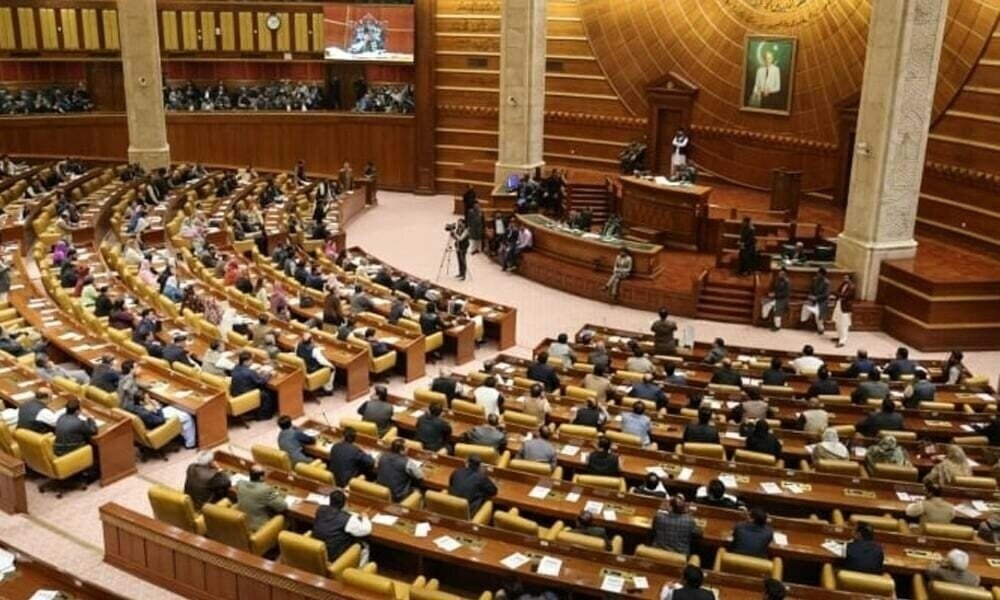
Although separated by centuries, the Janissary case resonates strongly with modern experiences of militarized politics. In Pakistan, repeated military interventions, prolonged periods of direct rule, and influence over foreign and security policy reflect patterns of institutional autonomy reminiscent of Janissary political leverage (Rizvi, 2000). Egypt’s military, deeply embedded in the national economy and political system, has similarly positioned itself as both guardian and arbiter of the state (Cook, 2012). Myanmar’s Tatmadaw exemplifies a more extreme form of militarization, combining coercive power with constitutional authority and economic dominance (Callahan, 2003).
African experiences with military coups further illustrate how armed forces can become decisive political actors when civilian institutions are weak. Even in consolidated democracies such as the United States, debates over defense spending, foreign interventions, and the influence of the military–industrial complex reveal subtler forms of military sway within formally civilian-controlled systems (Feaver, 2003). These cases underscore that the issue is not military strength per se, but the balance between professional autonomy and democratic accountability.
Lessons for State Stability and Human Security
The dangers of over-influential military institutions extend beyond political instability. When armed forces become ideologically aligned, economically autonomous, or insulated from oversight, the risk of systemic violence increases. While the Janissaries themselves were not central actors in genocidal campaigns, the later Ottoman military apparatus participated in mass violence during the Armenian Genocide, illustrating how unaccountable coercive power can facilitate catastrophic outcomes (Akçam, 2006).
Historical and contemporary cases suggest several lessons. Effective civilian oversight is essential to prevent institutional overreach. Militaries must remain professionally competent yet politically neutral, with clearly defined economic and social boundaries. Reform should be proactive rather than reactive, as entrenched military interests often resist change violently when threatened. Above all, the legitimacy of armed forces must rest on service to society rather than dominance over it.
Conclusion
The Janissary Corps stands as one of history’s most instructive examples of the dual nature of military power. As a professional and innovative force, it enabled Ottoman expansion and imperial consolidation. As a socio-political actor, it obstructed reform, destabilized governance, and ultimately required violent suppression. This trajectory offers enduring insights into the dynamics of civil–military relations.
Modern states continue to grapple with similar challenges. Whether through overt coups or subtler institutional influence, militaries can shape political outcomes in ways that threaten democratic governance and human security. The Janissary experience reminds policymakers and scholars alike that military strength must be matched by institutional accountability. Only when armed forces remain subordinate to civilian authority can they serve as pillars of stability rather than agents of decline.
References
Akçam, T. (2006). A Shameful Act: The Armenian Genocide and the Question of Turkish Responsibility. Metropolitan Books.
Aksan, V. (2007). Ottoman Wars, 1700–1870: An Empire Besieged. Routledge.
Callahan, M. (2003). Making Enemies: War and State Building in Burma. Cornell University Press.
Cook, S. A. (2012). The Struggle for Egypt: From Nasser to Tahrir Square. Oxford University Press.
Decalo, S. (1990). Coups and Army Rule in Africa. Yale University Press.
Feaver, P. D. (2003). Armed Servants: Agency, Oversight, and Civil‑Military Relations. Harvard University Press.
Finkel, C. (2005). Osman’s Dream: The History of the Ottoman Empire. Basic Books.
İnalcık, H. (1978). The Ottoman Empire: The Classical Age 1300–1600. Praeger.
OpenStax. (2025). World History Volume 2: The Ottoman Empire. OpenStax.
Rizvi, H. A. (2000). Military, State, and Society in Pakistan. Macmillan.
The social media accounts of the writer are as under:
Gmail: hsbta34@gmail.com
Instagram: Ibrahim463915