
Mubashar Nadeem
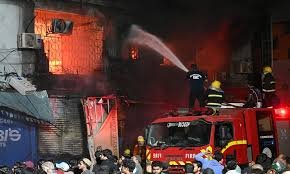
Over 20 people lost their lives when a massive fire engulfed Gul Plaza on Karachi’s M.A. Jinnah Road on Saturday night. The devastation shocked the city, but for many, the tragedy was not unexpected. It was the predictable outcome of years of regulatory neglect, inadequate oversight, and systemic failures that turned a commercial building into a death trap.
Gul Plaza, an aging structure housing more than 1,000 shops, was cramped and overcrowded. Narrow corridors, congested basements, and poorly ventilated upper floors made evacuation difficult, even under normal circumstances. Like many older markets in Karachi, the building reportedly lacked proper emergency exits, functional fire alarms, and adequate ventilation. The use of combustible materials, faulty wiring, and overcrowding created a perfect storm for disaster. Yet, despite these glaring risks, the plaza continued to operate in the heart of the city — a stark reminder that safety regulations in Karachi often exist more on paper than in practice.
When the fire broke out, rescue efforts faced major hurdles. Firefighters struggled with water shortages, blocked access routes, and mismanaged crowds, delaying crucial rescue operations. Witnesses and traders argue that a faster and better-coordinated response could have saved lives in those critical early hours. With a fire station located only minutes away, questions about preparedness and resource allocation are unavoidable. Days later, as flames reignited and bodies were recovered in fragments, the human cost of delay became painfully clear.
The Sindh government responded by announcing Rs10 million compensation for each victim’s family and promising inquiries, forensic investigations, and rehabilitation support for traders. While these measures are important, they follow a familiar pattern seen after previous market fires in Karachi. Compensation and inquiries rarely translate into accountability, and rebuilding often ignores the structural and administrative flaws that caused the tragedy.
The central question is not merely what ignited the fire, but why a building so clearly unsafe was allowed to operate for decades. Regulatory bodies responsible for enforcing building and fire codes have long been weakened by political interference, frequent leadership changes, and tolerance of illegal modifications. Karachi has witnessed this pattern repeatedly: factories without emergency exits, markets lacking safety plans, high-rises constructed without proper oversight. Each time, preventable disasters claim lives, elicit public outrage, and trigger financial compensation — but the underlying issues remain unresolved.
If the Gul Plaza fire is to carry any meaning beyond grief and financial relief, it must prompt systemic change. There needs to be strict enforcement of building and fire safety codes, with accountability extending beyond low-level officials to those responsible for policy and oversight. Emergency services require sustained investment, proper training, and sufficient resources to respond effectively when disaster strikes.
Without such reforms, Karachi will continue to witness tragedies that could have been prevented. Fires like the one at Gul Plaza are not natural disasters; they are failures of governance. The city’s residents, traders, and families of victims deserve more than condolences and cheques. They deserve a system that prioritizes human life, enforces safety standards consistently, and ensures that preventable disasters do not repeat themselves.
The lessons of Gul Plaza are clear, and they are urgent. Policy makers, regulators, and civic authorities must recognize that governance failures can be as deadly as the flames themselves. Only through meaningful accountability, investment, and reform can Karachi hope to prevent the next tragedy.