
Fajar Rehman
There is a particular kind of danger that announces itself slowly, then all at once. Pakistan is living through exactly that kind of danger — not one crisis but two, unfolding simultaneously, feeding each other, and together outpacing the capacity of any government to respond through ordinary means. The first is climate change, arriving ahead of every schedule its architects projected. The second is population growth, relentless and structurally encouraged by the very policies meant to govern the country’s development. Between them, they are constructing a trap from which escape will require considerably more than what Pakistan’s policymakers have so far been willing to commit.
Begin with the temperature. The Pakistan Meteorological Department has recently issued findings that deserve far more public attention than they have received. March’s night-time minimum temperatures reached 14.7°C — a full 2.7°C above the long-term average of 12°C, making it the second-highest ever recorded. Daytime highs touched 28.5°C, two degrees above normal. The national mean temperature for the month settled at 21.6°C against a historical average of 19.3°C, ranking it fifth-highest in recorded history. What makes these figures genuinely alarming is not merely their magnitude but their timing. Temperatures that scientists had projected Pakistan might face by 2030 are already here, today, in March. The trajectory is not a warning of what may come. It is a description of what is already upon us.
The human consequences of sustained temperature anomalies at this scale are not abstractions. Heat erodes labour productivity, particularly in outdoor and agricultural work where millions of Pakistanis earn their livelihoods. It strains public health systems that were never built to absorb mass heat-related illness. It accelerates glacial melt in the north, contributing to the catastrophic flooding cycles that have already devastated entire provinces and displaced millions. It pushes fragile ecosystems past the point of recovery. Rural communities dependent on predictable water cycles find those cycles increasingly unreliable. Urban populations, concentrated in cities whose infrastructure was designed for a cooler and less congested reality, bear the brunt of the urban heat island effect — an intensification of heat caused by dense development, concrete surfaces, and the absence of green cover that absorbs and disperses temperature. Pakistan is not approaching these consequences. It is already managing them, badly, with resources that do not match the scale of the challenge.
And into this landscape of environmental stress, 6.2 million additional people arrive every single year.
Health Minister Mustafa Kamal has projected that Pakistan could become the fourth most populous nation on earth within five years. The country’s fertility rate stands at 3.6. Its annual population growth rate is 2.55 percent. These numbers carry an implication that is rarely stated plainly in official discourse: a growth rate of 2.55 percent means the economy must expand at a comparable pace simply to maintain existing living standards for the people already here — before a single rupee is invested in improving those standards, before a single new school is built, before a single megawatt of new power is generated for productive use. In an economy battered by recurring shocks, IMF programme constraints, energy sector distortions, and external debt pressures, achieving that baseline expansion is not a given. It is a stretch goal. Every percentage point of population growth that outpaces economic expansion is, in effect, a contraction in the quality of life for the average Pakistani.
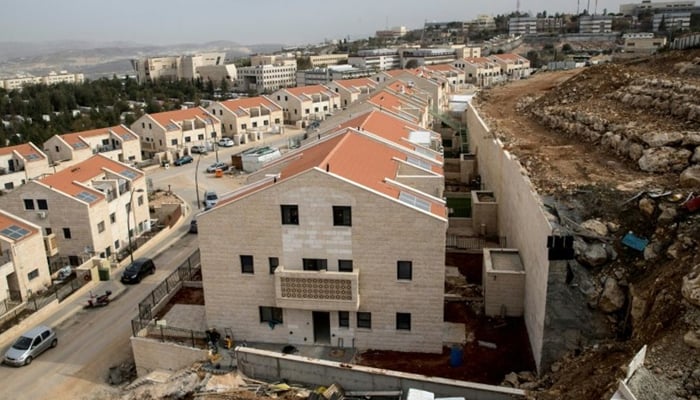
The relationship between population growth and climate stress is not incidental. It is structural. More people means more energy demand, more urban expansion, more pressure on water resources, more agricultural intensification on land that is already stressed. In cities, unplanned and dense development traps heat and intensifies the already punishing effects of rising temperatures. Beyond cities, water scarcity becomes more acute as more households compete for the same shrinking supply. Agricultural systems under climate pressure must somehow feed more mouths each year. The two crises do not merely coexist. They amplify each other in a feedback loop that conventional policy instruments — climate action plans, agricultural subsidies, social protection programmes — are not designed to interrupt.
The countries that have successfully navigated comparable demographic pressures offer a consistent lesson. Bangladesh and Indonesia, both of which faced population trajectories as daunting as Pakistan’s, managed to slow their growth rates without coercion and without sacrificing development outcomes. The instrument that worked in both cases, more than any other single policy, was the expansion of female literacy. Educated women exercise greater autonomy over reproductive decisions. They access family planning services more readily. They understand their options more clearly and act on that understanding. The relationship between female education and declining fertility rates is among the most robustly established findings in development economics. It is not a theory. It is a documented outcome observed across dozens of countries over several decades. Pakistan has acknowledged this relationship in policy documents for years. The gap between acknowledgment and implementation remains wide enough to drive a demographic catastrophe through.
What is now required is coordination at a scale that matches the problem. Planning Minister Ahsan Iqbal proposed, months ago, the creation of a National Population Council chaired by the Prime Minister and including all provincial governments. The proposal was sensible. Population policy is constitutionally a provincial subject following the Eighteenth Amendment, but the challenge is national in its consequences and cannot be addressed through fragmented provincial efforts that operate without common targets, common metrics, or common accountability. A challenge of this magnitude requires a governing architecture that reflects its scale.
Equally necessary is a rethinking of the NFC Award formula. The current formula ties resource allocation heavily to population size. The perverse incentive this creates is not subtle: provinces that grow faster get more. There is no structural reward for controlling growth, and no structural penalty for accelerating it. Reforming this formula would not solve the demographic challenge alone, but leaving it unchanged actively works against every effort to do so.
Pakistan is not without agency in this situation. The trap is not yet closed. The demographic window for intervention is still open, though not indefinitely. The temperature curve has not yet reached the point of no return, though it is moving with uncomfortable speed in that direction. What the country requires is precisely what it has historically been least willing to provide: a sustained, coordinated, politically costly commitment to policies whose benefits will not arrive before the next election cycle. That is the nature of existential challenges. They do not accommodate political calendars. They demand decisions made in full knowledge that the credit will be claimed, if at all, by governments not yet in office.
The heat is rising. The population is growing. The question is whether the political will to respond is rising fast enough to matter.