
Barrister Naveed Qazi
Pakistan’s political history has never been simple. It has lurched between military rule and civilian government, between constitutional order and extra-constitutional intervention, never quite settling into a stable, predictable pattern of governance. Three full military interventions marked the country’s post-independence decades: General Ayub Khan, General Zia ul-Haq, and General Pervez Musharraf each seized direct control, suspended constitutional processes, and governed through the unmediated authority of the uniform. Between those episodes, civilian governments came and went, often weakened, often compromised, rarely completing their mandates without looking over their shoulders.
Today, Pakistan operates under what analysts and observers commonly describe as a hybrid system. Neither fully civilian nor openly military, it places political parties in the visible seats of power while the establishment retains substantial influence over policy directions, political outcomes, and institutional appointments. This arrangement has become the defining feature of Pakistani governance in the current era, yet remarkably little serious academic or political discussion has been devoted to examining it honestly. That intellectual silence is itself a problem. A system that cannot be named clearly cannot be reformed seriously.
To understand what is wrong with the hybrid model, it helps to understand what military governments historically did right, even for those who rightly reject them on constitutional and democratic grounds. When military rulers took direct control, they assumed a direct relationship with the public. Ayub Khan, Zia ul-Haq, and Pervez Musharraf each governed through systems that, whatever their authoritarian character, delivered certain visible outcomes. Local government structures functioned with greater regularity. Administrative interference from political actors was reduced. Merit-based appointments, though imperfect, operated more consistently than under civilian governments notorious for patronage hiring. Decision-making moved faster, unburdened by parliamentary negotiation or coalition management. These practical qualities, combined with the tendency of military takeovers to follow periods of particularly discredited civilian rule, allowed each military ruler to enjoy genuine public support for significant periods. Pakistan’s military governments averaged roughly eight to ten years in duration, not because Pakistanis love authoritarianism, but because they were often entering power at moments when civilian alternatives appeared exhausted and corrupt.
The hybrid system dismantles this dynamic without replacing it with anything better. In the current arrangement, the establishment does not govern directly. Its relationship with the public is mediated entirely through political parties, primarily the Pakistan Muslim League-N, the Pakistan Peoples Party, and the Muttahida Qaumi Movement. Here lies the fundamental structural problem. These parties carry decades of accumulated public grievance. Their records on corruption, administrative incompetence, economic mismanagement, and elite capture are extensively documented and widely felt. When voters grow angry at these parties, and they regularly do, that anger does not stay neatly contained within the political sphere. It bleeds into the establishment’s reputation as well, because the public correctly understands that these parties govern with establishment facilitation.
The establishment thus absorbs the political liabilities of its civilian partners without gaining the administrative advantages that direct military rule historically provided. The strong local government systems that characterised earlier military periods are absent. The relative insulation from political interference in bureaucratic appointments is absent. The decisiveness that came from unified command is absent. What remains is a curious hybrid: the political chaos and governance failures associated with weak civilian rule, combined with the democratic deficit and accountability vacuum associated with military influence. Pakistan has managed to inherit the disadvantages of both systems while the advantages of neither have materialised.
This is not a theoretical problem. It produces real and visible consequences. Governance quality remains chronically poor. Policy continuity is rare. Institutional capacity deteriorates because appointments are politically driven rather than merit-based. Economic planning is short-term and reactive. Public services remain underfunded and poorly delivered. And through all of this, the question of ultimate accountability remains deliberately unclear. When things go wrong, political parties blame invisible forces. Invisible forces point to political incompetence. The citizen is left holding the consequences with no clear address for complaint.
Political science offers a straightforward observation that applies powerfully here: every system of government works best when it operates according to its own internal logic and spirit. Democracy functions when elections are genuinely free, when institutions are independent, when accountability is real, and when the public can meaningfully remove governments that fail them. Authoritarian systems function, in their own terms, when authority is consolidated, responsibility is clear, and the governing entity maintains a direct relationship with the population it controls. A hybrid that combines features of both without the core operating logic of either tends to produce systemic dysfunction. Pakistan’s experience confirms this observation with painful consistency.
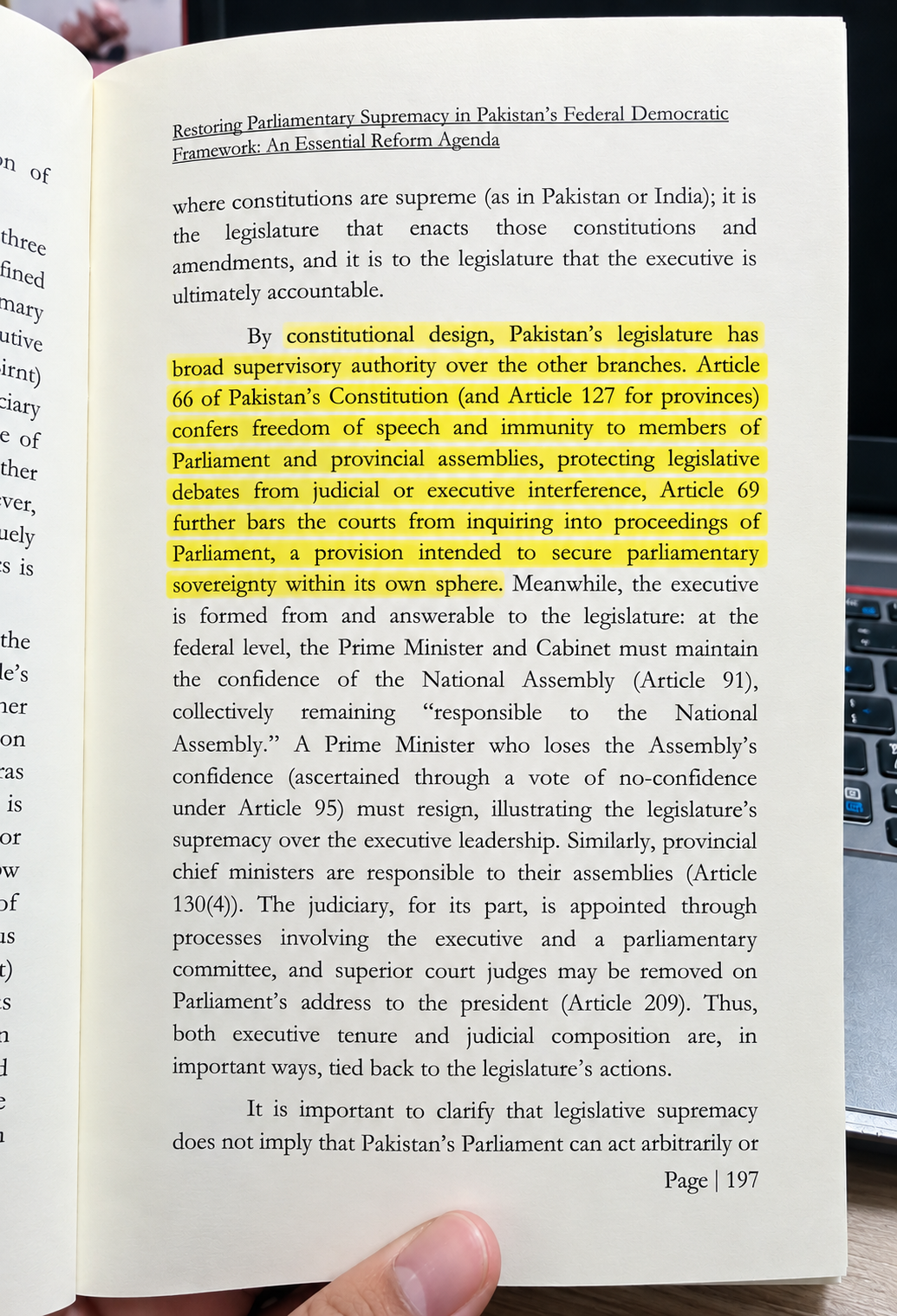
The path forward demands honesty about the choice that Pakistan faces. Constitutionally and morally, the answer is unambiguous. Pakistan’s constitution is a democratic document. It provides for parliamentary sovereignty, fundamental rights, an independent judiciary, and elected governments accountable to the public. The direction must be toward genuine constitutional democracy, meaning free, fair, and transparent elections through which citizens can elect representatives who actually govern, and remove them when they fail. Elections that are manipulated, contested, or engineered do not produce democratic legitimacy. They produce governments that look elected but cannot claim the mandate that democratic governance requires. Such governments are structurally weak, permanently vulnerable to the next intervention, and incapable of making the difficult long-term decisions that Pakistan urgently needs on economic reform, institutional rebuilding, and federal governance.
If the hybrid system persists, it will continue extracting the costs of both its component parts while delivering the benefits of neither. The political actors within it will remain unpopular because they are perceived, correctly, as performing governance under supervision. The establishment will remain under pressure because it absorbs blame for outcomes it does not fully control but substantially shapes. The public will remain frustrated because accountability flows to no clear address. And Pakistan’s governance crisis will deepen, year by year, beneath the surface appearance of a functioning political system.
Stability, effective governance, and public trust all require clarity. Whatever model a state adopts must operate with full internal coherence, genuine accountability, and transparent responsibility. Pakistan has spent too many decades in the ambiguous middle ground. The costs of that ambiguity are no longer abstract. They are written into the country’s economic fragility, its institutional decay, and the daily struggles of its citizens.
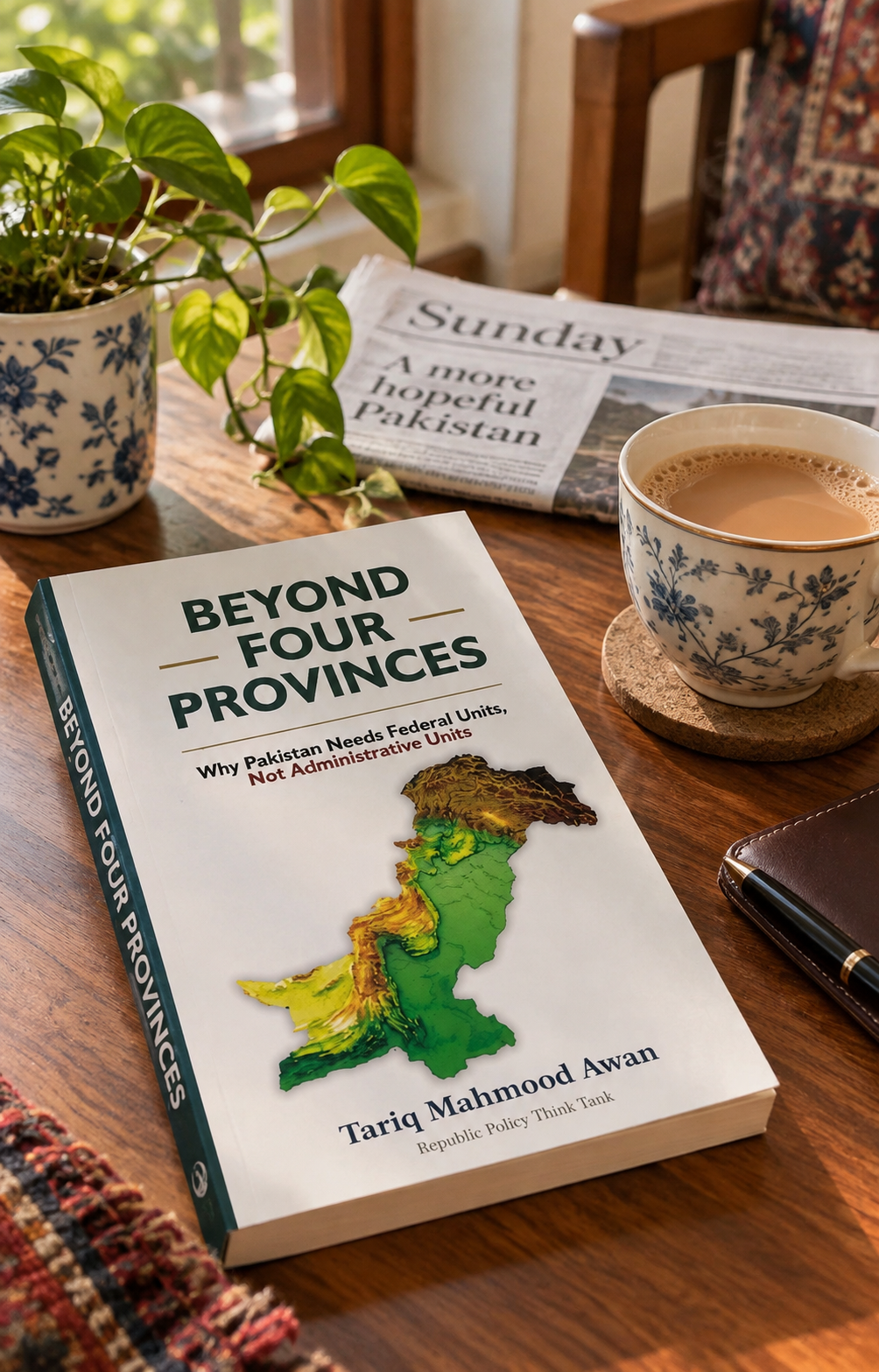
The books published by Republic Policy Think Tank on governance, politics, and reform are available at leading bookstores across Pakistan.