
Zafar Iqbal
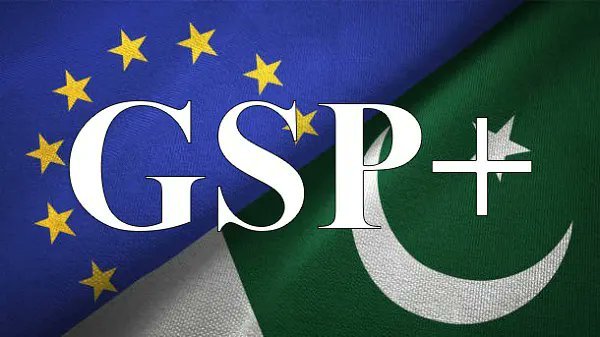
Pakistan’s partnership with the European Union under the Generalised Scheme of Preferences Plus (GSP+) has become one of the most important pillars of its export economy. Over the years, the relationship has followed a predictable pattern. Every monitoring cycle brings renewed scrutiny of Pakistan’s compliance with international commitments, every assessment raises concerns about the continuation of trade preferences, and every review is followed by diplomatic efforts that eventually help Pakistan retain its privileged status. While this pattern has continued for more than a decade, the latest review carries greater significance because Pakistan’s economic challenges have deepened, making continued access to European markets more important than ever.
The GSP+ programme is not merely a trade concession. It is a strategic economic opportunity that allows developing countries to export thousands of products to the European Union at reduced or zero customs duties. Pakistan became a beneficiary of the scheme in 2014 after committing to implement and uphold a wide range of international conventions related to human rights, labour standards, environmental protection, climate action and good governance. These commitments form the foundation of the arrangement, making compliance an essential requirement rather than an optional exercise.
The economic value of GSP+ cannot be overstated. According to recent figures, Pakistan exported goods worth approximately €7.5 billion to the European Union under the scheme in 2024. These exports benefited from tariff preferences estimated at nearly €732 million. For a country that constantly struggles with foreign exchange shortages, rising external debt and recurring balance-of-payments crises, these trade preferences are indispensable. They significantly improve the competitiveness of Pakistani products, particularly textiles and garments, in one of the world’s largest consumer markets.
Pakistan’s dependence on these trade concessions has grown steadily because the country has failed to diversify its export base despite repeated promises by successive governments. For decades, policymakers have spoken about increasing value-added exports, promoting engineering goods, expanding information technology services and entering new international markets. However, the export basket remains heavily concentrated in textiles and clothing, while geographical diversification has been limited. As a result, Pakistan continues to depend on a small number of products and markets for the majority of its export earnings.
This structural weakness has serious consequences. Although remittances from overseas Pakistanis have provided valuable support to the economy, they cannot permanently substitute for sustainable export growth. Foreign direct investment remains relatively low, industrial productivity has not improved sufficiently, and manufacturing competitiveness continues to face challenges ranging from high energy costs to inconsistent policies. In this context, any disruption to Pakistan’s preferential access to European markets could significantly damage export earnings and further weaken the country’s external financial position.
The European Union’s latest monitoring report therefore deserves careful and objective consideration. The report raises concerns regarding several important issues, including the rule of law, judicial independence, freedom of expression, enforced disappearances and accountability mechanisms. At the same time, it also acknowledges positive developments, including progress in minority rights legislation, implementation of the Anti-Torture Act and the continuation of the moratorium on executions. Such balanced assessments indicate that the monitoring process is not solely focused on criticism but also recognises reforms where meaningful progress has been achieved.
Whether Pakistan fully agrees with every observation contained in the report is not the central issue. The more important consideration is that these assessments directly influence future decisions regarding Pakistan’s eligibility under the revised GSP+ framework, which will come into effect after 2027. The European Union expects measurable implementation of international commitments, not merely legislative promises or policy announcements. Consequently, Pakistan must prepare itself for stricter monitoring and higher compliance standards in the coming years.
It is important to recognise that the conditions attached to GSP+ were accepted voluntarily. No country is compelled to join the scheme. However, once a country chooses to participate, it accepts both the economic benefits and the accompanying legal obligations. Compliance with international conventions is therefore not simply an external demand imposed by Europe. It represents commitments that Pakistan itself agreed to uphold in exchange for valuable trade preferences. Fulfilling these obligations strengthens domestic governance while preserving international economic opportunities.
Beyond immediate concerns, Pakistan must also confront a broader economic reality. Preferential market access cannot remain the permanent foundation of the country’s export strategy. GSP+ was designed to help developing countries strengthen their competitiveness, diversify exports and gradually integrate into global markets. It was never intended to replace domestic reforms or compensate indefinitely for structural weaknesses. Pakistan must therefore use the remaining years under the current framework to build a stronger, more diversified and innovation-driven export economy.
Achieving this objective requires comprehensive reforms. Industrial productivity must improve through technological modernisation and better infrastructure. Export financing should become more accessible, particularly for small and medium-sized enterprises. Education and vocational training need closer alignment with industrial requirements to improve workforce productivity. Stable taxation, predictable trade policies and competitive energy pricing are equally essential if Pakistan wishes to compete successfully in international markets without relying excessively on preferential treatment.
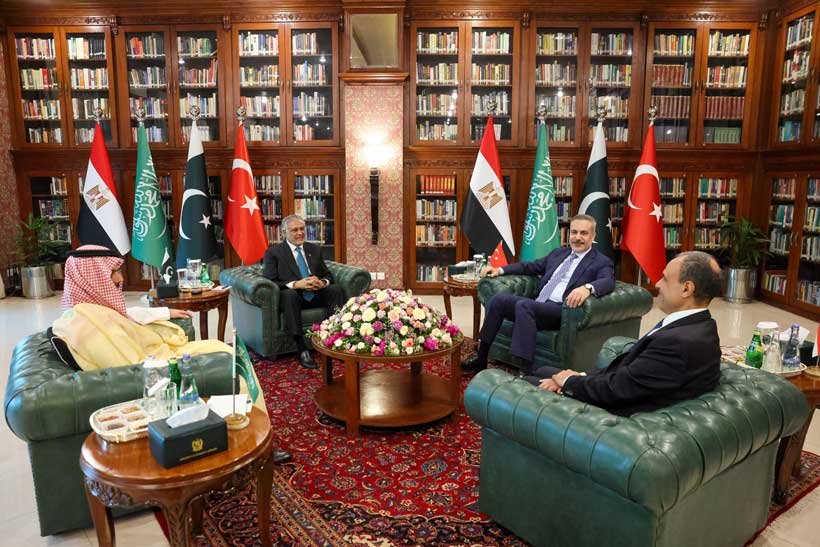
Diplomatic engagement will also remain crucial. The government should continue constructive dialogue with European institutions while responding seriously to legitimate concerns identified in monitoring reports. Where shortcomings exist, timely corrective measures should be implemented. Where Pakistan believes its progress has not been adequately recognised, it should present credible evidence through professional diplomacy rather than emotional rhetoric. Maintaining trust and transparency with European partners will strengthen Pakistan’s position during future reviews.
Pakistan has successfully navigated several GSP+ assessments over the past decade despite repeated uncertainty. Nevertheless, past success does not guarantee future outcomes. The revised framework after 2027 is expected to place greater emphasis on measurable implementation, institutional effectiveness and sustained reforms. Countries benefiting from the scheme will likely face more rigorous evaluations than before.
Pakistan’s economic situation leaves little room for complacency. Export growth remains below potential, foreign investment has yet to recover fully, and external financing pressures continue. In these circumstances, safeguarding GSP+ status must remain one of the government’s foremost economic priorities. More importantly, Pakistan should view the programme not merely as a source of trade concessions but as a catalyst for governance improvements, institutional reforms and long-term economic transformation. Only by combining responsible diplomacy with meaningful domestic reforms can Pakistan protect its access to European markets while building a stronger, more competitive and resilient economy for the future.