
Tahir Maqsood Chheena
The Pakistan Muslim League-N finds itself navigating increasingly troubled political waters in Punjab, the province that has historically been its electoral heartland. While multiple factors contribute to this erosion, one underlying cause stands out above the rest: a governance model that has quietly but decisively displaced elected politicians from the centre of power and replaced them with an entrenched bureaucratic order.
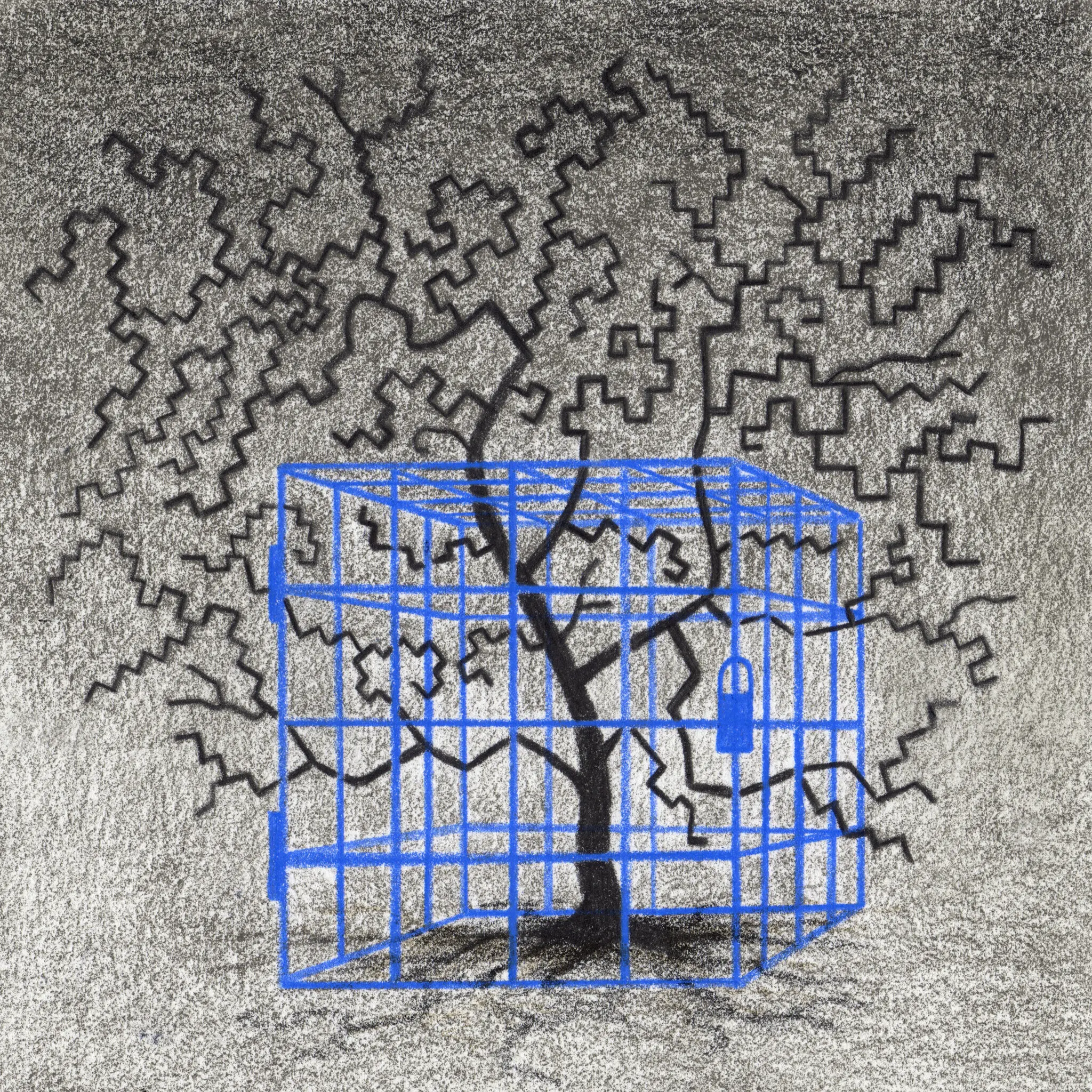
Critics across the political spectrum have observed that Punjab today is not governed by its Chief Minister and Cabinet in any meaningful sense. It is governed by the Chief Secretary, the bureaucratic secretaries, and a network of administrative officials who have accumulated decision-making authority that properly belongs to elected representatives. This is not a subtle shift. It is a structural transformation that has hollowed out the political function of the party’s own members and workers, and its consequences for PML-N’s electoral prospects are becoming impossible to ignore.
The problem extends from the provincial capital to the district level. In the absence of local government elections, there are no elected mayors, no municipal councils, and no empowered local representatives to bridge the gap between citizens and the state. In their place, Deputy Commissioners and Assistant Commissioners exercise authority that, in a functioning democratic system, would rest with elected local government. The result is an administrative landscape in which the ordinary voter has no meaningful political interlocutor. The party representative, the member of the provincial assembly, the traditional electable who once served as the link between constituency and government, has been rendered largely ceremonial.
The Punjab Assembly’s Standing Committees, which exist precisely to hold the executive accountable, have not demonstrated the institutional vigour necessary to check bureaucratic overreach. Public Accounts Committees, similarly, have failed to assert oversight over administrative expenditure and decision-making in ways that would matter. Observers point to the Chief Minister’s own posture as a contributing factor: the bureaucracy is widely perceived to enjoy her personal patronage, which has made it difficult for elected representatives to challenge administrative decisions or demand accountability through constitutional channels. When politicians feel that the system operates above them rather than through them, their motivation to deliver for the party diminishes accordingly.
This sense of political irrelevance is damaging enough on its own. Combined with the competitive pressure PML-N already faces, it becomes a serious electoral liability. Imran Khan’s popularity and the persistent appeal of Pakistan Tehreek-e-Insaf have placed the party’s traditional vote under sustained pressure in Punjab. In such an environment, a party depends more than ever on the energy of its workers, the loyalty of its electables, and the operational vitality of its political network. If those assets feel sidelined, if party stalwarts cannot point to tangible influence over decisions in their constituencies, they do not simply become inactive. They drift. Some find other arrangements. Others disengage entirely. The party structure, deprived of genuine purpose, atrophies.
There is also an internal perception within PML-N that Chief Minister Maryam Nawaz has built around herself a governing circle dominated by technocrats, unelected ministers, and senior bureaucrats. Access to this circle is reportedly limited for the traditional political leadership that built the party’s base over decades. Some observers specifically note the growing influence of figures like Maryam Aurangzeb in provincial decision-making as reflecting a broader pattern: governance conducted by the technically capable and politically unaccountable, at the expense of those whose legitimacy derives from public mandate. This perception, whether entirely accurate or not, is politically toxic when it takes root in the minds of party workers and elected representatives who feel they have been written out of the story.
What makes this especially problematic is a fundamental misreading of how political support is sustained. The party’s focus on development projects, administrative schemes, and governance metrics is not without merit. Infrastructure matters. Service delivery matters. But politics does not survive on projects alone. It survives on relationships, on the sense among workers and voters that their party represents them and that their participation in the political process carries weight. A government that delivers services through a bureaucratic machine, while its political workers watch from the margins, does not generate the kind of loyalty that sustains electoral majorities. It generates appreciation, at best, and distance at worst.
Punjab is not merely one province among others for PML-N. It is the foundation of the party’s national relevance. Without Punjab, the party has no claim to being a governing force at the federal level. This makes the current trajectory particularly alarming for those who take the party’s long-term future seriously. Some within political circles have begun to describe PML-N’s current situation in Punjab as a political existential crisis. Whether or not that language is too dramatic, the underlying concern it reflects is legitimate.
The path forward requires a deliberate reassertion of political authority over governance. That means conducting local government elections and restoring elected representation at the district level. It means empowering parliamentary committees to genuinely scrutinise the executive. It means restructuring decision-making so that political workers, elected members, and local leadership are not spectators to administration but participants in it. Most fundamentally, it means recognising that governance is the constitutional responsibility of the political executive, not a function to be delegated permanently to the permanent service.
A party that outsources its governing role to the bureaucracy does not strengthen itself. It undermines the very reason for its existence. Punjab will not be won in the next election by administrative efficiency alone. It will be won, or lost, on the strength of political relationships that PML-N must urgently rebuild.