Zafar Iqbal
Pakistan’s economic crisis is not a mystery. It is the predictable consequence of deliberate policy choices made across several decades, choices that systematically converted a potentially productive economy into one built on consumption and imports. Understanding how this happened, and why reversing it demands structural transformation rather than budgetary tinkering, is the first step toward genuine recovery.
For decades, Pakistan’s economic managers prioritised import facilitation over domestic industrial development. Tariff structures, regulatory arrangements, and public investment decisions consistently favoured the movement of finished goods into the country rather than the building of productive capacity within it. Local manufacturers found themselves competing against imported products on unequal terms. The incentive to produce gave way to the incentive to import and resell. Industries that could have grown into globally competitive enterprises were either stunted or abandoned altogether. The economy’s centre of gravity shifted from production to consumption, from creation to distribution. This was not accidental. It reflected the interests of trading classes and import lobbies that held disproportionate influence over successive governments.
The consequences are now structural and deeply embedded. Pakistan’s export base remains dangerously narrow, concentrated primarily in low-value textile products that compete on price rather than quality or innovation. When global commodity prices shift, when energy costs rise, or when competing nations devalue their currencies, Pakistani exporters have little cushion and fewer alternatives. A country of over 240 million people generates export revenues that a nation one-tenth its size would consider inadequate. The current account deficit becomes a recurring wound because the economy consumes far more than it produces for external markets. Every cycle of growth sucks in imports, widens the deficit, drains reserves, and forces a correction through devaluation and austerity. The pattern repeats because the underlying structure has never changed.
The budget for fiscal year 2026-27 arrives in this context. Budgets, by their nature, operate on annual cycles and address fiscal flows. They adjust tax rates, reallocate expenditure, and manage deficits. These are necessary functions. But they cannot resolve a structural problem. No budget can substitute for the absence of competitive industry. No fiscal measure can compensate for a workforce inadequately equipped for the demands of a modern economy. No taxation reform can replace the missing foundation of an export-driven productive base. Treating Pakistan’s economic crisis as primarily a fiscal problem is like treating a broken leg with painkillers. The pain may ease temporarily, but the fracture remains.
What Pakistan genuinely requires is a transition toward an export-based economy anchored in knowledge and driven by human development. These three elements are inseparable and must be pursued simultaneously.
An export-based economy demands that the state actively build the conditions under which Pakistani producers can compete in international markets. This means reliable and affordable energy, modern infrastructure, streamlined customs and regulatory processes, access to competitive financing, and trade agreements that open foreign markets. It means protecting infant industries where strategic logic justifies it, investing in industrial zones with genuine facilities rather than paper allocations, and building supply chains that add domestic value at every stage. The goal is not to export raw cotton but finished textiles, not raw leather but manufactured goods, not agricultural commodities but processed food products with international certification. Moving up the value chain requires deliberate state support, not passive hope.
A knowledge economy requires that Pakistan invest seriously and urgently in education, research, and technological capability. The world’s fastest-growing export sectors are not in traditional manufacturing alone. They encompass software, digital services, engineering design, biotechnology, pharmaceuticals, and creative industries. Pakistan has a young population that represents an enormous potential asset, but potential becomes reality only through investment. Universities must be connected to industry. Research must be funded and applied. Technical and vocational training must be expanded and modernised. The digital infrastructure must reach smaller cities and rural areas. A country that does not invest in the minds of its people cannot compete in an economy where knowledge is the primary source of value.
Human development is the foundation beneath both. An economy cannot sustain export growth or knowledge production if its workforce is poorly educated, in poor health, and excluded from economic opportunity. Pakistan’s human development indicators remain among the weakest in the region. Child stunting affects cognitive capacity and lifetime productivity. Girls excluded from education represent wasted talent on a national scale. Workers without skills cannot operate modern machinery or contribute to service exports. Human development spending is not charity. It is the most productive investment a state can make, because every improvement in education, health, and nutrition compounds across generations.
Underlying all of this is the governance problem that Pakistan has refused to confront honestly. Structural economic transformation requires a state capable of designing coherent policy, implementing it consistently, and protecting the rule of law impartially. Pakistan’s civil service needs reform. Its regulatory bodies need independence and competence. Its judicial system needs to resolve commercial disputes with speed and predictability. The business environment must be simplified so that entrepreneurs spend their energy building enterprises rather than navigating bureaucratic obstacles.
Pakistan’s problem is not primarily financial. Money has flowed in repeatedly through IMF programmes, remittances, and foreign assistance. The problem is that institutions have been too weak, too politicised, and too captured by narrow interests to convert resources into sustained development. Until governance is reformed alongside economic structure, budgets will continue to be annual exercises in managing decline rather than instruments of transformation.
The path forward is clear, even if it is difficult. Export-led growth, knowledge economy development, and serious investment in human capital are not alternatives to consider. They are necessities to pursue.
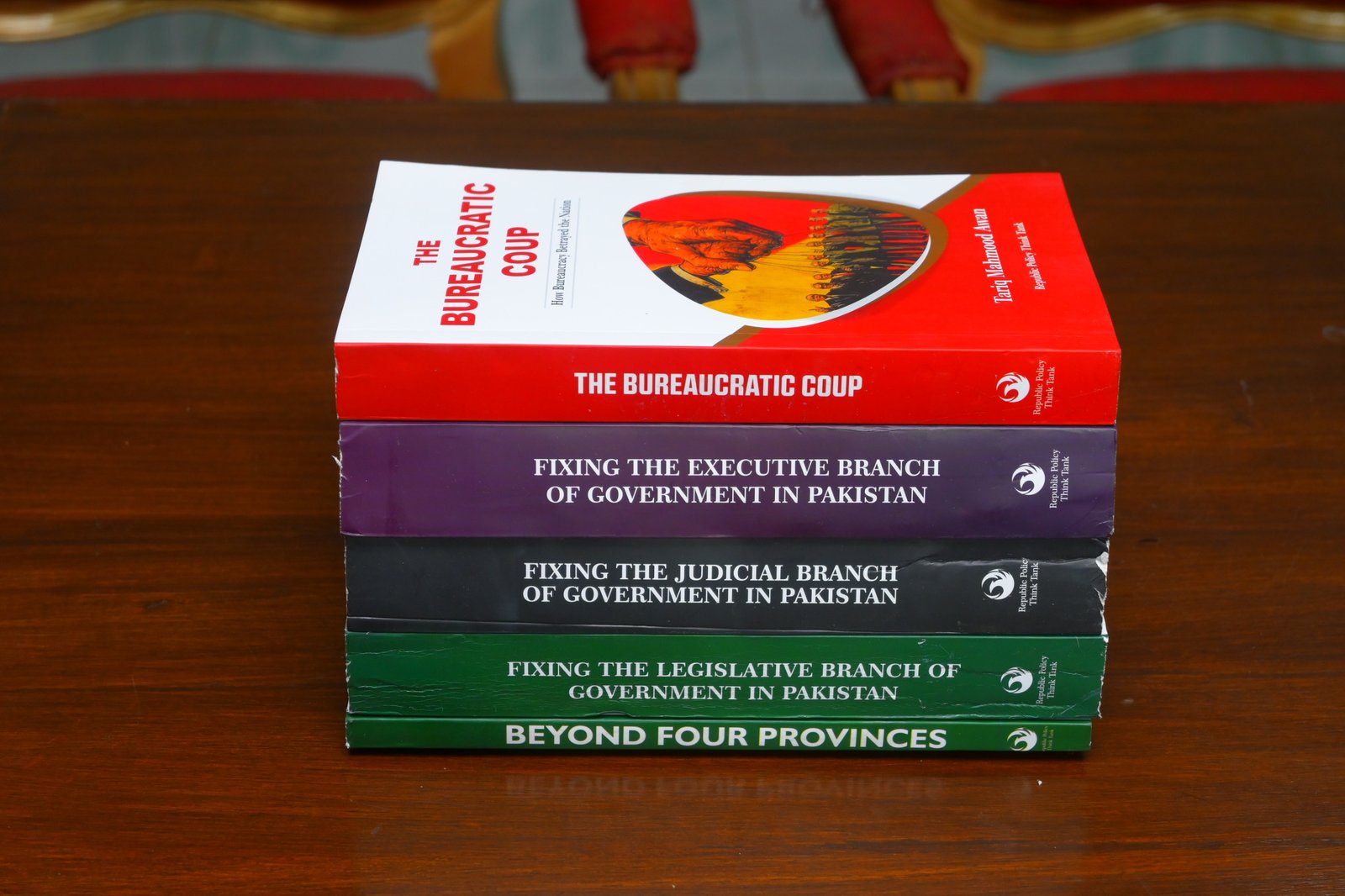
The best-selling books of Republic Policy Think Tank, including the landmark book The Bureaucratic Coup, are available at Vanguard Books, Liberty Books, Readings, Kitab Sarai, Sang-e-Meel, Saeed Book Stores, and others across Pakistan. Contact for home delivery: 0300 9552542.