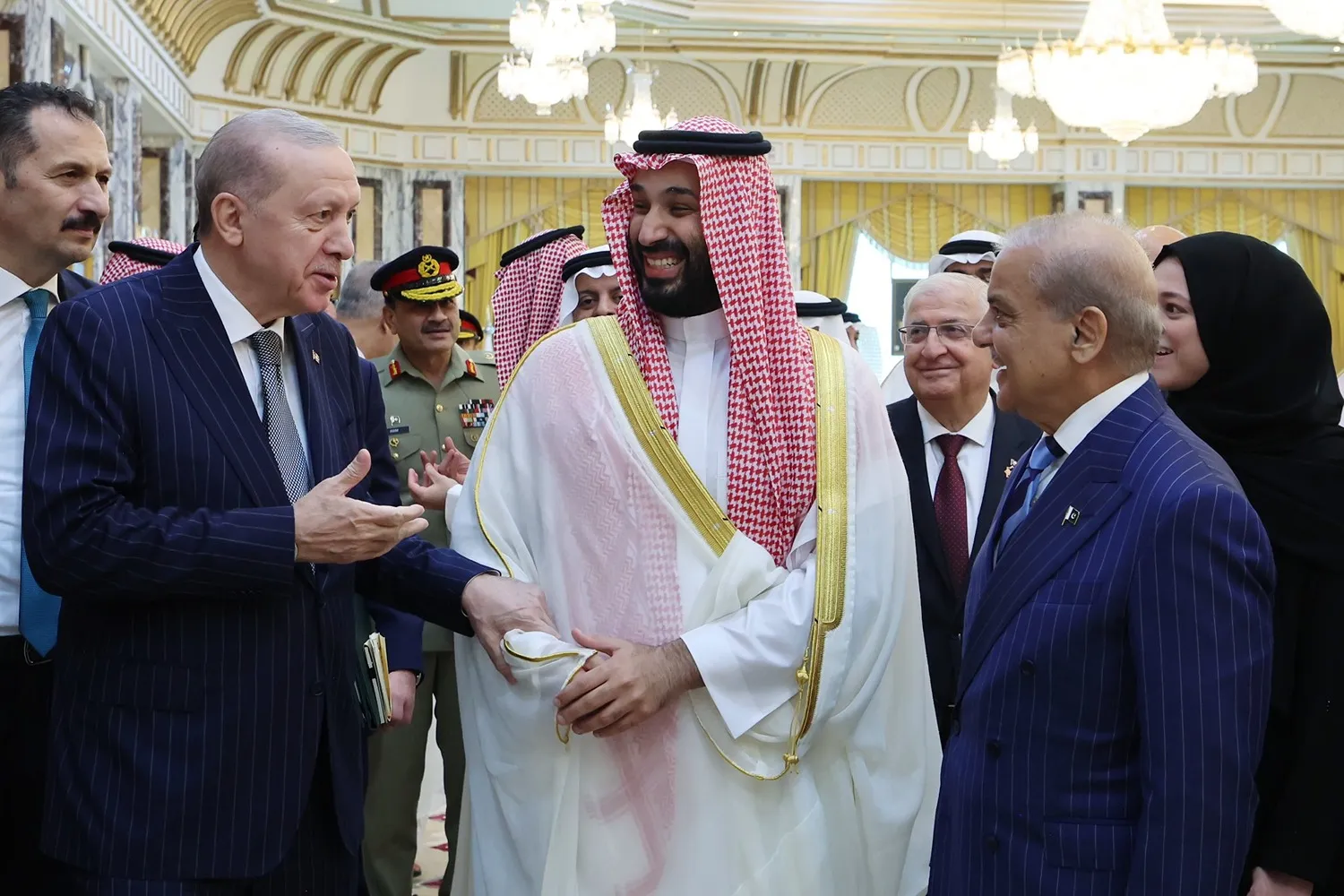

The Mecca Joint Defence Agreement, signed on August 7, 2026, by Pakistan, Saudi Arabia, and Turkey, hands Islamabad an elevated strategic footprint in the Middle East along with a formal mutual defense guarantee, modeled loosely on NATO’s Article 5, under which an attack on any one member is treated as an attack on all three.
The strategic gains for Pakistan are real. Aligning with Turkey, which fields NATO’s second-largest army, and Saudi Arabia, a leading economic and energy power, gives Islamabad a meaningful boost to its regional security standing and strengthens the case for collective deterrence among the three. The pact also enhances Pakistan’s diplomatic weight, positioning it as a middle power capable of playing a genuine role in broader regional conflict-resolution efforts, rather than a bystander to Gulf politics. More broadly, the agreement supplements traditional security thinking with a localized, cooperative deterrence structure at a moment when the Middle East’s underlying power dynamics are shifting fast.
The limitations, though, are just as important as the gains. The pact reinforces Pakistan’s position within the Middle East specifically, but it does not extend into Pakistan’s own distinct South Asian security environment, meaning it offers no defense commitment relevant to Pakistan’s rivalry with India. Officials have also been explicit that the agreement does not place Turkey or Saudi Arabia under Pakistan’s nuclear umbrella; no automatic extension of nuclear deterrence is built into the deal. And rather than obligating automatic military action, the pact leaves the exact form and scale of any response, military or financial, to mutual consultation among the three states, a structure of shared discretion rather than binding warfare obligations.