
Hafeez Ahmed Khan
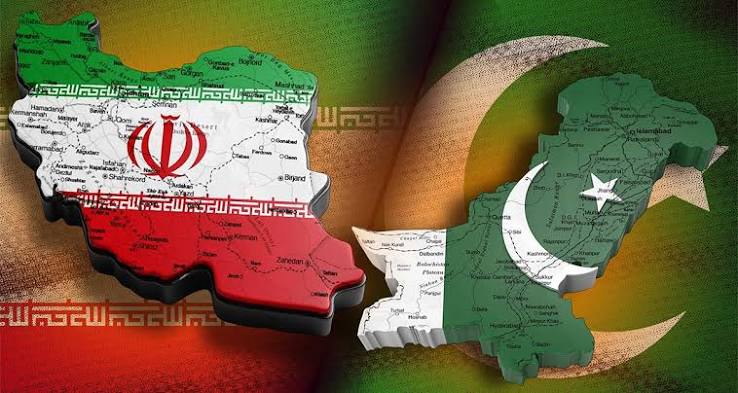
Symbolism is never accidental in international diplomacy. When Iranian President Masoud Pezeshkian chose Pakistan as the destination for his first foreign visit following the cessation of hostilities with the US-Israel combine, he was sending a message that the chancelleries of the world were meant to read carefully. That message was one of gratitude, strategic acknowledgment, and a quiet but unmistakable signal that the geopolitical map of the region is being redrawn, and Pakistan intends to occupy a more consequential position on it.
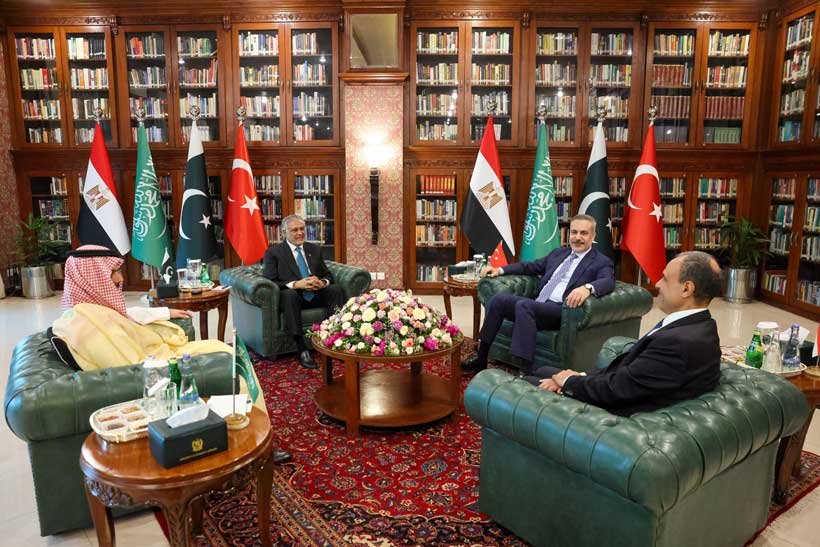
The warm reception that Islamabad extended to President Pezeshkian and his delegation, with both civilian and military leadership present, was not mere protocol. It was a statement of intent. Pakistan and Iran have long maintained a relationship that oscillated between cordiality and friction, shaped less by bilateral animosity than by the gravitational pull of larger powers. Washington’s decades-long campaign of economic strangulation against Tehran cast a long shadow over Islamabad’s willingness to deepen formal ties with its western neighbour. The fear of secondary sanctions, which carry the power to deny access to American markets, kept Pakistan’s engagement with Iran largely confined to the informal economy. That calculus, however, is now beginning to shift.
The geopolitical context of this visit cannot be separated from the role Pakistan quietly played in helping bring the war to a close. When Tehran chose Islamabad as the venue to negotiate with the Americans in April, it was not a random logistical choice. It was a deliberate signal of trust. In a region where trust between capitals is a scarce and precious commodity, Iran’s decision to use Pakistan as a channel of communication with Washington elevated Islamabad’s standing in a way that years of routine diplomacy could not have achieved. Pakistan demonstrated that it could occupy a rare and valuable position: a state with credible lines of communication to both sides of one of the world’s most entrenched geopolitical conflicts.
Now comes the harder work. Turning diplomatic goodwill into structural engagement requires courage and strategic clarity, both of which have historically been in short supply when it comes to Pakistan-Iran relations. The single most consequential step that both governments could take is the resumption of the Iran-Pakistan gas pipeline. The Iranian section of the project is complete. Pakistan’s section remains unbuilt, and Tehran has initiated arbitration proceedings in France over Islamabad’s failure to honour its contractual commitments. This unresolved dispute is an open wound in the bilateral relationship, and it must be addressed with seriousness. If the anticipated US-Iran framework agreement does in fact terminate secondary sanctions, as the memorandum of understanding currently under discussion suggests, Pakistan would lose its primary justification for inaction on the pipeline. The window to act is narrow, and allowing it to close again would be an act of strategic negligence.
Beyond energy, the trade relationship between the two countries carries enormous unrealised potential. Pakistan and Iran share a long border, and the communities on both sides have historically maintained organic economic linkages despite the absence of formal structures. Border markets, if regulated and supported rather than merely tolerated, can become engines of local development and instruments of confidence-building. The Foreign Office’s acknowledgment that the full spectrum of bilateral relations was on the agenda, including trade, energy, border security, and regional connectivity, was encouraging in its breadth. The real test lies in what follows these announcements.
Border security remains a genuine irritant that neither side can afford to treat as a secondary concern. Cross-border militancy, smuggling, and the movement of armed non-state actors have periodically strained relations and provided external actors with opportunities to manipulate tensions between two neighbours who otherwise have every reason to cooperate. Joint border management mechanisms, intelligence sharing, and cooperative counterterrorism frameworks are not merely desirable as diplomatic courtesies. They are strategic necessities.
The broader regional picture adds further urgency to the imperative of deepening Pakistan-Iran ties. The United States is recalibrating its presence and commitments in the Middle East, and the regional order is in genuine flux. China’s role as a mediator between Saudi Arabia and Iran has already demonstrated that the architecture of regional relationships is being restructured. Pakistan, which maintains its own complex relationships with both Riyadh and Tehran, has an opportunity to function as a stabilising presence rather than a passive bystander. The China-Pakistan Economic Corridor, for all its challenges, positions Islamabad as a node in a larger connectivity network that could eventually integrate Iranian markets and energy resources into a broader regional economic framework.
What Pakistan must resist is the temptation to allow this diplomatic momentum to dissipate into the usual cycle of warm words and stalled implementation. The history of Pakistan-Iran relations is littered with initiatives that generated enthusiasm at the moment of announcement and silence in the months that followed. The gas pipeline itself is the most painful example of this pattern. What is required now is a different disposition: one that treats the bilateral relationship not as a peripheral concern but as a strategic priority that deserves sustained political attention at the highest levels.
President Pezeshkian’s visit is an opening, not a conclusion. The foundations of a genuinely productive relationship between Pakistan and Iran are present: shared history, cultural affinity, geographic interdependence, and a newly strengthened reservoir of trust. What converts those foundations into lasting architecture is political will, institutional follow-through, and the courage to pursue a relationship on its own terms rather than through the lens of external pressures that may themselves be in the process of transformation.
Pakistan has earned a moment of regional consequence through its conduct during a difficult geopolitical conjuncture. The question is whether it will have the wisdom and discipline to build something durable from it.
The best-selling books of Republic Policy Think Tank, including the landmark book The Bureaucratic Coup, are available at Vanguard Books, Liberty Books, Readings, Kitab Sarai, Sang-e-Meel, Saeed Book Stores, and others across Pakistan. Contact for home delivery: 0300 9552542.