Zafar Iqbal
Pakistan’s central government debt has crossed a record Rs81.93 trillion after rising by Rs1.4 trillion in April alone. Even for a country long accustomed to fiscal stress, this figure carries a weight that demands serious attention. It is not simply another number in a long series of discouraging statistics. It is a signal that the trajectory of public finances has reached a point where silence and delay are no longer acceptable responses.
The broader picture is equally sobering. In just ten months of the current fiscal year, central government debt has increased by more than Rs4 trillion. Domestic debt accounts for Rs3.6 trillion of that rise while external debt has added over Rs400 billion to the total. The sharp spike recorded in April, driven by simultaneous increases in both domestic and foreign borrowing, reflects just how deeply the government depends on debt to keep itself running. It is not borrowing to invest. It is borrowing to survive, to pay salaries, to service older loans, and to fill gaps that revenue collection consistently fails to close.
This pattern is not new. What is striking is how little has changed despite how long the warnings have been sounding. Economists have raised the alarm. International financial institutions have conditioned their support on reform commitments. Government officials have themselves acknowledged the unsustainability of the current path. And yet the debt stock keeps climbing with a consistency that suggests the warnings are noted, discussed, and then quietly set aside when political realities assert themselves.
The reason this cycle persists is not difficult to understand. Successive governments have faced the same structural problem and reached for the same structural solution. When revenues fall short of expenditures, the gap is bridged through borrowing. When loan repayments fall due, more loans are taken to meet them. When spending commitments cannot be trimmed without political cost, borrowing absorbs the difference. Each administration inherits a difficult situation and hands its successor an even more difficult one. The debt grows not because governments are reckless by nature but because the incentives to reform are consistently weaker than the pressures to borrow.
The human cost of this arrangement is often buried beneath the macro-level discussion of debt ratios and fiscal deficits. But it is real and it is large. Every rupee directed toward debt servicing is a rupee that does not reach a school, a hospital, a road, or a household living below the poverty line. As debt expands, the government’s ability to invest in the future shrinks. Policymakers find themselves trapped in the business of managing yesterday’s obligations rather than building tomorrow’s capacity. The result is a state that grows more indebted while delivering fewer services, a combination that erodes public trust and economic confidence simultaneously.
The timing of these latest figures adds another layer of difficulty. The Middle East conflict has already unsettled energy markets and created fresh uncertainty across global trade flows. For Pakistan, which depends heavily on imported energy, higher oil prices translate directly into higher import costs and greater pressure on foreign exchange reserves. Those reserves remain far from comfortable. The country is still operating under an IMF programme, which provides a degree of external anchoring but also narrows the space for independent policy choices. Any deterioration in the external environment, whether through higher energy prices, reduced remittances, or tightening global financial conditions, hits Pakistan harder than it would hit an economy with stronger buffers.
This external vulnerability amplifies the domestic weakness rather than existing separately from it. Pakistan’s debt challenge would be serious even if global conditions were favourable. It becomes considerably more dangerous when geopolitical tensions are simultaneously squeezing the energy bill, pressuring the current account, and shaking investor confidence. The margin for error narrows precisely when the need for sound policy judgment is greatest.
There is also a credibility dimension that policymakers cannot afford to overlook. Pakistan regularly commits to fiscal discipline, structural reform, and sustainable economic management in its official statements and programme agreements. Those commitments sit awkwardly alongside a debt stock that keeps breaking its own records. Investors, lenders, and development partners are not moved by declarations of intent. They watch outcomes. When the outcomes consistently point in the opposite direction from the stated objectives, the credibility gap widens, and with it the cost of future borrowing and the difficulty of attracting productive investment.
What Pakistan needs is not another round of conversations about the debt problem but a sustained, politically serious commitment to addressing the causes that drive it. Revenue mobilisation must improve, and improve substantially. The tax base remains far too narrow, with agriculture, retail, and real estate continuing to contribute far less than their economic weight would justify. Expenditure management must become more disciplined, with subsidies rationalised, public enterprises reformed, and spending directed toward productive uses rather than current consumption. The structural reforms that expand the productive capacity of the economy, improve the business environment, and attract private investment must move from the agenda to the action column.
None of this is easy. Each of these steps carries political costs that governments are understandably reluctant to bear. The constituencies that benefit from the current arrangements are organised and vocal. The broader population that suffers the consequences is diffuse and largely unheard in the rooms where decisions are made. That imbalance helps explain why the cycle continues even when its dangers are widely acknowledged.
But continuing along the current path carries costs that are becoming harder to absorb with each passing year. The record debt figures released this month are not simply a milestone. They are a marker on a road that is growing narrower, steeper, and more treacherous. Pakistan must stop measuring how much more it can borrow and start answering the harder question of why the compulsion to borrow keeps growing. Until that question receives an honest answer and an honest response, each new debt record will be just another warning that was heard and ignored.
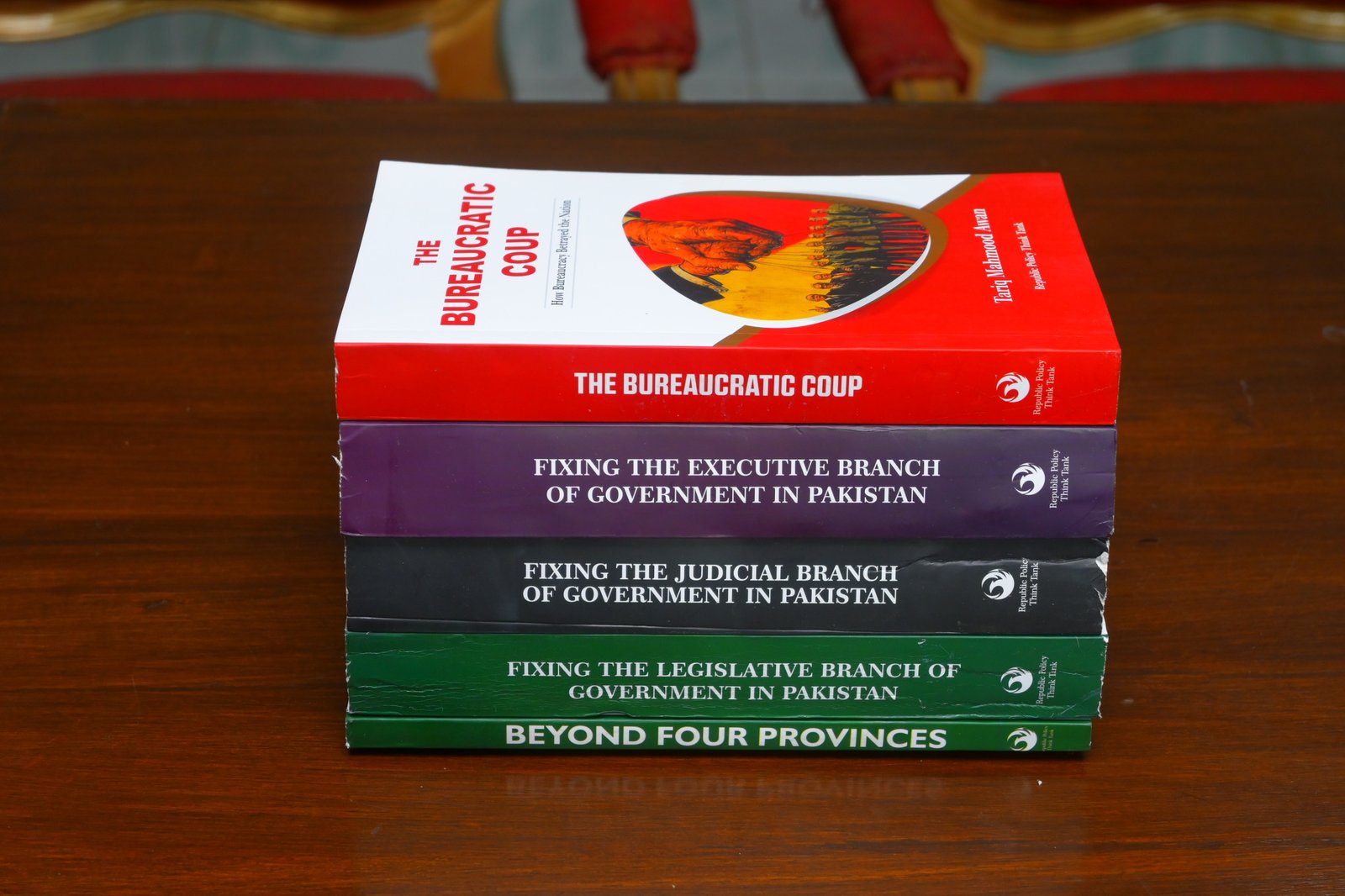
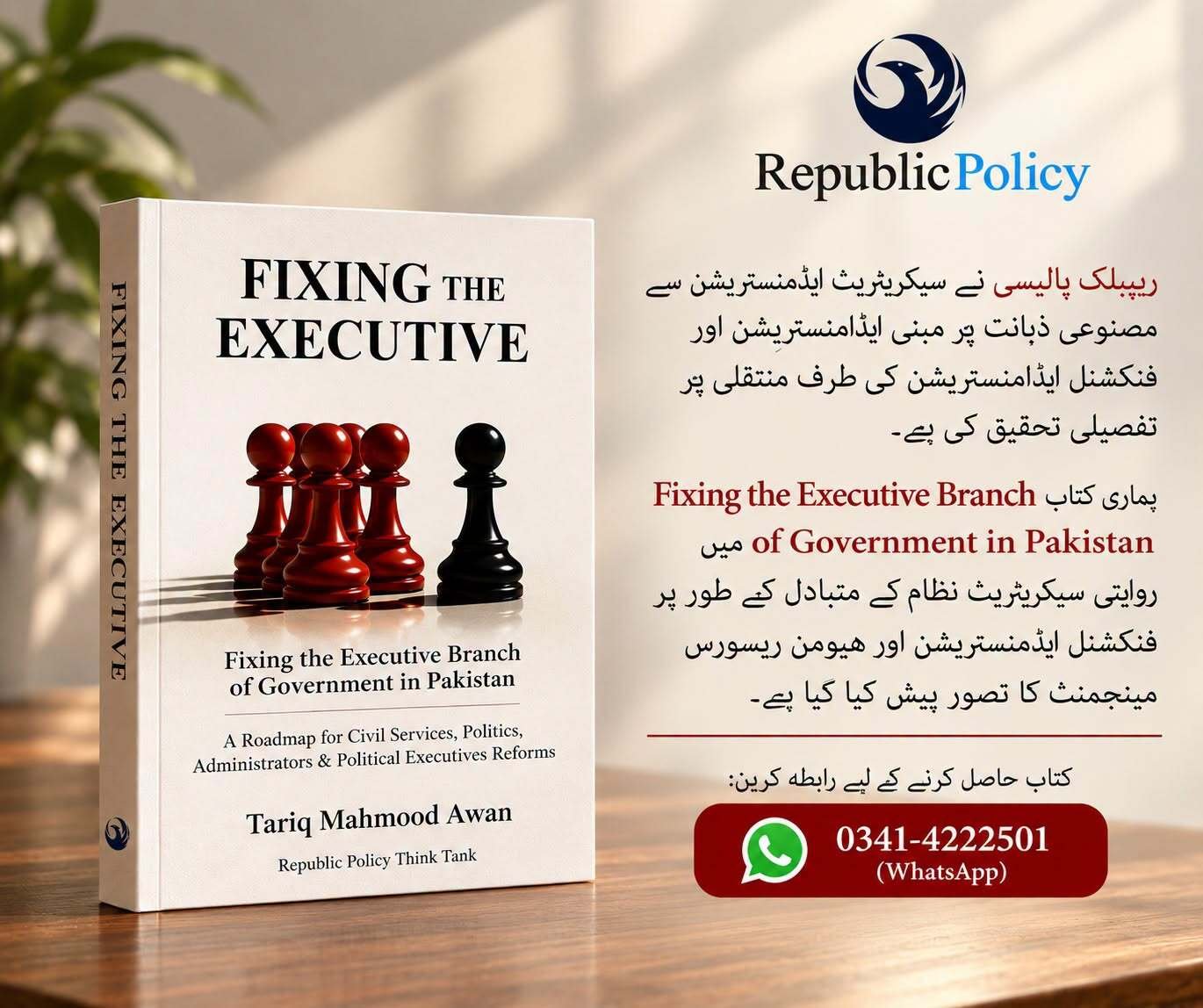
The best-selling books of Republic Policy Think Tank, including the landmark book The Bureaucratic Coup, are available at Vanguard Books, Liberty Books, Readings, Kitab Sarai, Sang-e-Meel, Saeed Book Stores, and others across Pakistan. Contact for home delivery: 0300 9552542.