
Mubashar Nadeem
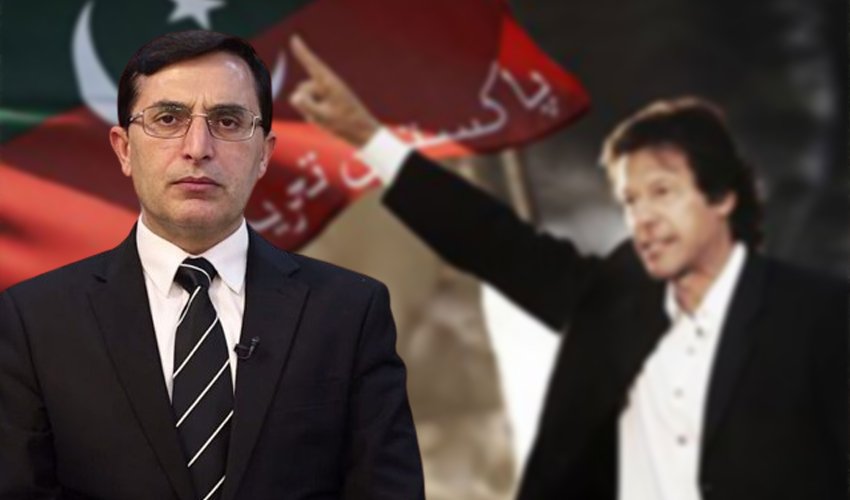
Political parties are not merely electoral machines. They are the foundational institutions of democratic governance. When political parties are weak, disorganised, and unaccountable internally, the democracy they participate in becomes equally hollow. This is not a peripheral concern. It is the central question of Pakistan’s democratic future. And it is precisely the lens through which Pakistan Tehreek-e-Insaf, and the three-year chairmanship of Barrister Gohar Khan, must be examined honestly.
Why does it matter to build political parties as institutions? Because governance does not begin when a party wins an election. It begins inside the party itself. A party that cannot hold internal elections cannot credibly demand free and fair national elections. A party that has no internal accountability cannot build a culture of accountability in government. A party that produces no coherent policy framework in opposition will produce no coherent governance in power. The organisational DNA of a political party determines the quality of the government it eventually forms. Weak parties produce weak governance. This is not coincidence. It is causation.
Pakistan Tehreek-e-Insaf is, by any credible measure, the most popular political party in Pakistan today. Its public support, tested repeatedly under conditions of extraordinary pressure, repression, and institutional hostility, has remained remarkable. Millions of Pakistanis have stood behind this party with a consistency and passion that no other political force in the country’s recent history has matched. That is a fact, and it deserves acknowledgment.
But popularity is not the same as institutional strength. And it is on institutional strength that a serious evaluation of PTI’s performance over the past three years must focus.
Barrister Gohar Khan has led the party for three years. The critical question is whether, in any formal party forum, his performance has ever been reviewed. Has any internal mechanism examined what concrete steps were taken toward organisational structuring? Has anyone assessed progress on internal accountability, party elections, worker training, policy development, and institutional reform? If the answer is no — and the evidence suggests it is — then PTI has allowed three years to pass without applying to itself the very standards of accountability it demands from others.
The circumstances argument is familiar and not without basis. PTI has operated under conditions of severe state pressure. Its leaders have been imprisoned, its workers harassed, its candidates disqualified. These are real constraints, and they cannot be dismissed. But they cannot explain everything. Political parties across the world have organised, reformed, and strengthened themselves under conditions far more hostile than those PTI faces in Pakistan. Pressure does not preclude organisation. In fact, history shows that the most durable political movements build their strongest institutional foundations precisely during periods of adversity. A party claiming the support of more than half the country’s population retains resources, networks, and moral authority that, if channelled with discipline, are more than sufficient to sustain meaningful internal reform.
The most concrete evidence of PTI’s institutional limitations is visible not in opposition but in government. Khyber Pakhtunkhwa has been under PTI governance for an extended period. It is a laboratory in which the party’s governance philosophy, administrative capacity, and reform instincts can be observed directly. The results, examined without partisan sentiment, raise serious questions. The colonial administrative framework remains largely intact. The bureaucracy continues to function on its traditional terms. Local governments have not been empowered in any transformative sense. Judicial and administrative complexities that citizens have endured for generations persist. The governance architecture, from the provincial level down to the local, does not present the model reforms that a party of PTI’s stated ambitions should have produced by now.
This is not an attack on PTI’s intentions. It is an observation about outcomes. Intentions without institutional capacity produce disappointment. And institutional capacity must be built deliberately, systematically, and with discipline — inside the party before it can be delivered through government.
Republic Policy Think Tank’s critique here is grounded in a commitment to democracy, not opposition to any party or leader. Strong democracy in Pakistan requires strong political parties. Strong political parties require internal democracy, genuine accountability, coherent policy frameworks, trained workers, and leadership that is itself subject to review and evaluation. These are not optional features of a political party. They are its essential architecture.
PTI must therefore conduct a formal, honest, and structured review of Barrister Gohar Khan’s performance as chairman. This is not a call for his removal. It is a call for institutional normalcy. Leaders in democratic organisations are reviewed. Their performance is assessed against defined responsibilities. Conclusions are drawn and decisions are made. That process, however uncomfortable, is what separates a political institution from a personality cult. PTI has always insisted it represents something different in Pakistani politics. Proving that requires demonstrating it internally, not just proclaiming it publicly.
The party’s extraordinary public support is a historic asset. But assets squandered through organisational neglect eventually diminish. PTI’s popular legitimacy must be matched by institutional seriousness. Policy documents must be developed. Worker development programs must be designed and implemented. Internal elections must be held on schedule and with credibility. Governance in Khyber Pakhtunkhwa must be transformed into a demonstrable model of reform that can be pointed to with pride.
Pakistan deserves political parties that are genuine institutions — accountable, organised, policy-driven, and internally democratic. PTI has the public support to become exactly that. Whether it has the institutional will to do so is the question Barrister Gohar Khan’s chairmanship must now answer.
Popularity wins elections. Institutions build nations. PTI must decide which it intends to be.
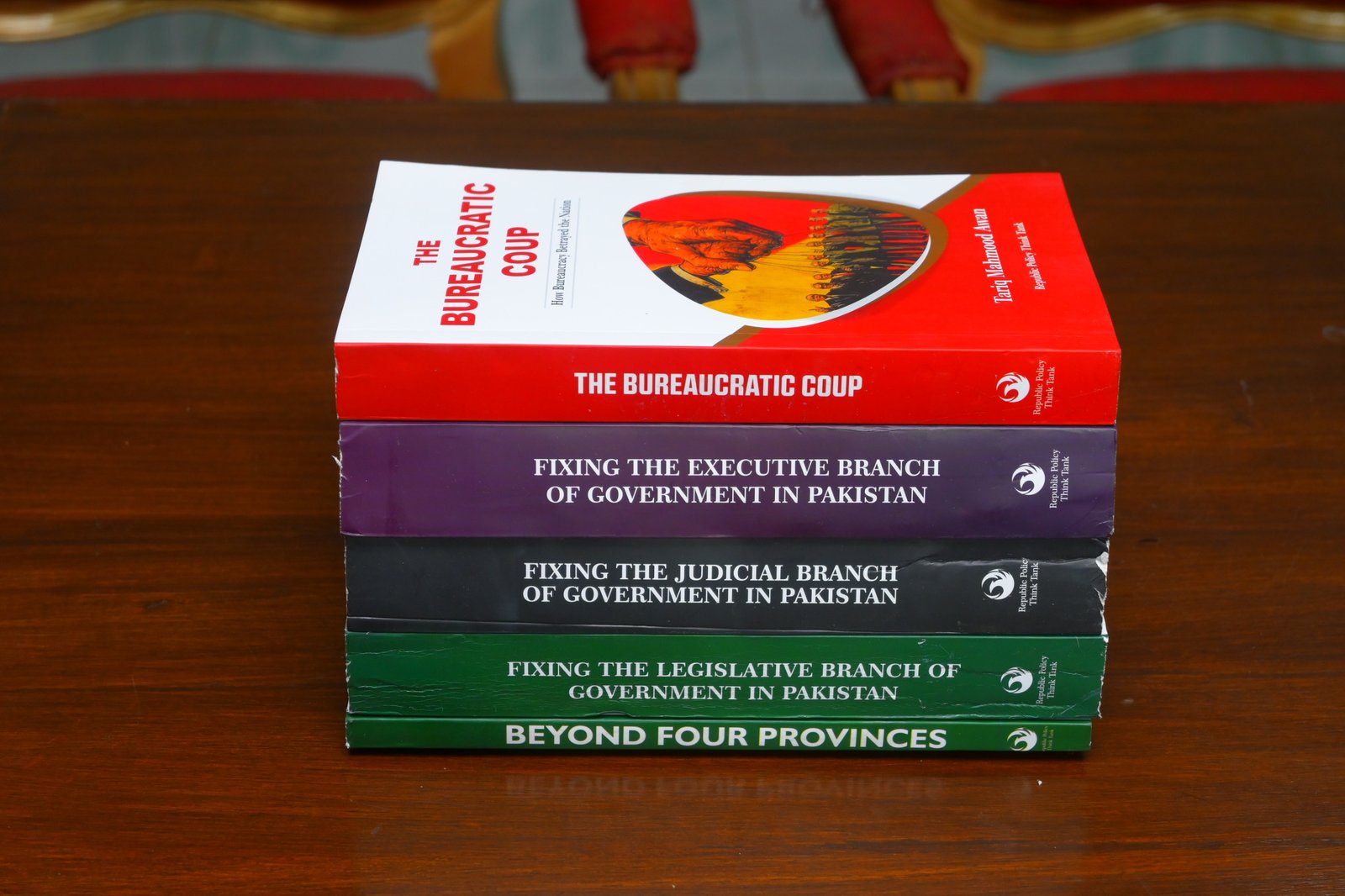
The best-selling books of Republic Policy Think Tank, including the landmark book The Bureaucratic Coup, are available at Vanguard Books, Liberty Books, Readings, Kitab Sarai, Sang-e-Meel, Saeed Book Bank Islamabad, National Book Foundation, and others across Pakistan. Contact for home delivery: 0300 9552542.