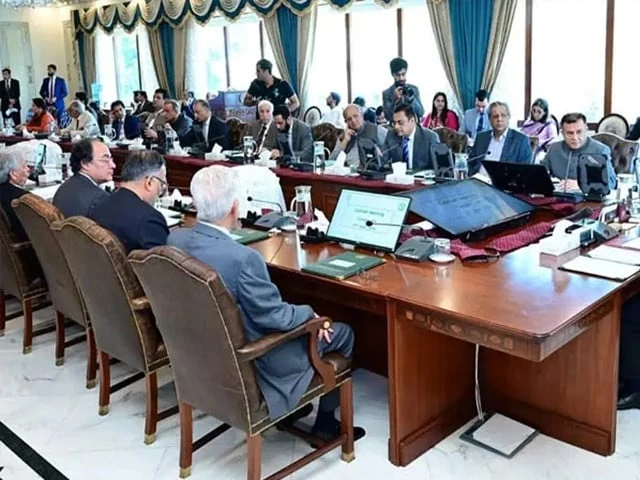

The federal cabinet has approved a fresh special allowance for Pakistan’s top bureaucracy, the second such perk in four years, sanctioning a Rs1.8 billion budget even as the government extends austerity measures and grants ordinary government employees only a 7% pay raise.
The decision was made during a special cabinet meeting on June 12 that also approved the federal budget, though the cabinet division did not release details until July 17. In the same session, the Shehbaz Sharif-led cabinet approved just a 7% salary increase for all government employees, a group that includes the same officers now set to benefit from two separate special allowances, and extended austerity measures into the current fiscal year 2026-27.
Well-connected bureaucrats’ salaries and perks have continued climbing even as the rest of the public sector goes uncompensated amid sharp inflation. Ordinary citizens, meanwhile, remain exposed to imported inflation and now, increasingly, to daily fuel price fluctuations, a relatively new burden.
The new allowance has been named the “All Pakistan Services (APS) Provincial Governments’ Cadre Posts’ Parity Allowance.” It marks the second such allowance PM Sharif has approved, following a 150% executive allowance granted to bureaucrats in June 2022. The cabinet has allocated Rs1.8 billion to fund it starting July 1, a sum suggesting the allowance could amount to at least 100% of basic pay.
Neither the secretary of the establishment division nor the secretary of the cabinet responded to questions about the allowance’s purpose, its rate, or whether any needs assessment was conducted, particularly given the scale of the earlier 150% executive allowance. Sources said the justification behind both allowances is the same: bureaucrats enjoy substantial perks at the provincial level and are reluctant to serve in the federal government, and pay structures across the federal government, judiciary, and bodies like NAB and the FBR remain inconsistent.
Rather than pursuing structural pay reform, however, critics say the government is deepening existing distortions that other service groups are likely to cite in seeking similar benefits of their own.
Under Article 240 of the constitution, All-Pakistan Services are specialised civil services whose members serve in positions common to both federal and provincial governments, with the Pakistan Administrative Service and the Police Service of Pakistan falling under this category. A recent World Bank report has separately flagged how provinces misused additional funds from the National Finance Commission award by repeatedly raising salaries and pensions.
The cabinet has directed the establishment division to work with the cabinet and finance divisions to prepare a case for the prime minister’s approval, covering the allowance’s size, structure, and eligibility criteria, with the stated aim of ensuring fairness among All-Pakistan Services officers posted in Islamabad. Separately, the cabinet approved recalculating the existing 150% executive allowance based on running basic pay as of June 30, 2026, delinking it from 2017 pay levels, a change that offers further relief to bureaucrats in grades 17 to 22.
The executive allowance was originally granted to officers posted against sanctioned positions ranging from section officers to secretaries within the federal secretariat, the Prime Minister’s Office, and the President’s Secretariat. It was later extended to other service groups after they protested the disparity, a pattern officials say could repeat itself with the new APS allowance.
Austerity Continues, With Exceptions
At the same meeting, the cabinet approved extending its austerity measures, while simultaneously authorizing a back-door mechanism allowing exemptions to its own restrictions. The Austerity Committee, formed by the Finance Division, has been empowered to grant case-by-case relaxations where it deems sufficient justification exists, a provision that has already been used to approve car purchases for bureaucrats and ministers, along with office furniture and renovations.
The cabinet reaffirmed a continued ban through fiscal year 2026-27 on new durable goods purchases, new vehicle purchases, and lavish catering at government events, restricted to single-dish meals or tea and biscuits. Yet the Austerity Committee has repeatedly relaxed these very rules. Also extended were bans on creating new posts, including temporary and contingent ones, on continuing such posts beyond one year, on government-funded medical treatment abroad, and on non-obligatory foreign travel funded by the state. Despite this, the cabinet has approved new positions within the Ministry of Interior in recent months.
The cabinet further decided that these austerity measures will extend to state-owned entities, with instructions issued under the State-Owned Enterprises Governance and Operations Act, 2023.