
Barrister Talha Nadeem
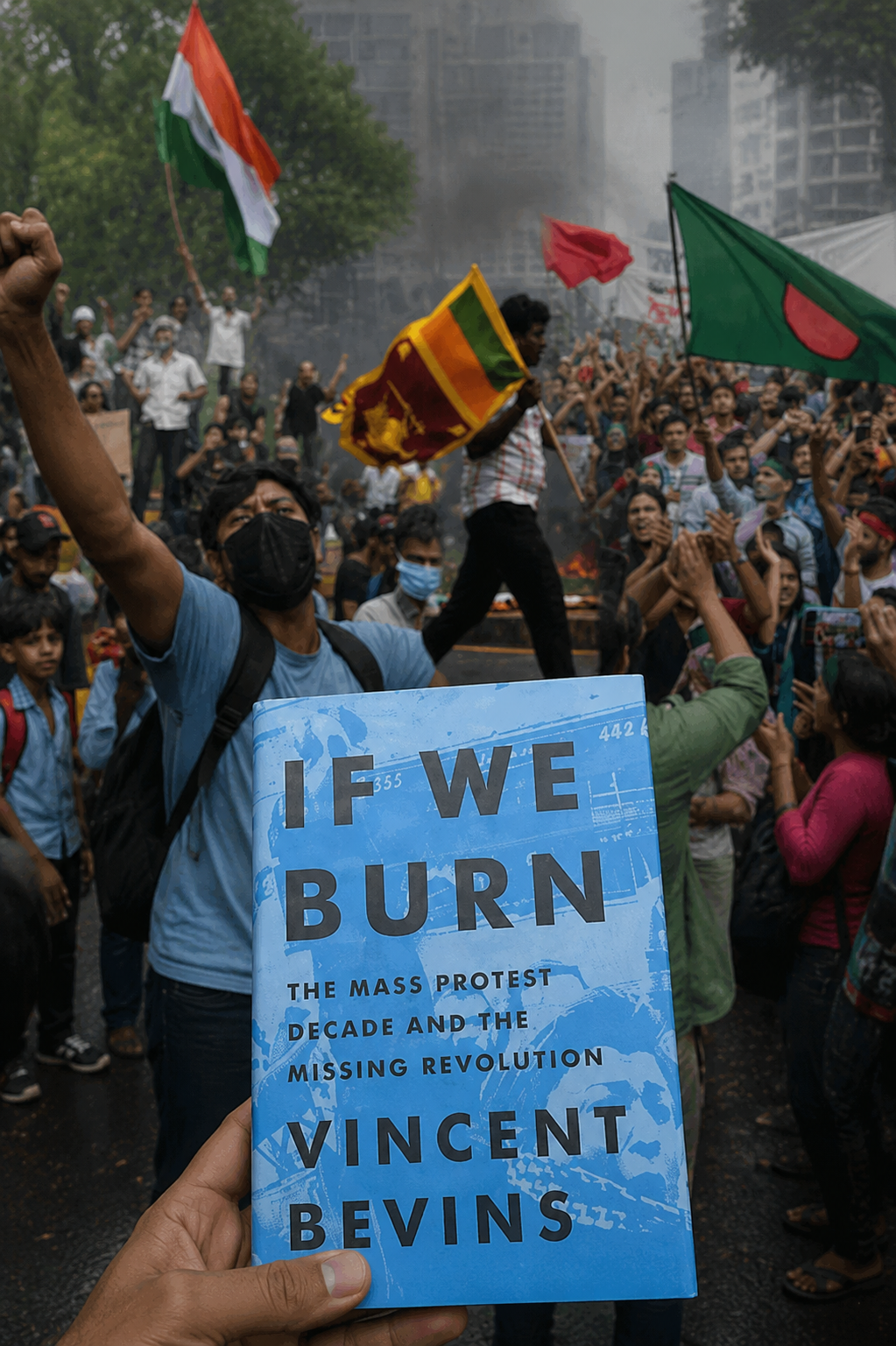
Across Pakistan, one question is being asked repeatedly: why has Pakistan’s youth not launched a nationwide movement despite rising unemployment, economic hardship, political uncertainty, restrictions on freedom of expression, and growing public frustration? Many observers compare Pakistan with Sri Lanka, Bangladesh, Nepal, and, more recently, India’s youth-led reform campaigns. They ask why young people in those countries were able to challenge the existing political order while Pakistan’s Generation Z appears less willing or less able to do so.
At first glance, these comparisons seem reasonable. All of these countries have faced political crises, economic pressures, and dissatisfaction among young people. Yet the comparison often ignores two fundamental differences that make Pakistan’s situation unique. Unless these differences are understood, any comparison between Pakistan and the rest of South Asia will remain incomplete and misleading.
The first and most important difference lies in the nature of the political order itself.
In Sri Lanka, Bangladesh, Nepal, and India, youth movements emerged primarily against civilian political governments. Whether one agrees with those movements or not, they were directed at elected governments and political elites operating within civilian political systems. The institutions confronting protesters were largely those of the civilian state. Governments changed, prime ministers resigned, elections were held, and political transitions took place through constitutional or electoral processes.
Pakistan presents a different political landscape.
Many analysts argue that Pakistan’s political system has historically been shaped not only by elected governments but also by powerful state institutions whose influence extends well beyond ordinary civilian politics. Regardless of where one stands in this debate, it is widely acknowledged that Pakistan has experienced long periods of direct military rule and continuing institutional influence over national politics. This historical reality has produced a political environment that differs significantly from those of many neighbouring countries.
This distinction matters because public movements calculate risk before they calculate opportunity.
Young people are naturally willing to protest when they believe that political pressure can produce political change. However, they become far more cautious when they believe that the centres of power extend beyond elected governments. History teaches that movements confronting deeply entrenched power structures face far greater challenges than those seeking only a change of government.
This is not a judgment about any institution. It is simply an observation drawn from Pakistan’s own political history.
Throughout the world, political systems evolve in different ways. Some change through elections, some through negotiations, some through gradual institutional reform, and others through prolonged political evolution. Every country’s path is shaped by its own history.
The second major difference is equally important but receives far less attention.
The successful public uprisings witnessed in Sri Lanka and other countries were not generally seen as the campaigns of a single political party. They attracted students, professionals, workers, civil society organisations, business communities, and ordinary citizens from across the political spectrum. People participated because they identified with national grievances rather than with a particular party.
That broad social participation gave those movements legitimacy.
In Pakistan, however, periods of political mobilisation have usually been closely associated with one political party or another. Supporters of rival parties often view such movements through partisan lenses rather than as expressions of national concern. As a result, large sections of society remain spectators instead of participants.
When a movement becomes identified with one political party, it becomes easier for opponents to dismiss it as partisan politics rather than a broader public demand.
This is perhaps the greatest obstacle to building a truly nationwide civic movement.
Generation Z is the largest and most connected generation in Pakistan’s history. It is educated, digitally aware, and deeply informed about global events. It watches developments in Sri Lanka, Bangladesh, Nepal, Europe, and North America in real time. Yet access to information does not automatically translate into collective political action.
Young people also evaluate costs.
Every generation asks itself a simple question before entering any movement: what are the risks, and what are the chances of success? Where the perceived costs appear overwhelming, caution often replaces activism. This calculation is not unique to Pakistan. It is a feature of political behaviour across the world.
This helps explain why simply asking, “Why can’t Pakistan’s youth do what Sri Lanka’s youth did?” overlooks the structural differences between the two countries.
Pakistan’s Generation Z is not necessarily less aware, less courageous, or less concerned. Rather, it operates within a political environment that many believe presents different realities, different risks, and different constraints.
If Pakistan is ever to witness a genuinely nationwide civic movement, one lesson from other countries deserves careful consideration. Such a movement would need to rise above party loyalties. It would have to represent citizens before political organisations, national interests before electoral interests, and shared constitutional aspirations before partisan agendas.
Movements rooted solely in party politics inevitably divide society into supporters and opponents. Movements rooted in common public concerns have a greater chance of bringing diverse citizens together.
This does not mean political parties have no role in democracy. They remain indispensable institutions for elections, legislation, and governance. But history suggests that the largest civic transformations often begin when ordinary citizens act collectively around shared national concerns rather than party identities.
Pakistan’s future will ultimately be determined not by comparisons with other countries but by its own constitutional evolution, institutional development, and democratic maturity. Learning from neighbours is valuable, but copying their experiences without recognising Pakistan’s unique political realities risks producing false expectations and flawed conclusions.
The real comparison, therefore, is not whether Pakistan’s Generation Z is weaker than the youth of Sri Lanka, Bangladesh, Nepal, or India. The more meaningful question is whether Pakistan can create the political space, institutional confidence, and national unity necessary for its young citizens to participate fully in shaping their country’s future through peaceful, constitutional, and democratic means. Changing a political order, manufactured by the Establishment is a Herculin Task.
The answer to that question will determine not only the future of Generation Z but also the future of Pakistan’s democracy itself.