
Editorial
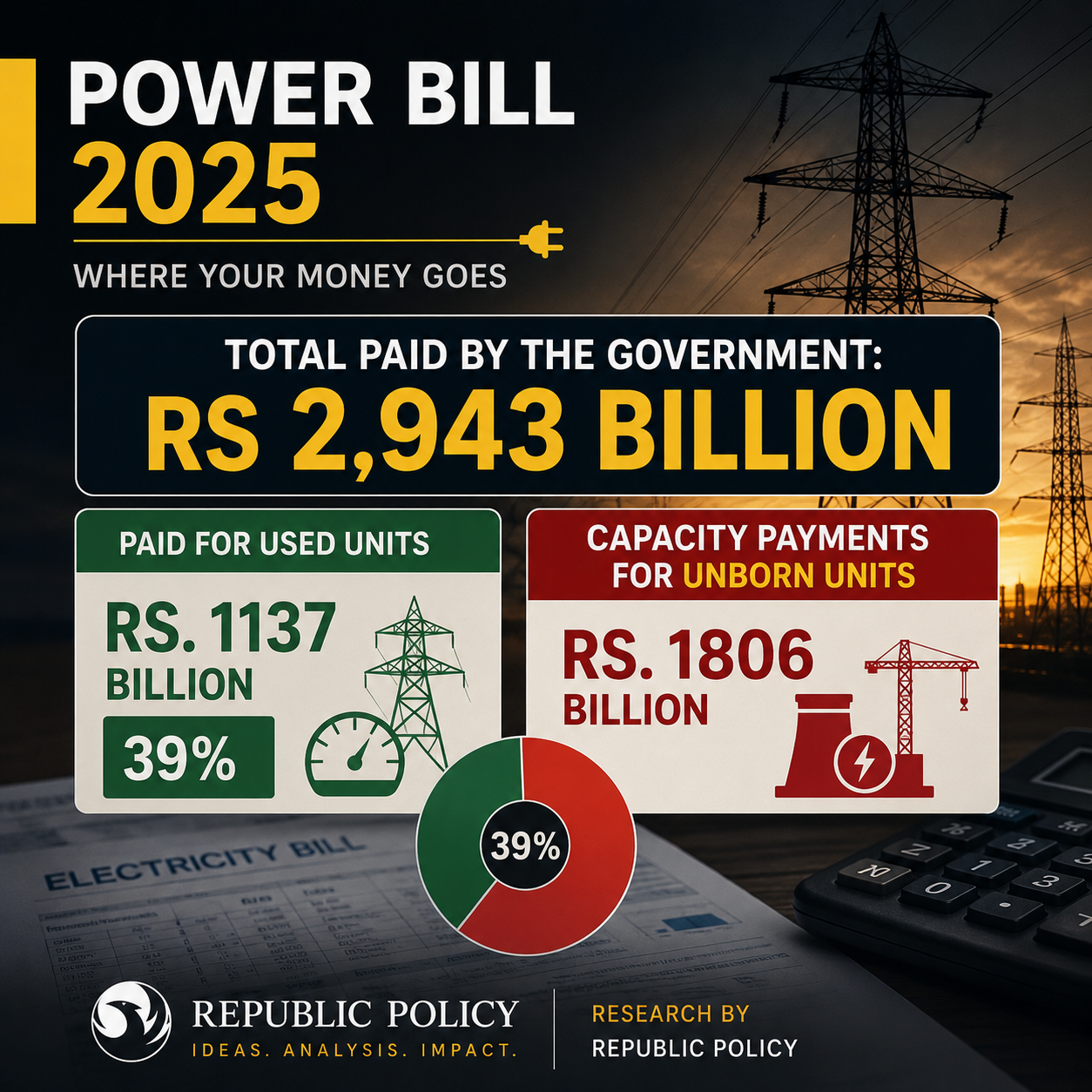
The research by the RP organization on the energy sectors of Pakistan shows that poor governance is at the heart of the energy crisis. From wrongly perceived IPP agreements to high distribution losses, Pakistan’s energy sector suffers more from the poor governance than the geopolitics. However, governments blame merely fuel dependency and other geopolitical factors for the high prices.
They hardly blame the poor governance. Our bureaucrats thought excessive capacity would bring high income growth and vice versa. It didn’t materialize. Excessive capacity became a burden on the consumers.
The consequence is visible: a shadow grid is emerging in Pakistan. According to the RP organization, the capacity of distributive solar has reached 38 GWh, competing with the installed capacity of the National Grid, which is 42 GWh. Industrial and domestic consumers are losing trust in the Grid and generating their own power in the daytime.
It has negative impacts for the grid: in the daytime, demand drops to merely 2000 MW, and during nighttime, demand rises suddenly, impacting the On-Off cycle of the power plants.
Government is worried. It has introduced the Competitive Markets of Energy, allowing the consumers to buy power directly from the IPPs without involving the government.
Apparently, it seems a good start. Its results will be seen in the energy markets after the auction is completed.